
Join 250,000+
professionals today
Add Insights to your inbox - get the latest
professional news for free.
Join our 250K+ subscribers
Subscribe19 JAN 2026 / IRS UPDATES
The IRS has revived regulations within Section 2801 of the HEART Act of 2008, requiring U.S. persons who have received gifts or bequests from a 'covered expatriate' to pay a 40% tax. This is impacting globally mobile families, trusts, and unsuspecting inheritors who believed they were getting clean inheritances, and is enforced on transfers made from 1 January 2025.
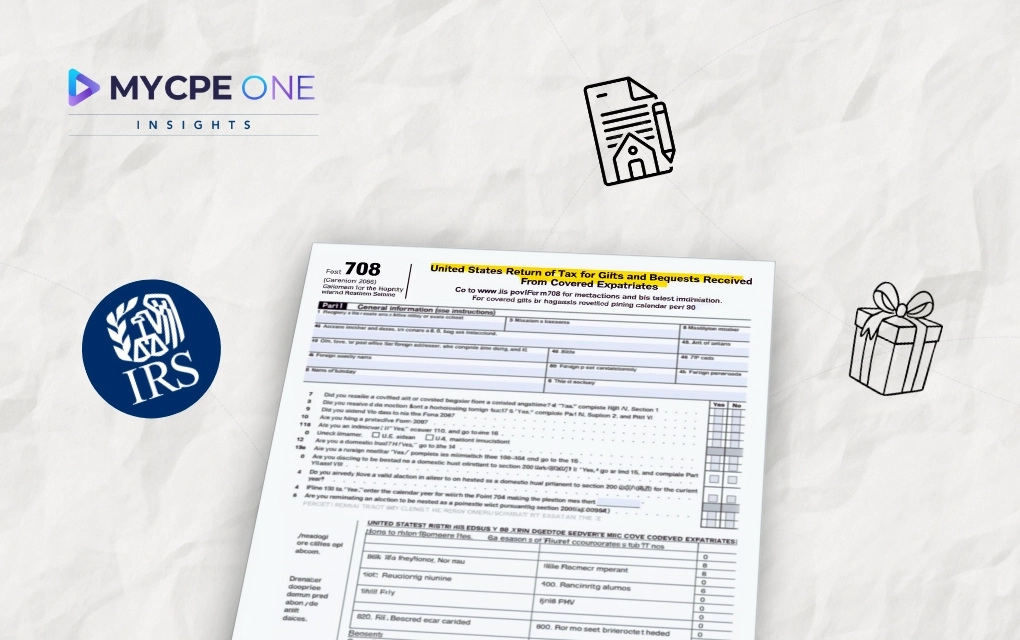
For years, Section 2801 sat in the Code like an unplugged smoke detector. Everyone knew it existed. No one heard it chirp. Then, in January 2025, the IRS finalized regulations, and Form 708 finally landed. If you advise globally mobile families or sit inside a U.S. firm with cross-border clients, this one matters more than the headlines suggest. It does not hit the expatriate. It hits the kid, the trust beneficiary, or the unsuspecting heir who thought an inheritance was clean. This is not a new law. It is a newly alive law.
Section 2801 came out of the HEART Act in 2008, alongside the exit tax rules in Section 877A. Congress had a clear idea. If someone walks away from the U.S. tax system, the IRS still wants a bite when their wealth circles back to U.S. persons. What changed is enforcement. Final regulations dropped in January 2025. Form 708 followed with a December 2025 revision date. Transfers received on or after January 1, 2025, are now squarely in scope. The long pause is over. Expatriations have climbed steadily over the last decade. Combine that with aging parents, trust distributions, and estate settlements, and the IRS is staring at real money. Forty percent money.
A covered expatriate is not just someone rich at the moment they renounce. The status attaches if, at expatriation, any one of three test trips:
That third one causes most of the trouble. Miss a filing. Botch an information return. Forget Form 8938. Suddenly, the label applies. Here is the kicker that trips up families. Once someone is a covered expatriate, they stay that way for Section 2801 purposes. It does not matter when the assets were earned. Pre-expatriation, post-expatriation, offshore, onshore, cash, stock, real estate, all count.
The tax applies when a U.S. person receives either a covered gift or a covered bequest.
There is a single annual exclusion of $19,000 for 2025 and 2026, applied once per year across all covered expatriates. There is no lifetime exemption. Once you blow past that number, the math is simple and ugly. Fair market value times 40%, reduced only by limited credits for foreign gift or estate tax. If that feels punitive, that is because it is.
Trusts are where Section 2801 moves from theory to real-world headache. Distributions from domestic trusts and electing foreign trusts can trigger the tax. For foreign trusts, the regulations introduce the Section 2801 ratio. You must determine how much of the trust is attributable to covered transfers versus other contributions. Every new contribution forces a recalculation. If records are incomplete, the IRS presumes the entire distribution is taxable. That presumption alone should make trustees sweat. In practice, many beneficiaries will not have clean contribution histories going back to 2008. That puts them deep in the weeds, fast.
That is why protective filings matter. Filing Form 708 with zero tax, supported by a sworn affidavit and documented due diligence, starts the statute of limitations. Skip that step, and the exposure stays open.
Picture a U.S. CPA firm with a client whose parent moved back to Canada twenty years ago. The parent held a green card long enough to qualify as a long-term resident. They never filed Form I 407. They never certified compliance. At death, the child inherits Canadian assets that were already taxed under Canadian rules. From the child’s perspective, the check clears. From the IRS perspective, the transfer just triggered a 40 percent tax. That scenario is not rare. It is showing up more often, and not just with Canada. Europe, Asia, and the Middle East all apply.
Form 708 did not create a new tax. It turned on the lights for one that had been sitting quietly for seventeen years. For U.S. recipients, this is not academic. It is cash out the door. For firms, it is a compliance issue that cuts across individual tax, trusts, estates, and cross-border planning. If your client hears the word inheritance and relaxes, that is your cue to lean in and ask better questions.
Until next time…
Don’t forget to share this story on LinkedIn, X and Facebook
Subscribe now for $199 and get unlimited access to MYCPE ONE, from CPE credits to insights Magazine
📢MYCPE ONE Insights has a newsletter on LinkedIn as well! If you want the sharpest analysis of all accounting and finance news without the jargon, Insights is the place to be! Click Here to Join
You’ve reached the 3 free-content piece limit. Unlock unlimited access to all News & CPE resources.
Subscribe Today.
Already have an account?
Sign In