
Join 250,000+
professionals today
Add Insights to your inbox - get the latest
professional news for free.
Join our 250K+ subscribers
Subscribe02 SEP 2025 / MONTHLY REGULATORY CAPSULE
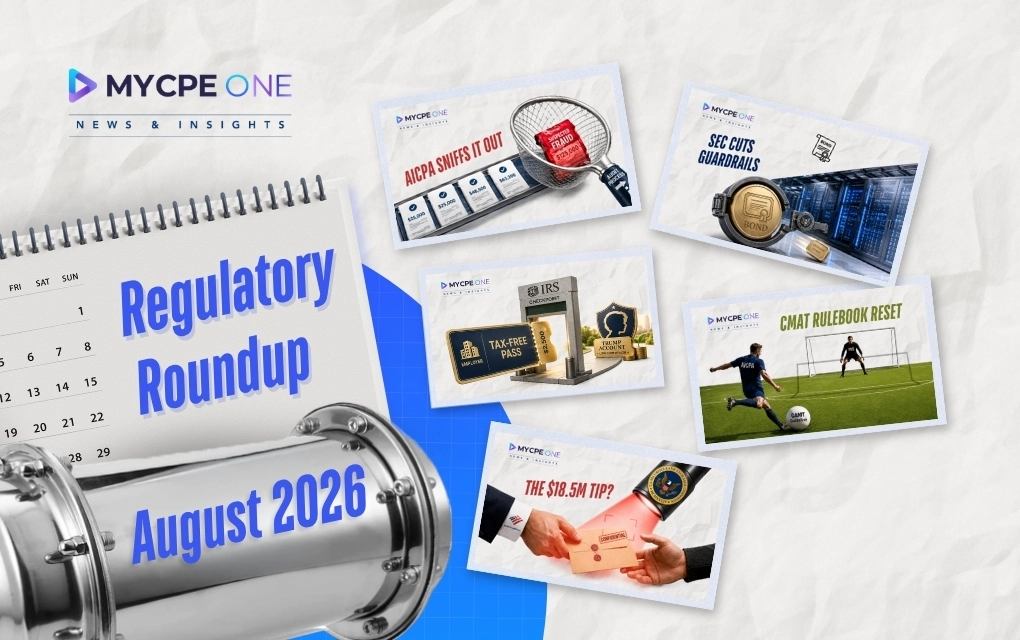
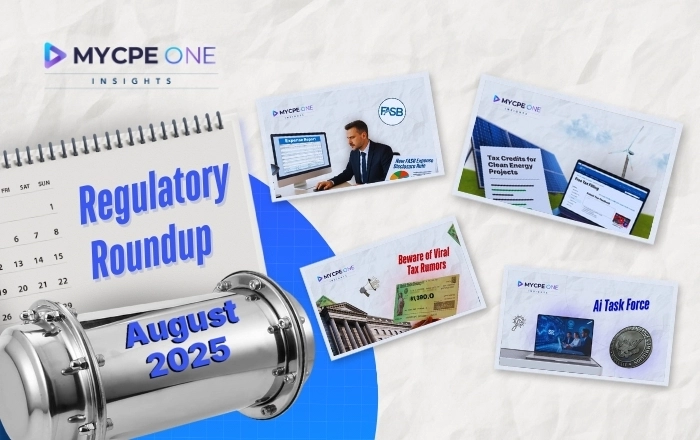
In August, the IRS focused on surveys, reducing energy credits and battling scams related to stimulus, while the SEC launched an AI Task Force to redefine enforcement and reshuffled the PCAOB leadership. This evolving regulatory landscape impacts a wide range of professionals, including tax officials, auditors and finance professionals, and requires ongoing monitoring to avoid potentially serious pitfalls.
August proved that compliance never takes a vacation. The IRS was busy conducting surveys, trimming energy credits, and combating stimulus scams. The SEC rolled out an AI Task Force that could redefine enforcement, while also shaking up PCAOB leadership. Meanwhile, the AICPA pressed for immediate research cost guidance and backed legislation to support domestic abuse survivors, and FASB kept finance teams on edge with new rules on expense reporting and credit loss relief. Across the board, regulators and standard-setters are redefining the landscape, and professionals must closely track these shifts to avoid being caught flat-footed.
The IRS is juggling politics and policy: a nationwide survey could decide the fate of Direct File, while clean energy credits face early sunsets under OBBBA. From EV incentives to home solar breaks, deadlines are closing quickly, and missing one date could mean lost dollars. For tax pros, this mix of free filing uncertainty and expiring credits isn’t just fine print; it’s a client strategy. How prepared are your clients for the shifting ground?
Social media hype about $1,390 “stimulus checks” had taxpayers buzzing, but the IRS had to step in; no new payments are coming. Scammers are using old pandemic programs to push phishing traps while Congress debates real but stalled proposals like tariff-funded rebates. At the same time, the IRS is expanding its CAP program for big corporations. For pros, the message is clear: facts matter.
From flood relief extensions in West Virginia to postponed payroll reporting changes under OBBBA, the IRS is juggling taxpayer needs and long-term reforms. Add in mandatory MFA, IP PINs, and a scaled-back modernization plan, and the workload only grows. For practitioners, this means tracking new deadlines, advising on security, and bracing for tech pivots. The big question: can the agency balance disaster response, compliance shifts, and modernization all at once?
IRS Notice 2025-45 signals changes ahead for inbound reorganizations, making it easier for foreign-traded companies to redomicile in the U.S. Proposed regulations would relax certain gain recognition rules for F reorganizations while clarifying stock disposition treatment. Treasury argues these transactions don’t trigger avoidance risks, making exceptions appropriate. For corporate tax directors and advisors, it’s a potential shift in the cross-border playbook.
The SEC just flipped the switch on enforcement with its new AI Task Force, led by Chief AI Officer Valerie Szczepanik. From crypto oversight to nonstop fraud detection, AI is moving the agency from reactive to proactive. Think disclosures scanned in seconds, pump-and-dump schemes flagged instantly, and filings reviewed with machine precision. However, with power comes risk, bias, explainability, and accountability, which loom large.
SEC Chair Paul Atkins is shaking things up again, launching a search for new PCAOB board members just after Erica Williams stepped down. Acting Chair George Botic fills the seat for now, but Atkins is eyeing budget cuts and salary reductions for a board that has seen its expenses grow faster than the Commission’s. With board terms staggered through 2030, the reshuffle could redefine PCAOB oversight.
The AICPA is pressing Treasury and the IRS for urgent guidance on OBBBA’s research cost provisions. Without clarity, small businesses risk filing uncertain returns and unnecessary amendments in 2024. The Institute proposes allowing upfront deductions, retroactive amendments, and NOL adjustments to cut compliance headaches. For practitioners, it’s about immediate relief and smoother administration. But will Treasury deliver answers before deadlines catch taxpayers off guard?
The AICPA is supporting the bipartisan SAFE Act, which would let survivors of domestic abuse or spousal abandonment file taxes as if unmarried. The bill promises safety, equity, and independence by breaking financial ties to abusers while preserving access to credits and deductions. For practitioners, it provides a lifeline to clients who are currently trapped by existing filing rules. The question now is whether Congress will move quickly to turn this protection into law.
The PCAOB has launched a Smaller Firm Resource Group to amplify the voices of firms auditing 100 or fewer public companies. With over 500 such firms serving 3,200 companies, this initiative gives them direct input on standards, inspections, and cost considerations. Acting chair George Botic emphasized their vital market role, with forums, QC 1000 workshops, and new tools already underway. But will this group truly shift the balance for smaller audit firms?
The PCAOB is seeking nominations for its Investor Advisory Group and Standards and Emerging Issues Advisory Group, with terms commencing in January 2026. These bodies give investors and professionals a voice on regulatory standards, audit quality, and emerging issues. With vacancies looming at year-end, the board is seeking fresh perspectives to guide oversight and policy. The open question: which voices will shape the next phase of audit regulation?
The FASB is cracking open the SG&A “black box,” prompting public companies to break down expenses, such as compensation, depreciation, and manufacturing costs, in footnote tables. Investors receive cleaner comparisons, but finance teams face tighter tracking, clearer definitions, and audit-ready details. It’s disclosure, not redesign, but the ripple effect hits accountants, auditors, and tech tools alike. Transparency is the new norm, so how ready is your reporting process?
CECL fatigue? FASB’s new ASU 2025-05 hands out real relief. Public and private entities can skip forecasting theatrics for short-term receivables by freezing conditions at the balance sheet date, while private firms get a bonus: using post-balance-sheet collections. This trims model complexity, cuts costs, and aligns accounting closer to reality. For finance pros, it’s practical sanity in credit loss land, but will teams embrace the shortcut or stick with CECL’s full grind?
This month’s updates underscore one key fact: compliance and regulation are advancing at an unprecedented pace. The IRS is juggling taxpayer relief, misinformation battles, and changes to payroll reporting. The SEC is no longer content to lag technology, turning AI into its next enforcement powerhouse, while the PCAOB is both rebuilding leadership and broadening outreach to smaller firms. Add AICPA’s advocacy and FASB’s push for transparency, and it’s clear every corner of the profession is being reshaped. For CPAs, auditors, and finance professionals, the playbook is shifting in real-time; staying nimble is the only way to turn change into an advantage. Stay ahead of every twist in tax, audit, and compliance. Subscribe to MYCPE ONE Insights and get straight-talking updates delivered to your inbox before they hit the headlines.
Until next time…
Don’t forget to share this story on LinkedIn, X and Facebook
Subscribe now for $199 and get unlimited access to MYCPE ONE, from CPE credits to insights Magazine
📢MYCPE ONE Insights has a newsletter on LinkedIn as well! If you want the sharpest analysis of all accounting and finance news without the jargon, Insights is the place to be! Click Here to Join
Digital Marketing Services for CPA & Accounting Firms - Starting $399/month.
Struggling to attract new clients? MYCPE ONE’s Digital Marketing Services help accounting firms stand out, generate leads, and grow revenue effortlessly.
With expertise in SEO, paid ads, social media, and targeted PPC, MYCPE ONE maximizes your marketing efforts to deliver high ROI and broader industry reach.
Invest in digital marketing for your firm today—see the difference with MYCPE ONE!
Stand out. Generate leads. Grow revenue.
You’ve reached the 3 free-content piece limit. Unlock unlimited access to all News & CPE resources.
Subscribe Today.
Already have an account?
Sign In