Join 250,000+
professionals today
Add Insights to your inbox - get the latest
professional news for free.
Join our 250K+ subscribers
Subscribe08 SEP 2025 / PCAOB UPDATES
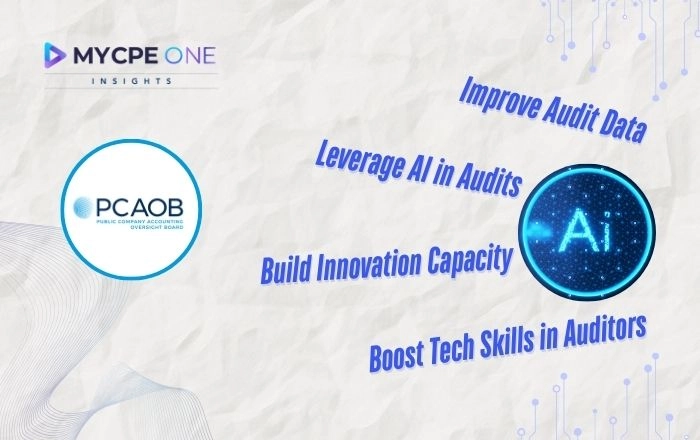
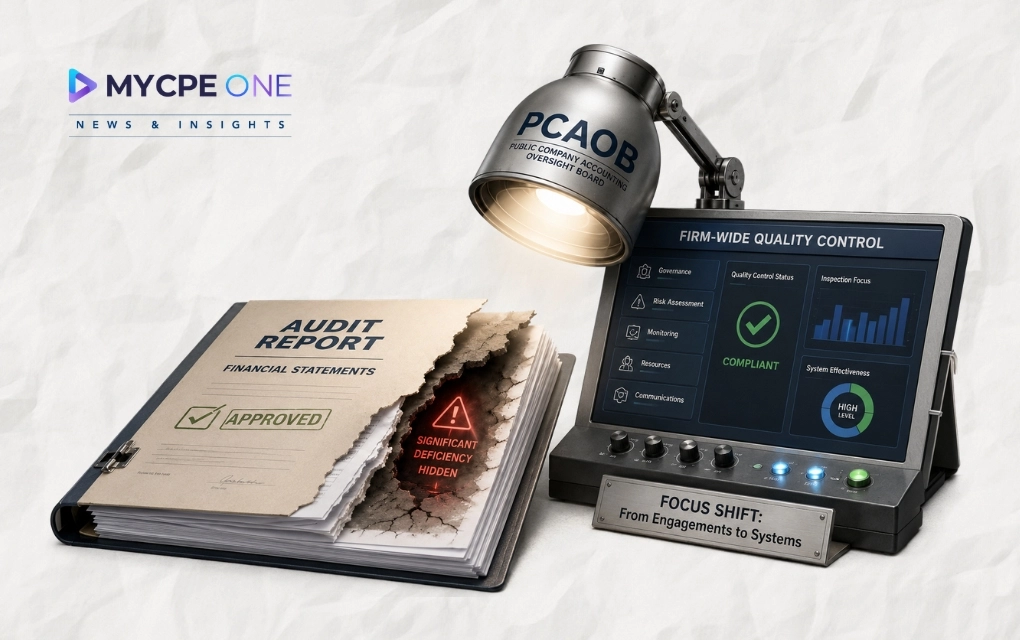
The Public Company Accounting Oversight Board (PCAOB) has issued new standards and recommendations to enhance audit quality, including a stronger emphasis on the use of AI technologies in auditing. The move is intended to catch up with the rapid development and implementation of AI in the auditing sector. These new standards directly address how auditors should employ technology-assisted analyses and highlight the need to boost tech literacy among auditors to ensure readiness for modern tools.
Auditors love a good checklist, but technology doesn’t always wait for box-ticking. For years, firms have been experimenting with AI, data analytics, and other advanced tools, while regulators have adhered to standards that appear to have been written on dial-up internet. That gap is finally narrowing. The Public Company Accounting Oversight Board (PCAOB) has just released new standards on technology-assisted analysis and shared a study containing four bold recommendations for enhancing audit quality. Pair that with the billion-dollar AI strategies flying out of accounting’s biggest names, and we might be staring at the profession’s version of “taking it up a notch.”
In 2022, the PCAOB established the Technology Innovation Alliance (TIA) Working Group, chaired by Christina Ho. Their job? Determine how emerging technologies impact audits and what the PCAOB should do in response. Fast-forward to September 2025, and the board posted two significant documents: a Current State Deliverable (dated August 2023) and "Transforming Audit Quality Through Technology" (dated May 2024). Both are still fresh, especially given the breakneck pace of AI.
What’s inside? The TIA offered four key plays:
That last one hits home. As the report bluntly put it, some auditors “lack skillsets in technology, data analysis, and AI,” which is a nice way of saying they are unprepared for modern tools. If you’re thinking this sounds like a regulatory nudge toward AI-powered auditing, you’re right. It aligns neatly with our earlier coverage of the Big Four’s AI strategies and BDO’s $1 billion AI investment, where firms are racing to integrate automation, agentic AI, and analytics into their daily audit work.
At almost the same time, the PCAOB also updated two major auditing standards: AS 1105 (Audit Evidence) and AS 2301 (Responses to Risks of Material Misstatement). The changes aren’t window dressing; they directly address how auditors should use technology-assisted analysis.
Here’s the quick rundown:
And the PCAOB gave us a helpful before-and-after example in accounts receivable auditing:
Think of it like upgrading from a flip phone to a smartphone: the basics still apply, but now you’ve got apps that can save time and cut manual grunt work. In practice, this means fewer redundant procedures and more reliable evidence.
Meanwhile, firms aren’t waiting for regulators to bless their tech. McKinsey’s proprietary AI, Lilli, already cuts research time by 30%. Thomson Reuters is touting AI tools that claim to save tax pros 240 hours a year. Sovos rolled out “Sovi,” pitched as the first AI-driven tax intelligence solution. And Docyt is chasing the holy grail of month-end close automation. Intuit? They’ve been integrating AI into QuickBooks and tax preparation as if it were second nature.
And here’s where the numbers get loud:
That gap is the elephant in the audit room. Technology is everywhere, but human skills aren’t keeping up.
This all sounds promising, but it raises some big-time questions:
Those aren’t hypothetical worries. The PCAOB’s call for tech literacy feels less like advice and more like a warning label: get with it, or risk being left behind.
Auditors love precision, so here’s a precise point: compliance is catching up, but adoption is still uneven. The PCAOB’s standards make it clear that you can’t just throw AI at a problem and call it a day. Reliability, controls testing, and human judgment still matter, big time. The smarter play? Blend innovation with accountability. Regulators like the PCAOB are creating space for experimentation, while firms are pushing the envelope with billion-dollar AI bets. For practitioners, the move is simple: stay curious, keep sharpening tech skills, and don’t be afraid to lean on tools that can cut the busywork so you can focus on judgment calls that actually require a human brain. As Benjamin Franklin said, “An investment in knowledge pays the best interest.” In 2025, that interest just happens to be accruing in AI. Subscribe to MYCPE ONE Insights and get the latest on AI and audit delivered straight to your inbox.
Until next time…
Don’t forget to share this story on LinkedIn, X and Facebook
Subscribe now for $199 and get unlimited access to MYCPE ONE, from CPE credits to insights Magazine
📢MYCPE ONE Insights has a newsletter on LinkedIn as well! If you want the sharpest analysis of all accounting and finance news without the jargon, Insights is the place to be! Click Here to Join
Website Services for CPA & Accounting Firms - Starting $69/month.
Is your website attracting clients—or turning them away? MYCPE ONE’s Website Development Services, starting at just $69/month, create high-converting, professional websites tailored for accounting firms like yours.
With over 400 designs to choose from and a dedicated webmaster, we handle it all for you—no DIY required.
Get started today and create a website that works for your firm with MYCPE ONE!
Make a lasting impression. Boost conversions. Stay secure.
You’ve reached the 3 free-content piece limit. Unlock unlimited access to all News & CPE resources.
Subscribe Today.
Already have an account?
Sign In