Join 250,000+
professionals today
Add Insights to your inbox - get the latest
professional news for free.
Join our 250K+ subscribers
Subscribe06 MAY 2026 / SEC UPDATES
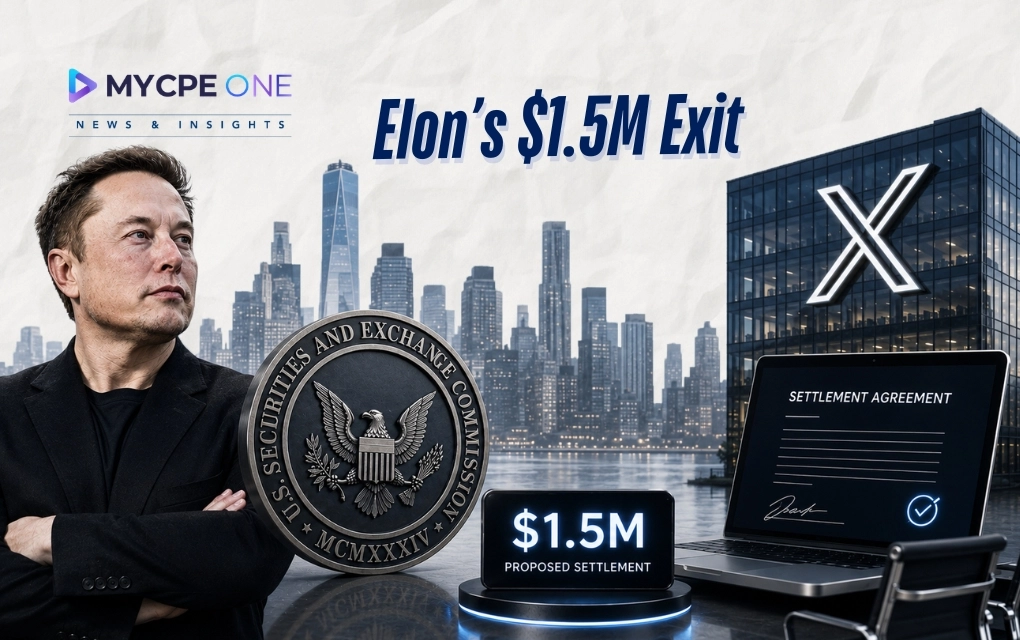
Elon Musk has settled a lawsuit with the U.S. Securities and Exchange Commission (SEC) over his delayed disclosure of significant Twitter stock purchases for $1.5 million, markedly less than the original $150 million sought by the agency. Analysts suggest the outcome could potentially indicate a shift in regulatory enforcement, moving away from stringent penalties towards pragmatic approaches, raising concerns about transparency and credibility in the process.
The SEC Just Took Elon Musk to Court Over $150 Million, Then Settled for $1.5 Million. So… What Changed? Wall Street has seen plenty of eyebrow-raising settlements over the years, but this one lands somewhere between “that’s it?” and “wait, seriously?” Elon Musk, the man who turned a late-night Twitter habit into one of the most expensive social media acquisitions in history, has agreed to settle the SEC’s lawsuit tied to his 2022 Twitter stock purchases for just $1.5 million. Not $150 million. Not a clawback of alleged gains. Not another governance crackdown like the Tesla-era SEC battles. Just $1.5 million.
And that tiny number sitting next to a $44 billion Twitter takeover is exactly why the financial world is paying attention. Because this case is no longer just about Elon Musk being late on paperwork. It’s about what enforcement really looks like in modern markets when billionaires, regulators, and public companies collide in broad daylight.
Back in early 2022, Musk quietly started scooping up Twitter shares. Once his ownership crossed 5%, securities law required him to publicly disclose the position within 10 calendar days. That disclosure matters because markets move on information. The moment investors learn someone like Musk is buying aggressively, stock prices usually pop fast. But Musk didn’t file on time. According to the SEC, he waited an extra 11 days before revealing his growing stake. During that period, regulators say Musk continued buying shares at artificially low prices because the market had no clue what was happening behind the curtain. Then came the filing.
Twitter stock surged roughly 27% in a single day after Musk disclosed a 9.2% stake, validating exactly why disclosure rules exist in the first place. The SEC later argued that the delayed filing allowed Musk to save approximately $150 million while unsuspecting shareholders sold stock at lower prices. That number became the foundation of the agency’s lawsuit filed in January 2025. At the time, it sounded like another heavyweight Musk-vs-SEC cage match was about to begin. Turns out, the ending looked more like a negotiated parking ticket.
The final settlement requires Musk’s revocable trust, not Musk personally, to pay a $1.5 million civil penalty without admitting wrongdoing.
That stands in stark contrast to Musk’s infamous 2018 SEC battle over his “funding secured” Tesla tweet. In that case:
That settlement carried reputational and governance weight. This one feels different. Much different. And frankly, that difference says a lot about where regulatory enforcement may be heading.
That’s where things get spicy. Several factors likely pushed this settlement toward a much smaller number.
The SEC’s argument centered on disclosure timing, not outright fraud or fabricated financial statements. That distinction matters. It’s easier to pursue aggressive penalties when regulators can prove deception, manipulation, or intentional misconduct. A late filing, even one with massive market implications, sits in a grayer area legally. Musk’s lawyers repeatedly framed the issue as procedural rather than deceptive. And in settlements, nuance often hits the wallet hard.
Dragging Elon Musk through years of litigation is expensive, politically messy, and wildly unpredictable. The SEC already lost public goodwill battles with Musk in prior cases where he openly mocked the regulator, famously calling it the “Shortseller Enrichment Commission.” At some point, enforcement agencies also start calculating risk versus return. A guaranteed settlement today may look better than an uncertain courtroom war tomorrow especially against someone with nearly unlimited legal resources.
The SEC originally claimed Musk saved around $150 million by delaying disclosure. Yet the settlement does not require him to give back those alleged gains. That dramatically shrinks the practical punishment. Without disgorgement, the case shifts from recovering investor harm to simply penalizing procedural non-compliance. That’s a completely different regulatory tone. And markets noticed immediately.
Some analysts think so. Others say the agency is simply becoming more pragmatic. Still, timing matters here. The lawsuit was originally filed days before President Donald Trump returned to the White House. Since then, several high-profile enforcement actions involving politically connected or crypto-related firms have either softened or disappeared altogether. The SEC has also seen leadership changes. Margaret Ryan, the agency’s enforcement director, resigned shortly before settlement discussions intensified.
Meanwhile, new SEC Chair Paul Atkins has signaled a different approach to enforcement priorities compared to previous administrations. That doesn’t automatically mean Musk got special treatment. But let’s not kid ourselves, optics matter on Wall Street. And this settlement definitely raised some “what’s really going on here?” conversations across legal and compliance circles.
Even though this SEC chapter is wrapping up, Musk’s broader legal drama is still running like a Netflix series that refuses to end. A separate shareholder lawsuit recently resulted in a jury finding that Musk misled Twitter investors during the acquisition saga. Damages in that case could reportedly climb toward $2 billion depending on appeals and future rulings. Then there’s the OpenAI legal war. Musk is currently battling OpenAI CEO Sam Altman over claims the company abandoned its nonprofit roots. That courtroom fight has already exposed private emails and texts between some of Silicon Valley’s biggest players, and honestly, it’s becoming must-watch corporate theater.
At first glance, this story looks like another Elon Musk headline designed to break the internet for a day or two. But underneath the memes, legal filings, and billion-dollar personalities sits something much more important for financial professionals: Markets only function properly when information moves fairly. That principle sounds boring until one delayed filing allegedly shifts $150 million in value. The SEC may have settled cheaply. Musk may have avoided harsher consequences. And the legal system may have chosen efficiency over escalation. But the bigger conversation about transparency, enforcement credibility, and calculated regulatory risk? Yeah, that conversation is just getting warmed up.
Until next time…
Don’t forget to share this story on LinkedIn, X and Facebook
Subscribe now for $199 and get unlimited access to MYCPE ONE, from CPE credits to insights Magazine
📢MYCPE ONE Insights has a newsletter on LinkedIn as well! If you want the sharpest analysis of all accounting and finance news without the jargon, Insights is the place to be! Click Here to Join
You’ve reached the 3 free-content piece limit. Unlock unlimited access to all News & CPE resources.
Subscribe Today.
Already have an account?
Sign In