Join 250,000+
professionals today
Add Insights to your inbox - get the latest
professional news for free.
Join our 250K+ subscribers
Subscribe20 MAY 2026 / SEC UPDATES
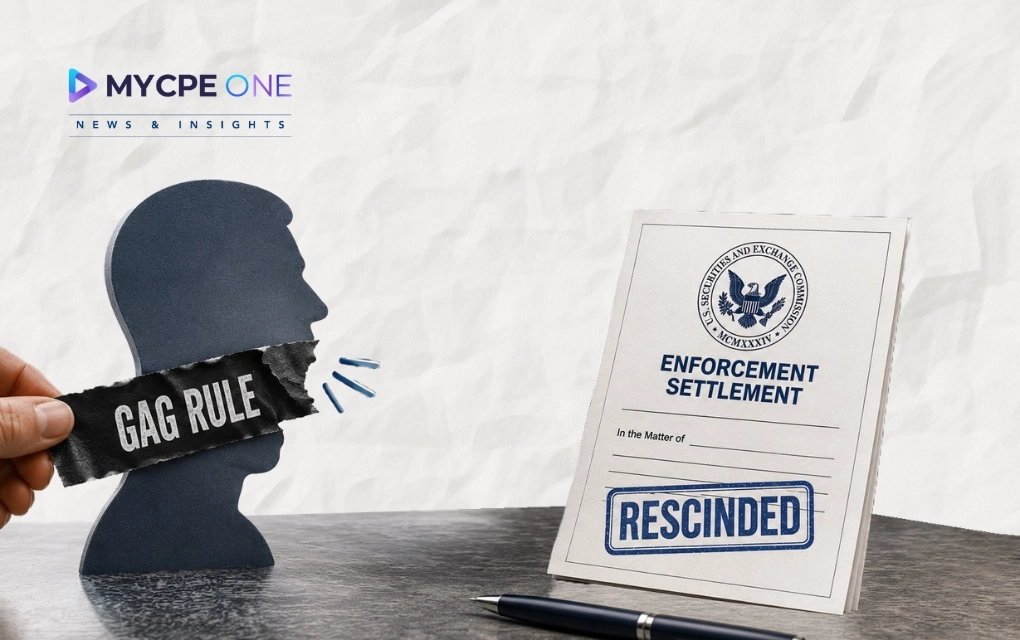
The US Securities and Exchange Commission (SEC) has abolished its longstanding "gag rule", which prohibited companies and executives from publicly denying claims made against them in enforcement cases. SEC Chair Paul Atkins stated the move was necessary to protect free speech and modernize enforcement, although some critics believe it may lead to more complex post-settlement communication strategies and possibly tougher negotiations in high-profile cases.
The SEC just tossed one of Wall Street’s longest-running settlement rules into the shredder, and let’s just say the compliance world is already reading the fine print twice. For more than 50 years, companies and executives settling Securities and Exchange Commission enforcement cases faced a strange tradeoff: pay the penalty, move on with business, but keep your mouth shut afterward. You did not have to admit wrongdoing, but you also could not publicly say the SEC got it wrong. Critics called it a “gag rule.” Supporters called it necessary market discipline. Either way, the policy shaped the tone of SEC settlements for decades. Now, under SEC Chair Paul Atkins, that era is officially over. On May 18, 2026, the SEC rescinded its controversial “no-deny” settlement policy, ending a rule first adopted in 1972. The move does not erase enforcement risk or make settlements easier. But it does fundamentally change how companies, executives, accountants, advisers, and compliance professionals may communicate after regulatory battles. And yeah, for legal and finance teams, this is kind of a big deal.
At the center of the controversy was the SEC’s classic “neither admit nor deny” settlement structure. Under this model, a defendant could resolve an SEC enforcement case without admitting the allegations were true. Sounds straightforward enough. But there was a catch hiding in the paperwork. The settling party also had to agree not to publicly deny the SEC’s allegations later or imply the case lacked merit. In practical terms, the SEC could publish a press release detailing alleged misconduct, while the company or executive on the other side had extremely limited room to publicly push back.
That imbalance became increasingly controversial because nearly all SEC enforcement cases settle. Forbes noted that roughly 98% of SEC enforcement actions end in settlement rather than trial. Fighting the SEC can cost millions in legal fees and drag on for years. For many firms, settlement is less about surrender and more about stopping financial bleeding before it spirals.
Thomas Powell’s case became one of the most visible examples. Powell, who settled SEC allegations in 2021 for a $75,000 penalty after reportedly spending over $4 million on legal fees, later argued he could not publicly explain his side of the story because of the settlement restrictions. According to Forbes, Powell claimed the reputational fallout contributed to banks cutting ties, clients leaving, and his firm eventually winding down operations. That is where critics said the rule crossed the line from settlement management into speech control.
The rule itself dates back to 1972, when the SEC adopted the policy without a formal public notice-and-comment process. Regulators believed the approach protected the integrity of enforcement settlements. The logic was simple: if companies could settle a case one day and publicly deny wrongdoing the next, investors might question whether the SEC’s allegations had any merit at all. The agency wanted settlements to send a strong deterrent message across the market. From the SEC’s perspective, enforcement actions are not just about fines. They are also public accountability tools.
But over time, critics argued the policy gave the government a one-way microphone. The SEC could aggressively publicize allegations, while settling defendants remained boxed in from responding meaningfully. That criticism picked up steam in recent years. Elon Musk, Mark Cuban, free speech advocates, former SEC officials, and groups like the New Civil Liberties Alliance all publicly challenged the policy. The issue even reached the Supreme Court conversation pipeline after constitutional challenges argued the rule violated First Amendment protections and created “compelled speech.” In one of the more striking criticisms, legal challengers argued the rule effectively forced defendants to live under a permanent government-approved version of events. That argument clearly started gaining traction.
SEC Chair Paul Atkins framed the reversal as both a free speech issue and a modernization effort. “Speech critical of the government is an important part of the American tradition,” Atkins said while announcing the rescission. The SEC also emphasized that most federal agencies do not impose similar no-deny requirements. Accounting Today reported the Commission believes removing the rule will provide more flexibility in settling cases while potentially speeding up the return of money to harmed investors.
Interestingly, several legal experts noted the rule was rarely enforced in practice anyway. Sarah Sallis, co-leader of Husch Blackwell’s securities enforcement group, described the move as partly symbolic but institutionally meaningful. She argued the rescission signals a regulator willing to admit when older policies become obstacles to fair and efficient resolutions. That may be the bigger story here. This is not simply about letting executives vent on CNBC after settlements. It reflects a broader philosophical shift inside the SEC toward flexibility, optics, and possibly reducing constitutional fights that could weaken future enforcement authority.
Before corporate America starts firing off spicy LinkedIn posts after every settlement, there are still guardrails everywhere. The end of the gag rule does not eliminate securities laws, disclosure obligations, or anti-fraud standards. Public companies still must ensure statements remain accurate and non-misleading. CFOs, investor relations teams, lawyers, auditors, and compliance officers will still need carefully coordinated communication strategies. That means post-settlement messaging may actually become more complicated, not less.
Previously, silence was the default. Now companies may feel pressure to explain themselves publicly, especially when reputational damage threatens investors, lenders, employees, or customers. That creates new risks.
This update is not just a securities law headline. It is a governance lesson.
If settling defendants begin publicly criticizing SEC allegations more aggressively, the Commission may respond by negotiating tougher settlement language elsewhere. Regulators could also push harder for admissions of wrongdoing in certain high-profile cases. Some policy critics already argue the rescission favors defendants too heavily. Better Markets, a financial policy think tank, warned that the move appears more focused on protecting enforcement targets than on investors harmed by securities violations. At the same time, supporters argue transparency cuts both ways. If settlements are supposed to promote market trust, allowing defendants limited room to explain their position may actually strengthen confidence in the process. The Commodity Futures Trading Commission is reportedly considering a similar rollback of its own no-deny policy, which suggests the SEC’s move could ripple across the broader regulatory world. So yeah, this may not stop with one agency.
The SEC’s decision to nix its gag rule is a major reset in enforcement settlements. It does not weaken the need for compliance. It does not erase penalties. It does not turn every settlement into a public debate. But it does change the balance. For more than 50 years, settling defendants often paid money and surrendered their voice. Now, the SEC is moving toward a model where settlement does not automatically mean silence. For accounting, finance, tax, audit, legal, and compliance professionals, the message is clear: enforcement communication just became more strategic, more sensitive, and more important.
Until next time…
Don’t forget to share this story on LinkedIn, X and Facebook
Subscribe now for $199 and get unlimited access to MYCPE ONE, from CPE credits to insights Magazine
📢MYCPE ONE Insights has a newsletter on LinkedIn as well! If you want the sharpest analysis of all accounting and finance news without the jargon, Insights is the place to be! Click Here to Join
You’ve reached the 3 free-content piece limit. Unlock unlimited access to all News & CPE resources.
Subscribe Today.
Already have an account?
Sign In