Join 250,000+
professionals today
Add Insights to your inbox - get the latest
professional news for free.
Join our 250K+ subscribers
Subscribe21 MAY 2026 / SEC UPDATES
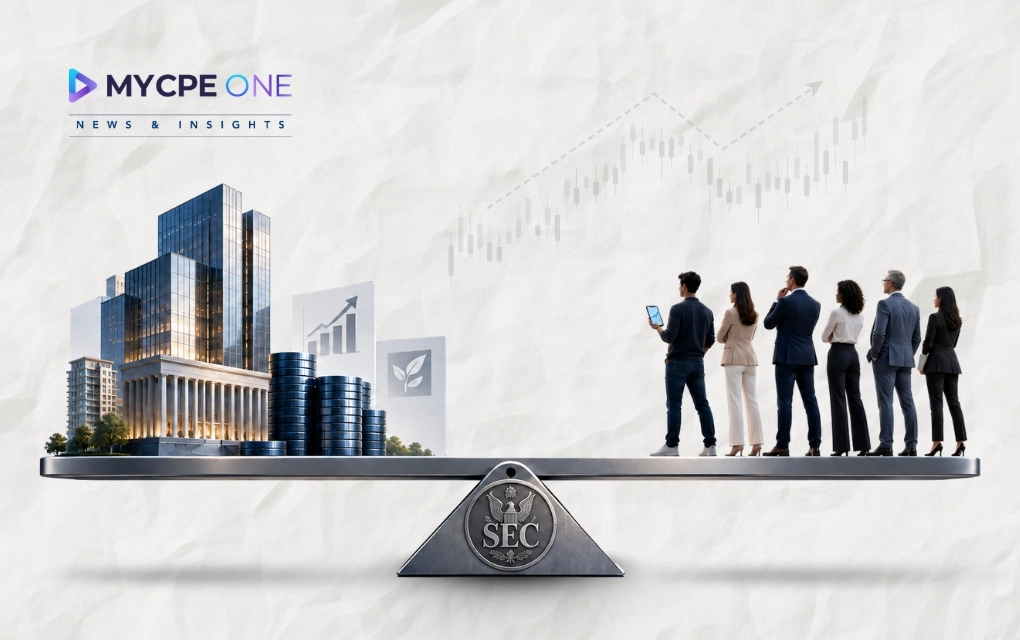
SEC Chair Paul Atkins is proposing a shift in the agency's policy that could significantly relax reporting rules for public companies and pave the way for crypto-based stock trading. The move could also reduce compliance costs, alter the process of going public for companies, and change the frequency of reporting, potentially causing significant ramifications for CFOs, auditors, tax professionals, and securities lawyers.
The SEC looks like it just walked into Wall Street’s living room, grabbed the remote, and said, “Alright, let’s try something different.” In one of the agency’s biggest policy pivots in years, SEC Chair Paul Atkins is pushing a stack of proposals that could dramatically loosen reporting rules for public companies, shrink compliance costs, and open the door wider for crypto-powered stock trading. If Gary Gensler’s SEC was known for throwing flags, this version seems more interested in speeding up the game clock. For CFOs, auditors, tax pros, and securities lawyers, this is not just another Washington paper shuffle. It could reshape how companies go public, stay public, and communicate with investors.
Public companies have filed quarterly reports for decades. It is practically muscle memory. Every three months: close the books, stress out the finance team, survive earnings season, repeat. Now the SEC wants companies to have the option to file semiannual reports instead of quarterly Form 10-Q filings. Under the proposal, companies could switch to a new Form 10-S and report twice a year. President Trump pushed this idea back in 2018, arguing that quarterly reporting forces executives to obsess over short-term numbers instead of actually running the business. The SEC now appears ready to test that theory.
Critics are already asking the obvious question: Does less frequent reporting mean less transparency? Maybe. But supporters argue that quarterly reporting has become a giant money pit for smaller public companies. Think about it. Audit fees, legal reviews, internal controls, disclosure prep, investor relations calls, and compliance staffing. That tab adds up fast. For smaller issuers, it can feel like paying for a luxury suite when you are barely selling tickets. As Warren Buffett once said, “The stock market is designed to transfer money from the active to the patient.” The SEC seems to be betting investors can survive waiting six months for updates.
The SEC also wants to make life easier for companies thinking about going public. Right now, firms with a public float above $700 million become “large accelerated filers,” triggering stricter compliance obligations, including auditor attestation requirements under SOX Section 404(b). The new proposal would raise that threshold to $2 billion. That is not a small tweak. That is moving the fence from the backyard to the next zip code. The proposal would also give newly public companies a 60-month “IPO on-ramp” before they face large accelerated filer status, regardless of size. Translation? Companies get breathing room to grow before the heavy compliance bills arrive. The SEC estimates that about 81% of public companies would qualify for scaled disclosure accommodations under the new framework.
For smaller firms, there is more. The SEC wants to create a category called “small non-accelerated filers,” giving them an extra 30 days for annual reports and five more days for quarterly filings. Audit firms are probably reading this proposal with mixed feelings. Less attestation work could mean lower revenue opportunities. Smaller issuers, meanwhile, are probably saying, “Finally, somebody gets it.”
The SEC is also preparing what it calls an “innovation exemption” for tokenized stocks. In plain English? Digital crypto versions of publicly traded shares may soon trade on blockchain platforms, including decentralized finance systems. Here is where things get spicy. The SEC is reportedly considering allowing third parties to create tokenized versions of stocks without permission from the actual companies. So theoretically, someone could tokenize Apple or Amazon shares and trade them on crypto rails even if those companies never asked for it. Wall Street veterans are raising eyebrows hard enough to cause forehead injuries.
Critics worry this creates fragmented markets where multiple versions of the same stock trade in different ecosystems with varying protections, liquidity, and pricing standards. Some tokenized shares may not even include voting rights or dividends. Brett Redfearn, former SEC trading chief, warned this could create confusion around what investors actually own at any moment. And honestly? He has a point. DeFi platforms already face hacking risks and uneven regulation. Adding tokenized equities into that environment feels a little like putting a Ferrari engine into a garage-built go-kart and saying, “Let’s see what happens.” Still, crypto firms are pumped. Exchanges, broker-dealers, and fintech players see tokenization as the next big money lane because blockchain markets run 24/7 with near-instant settlement. No waiting two business days. No market close bell. No “see you Monday.”
Atkins keeps repeating one phrase: “Make IPOs Great Again.” And honestly, the SEC’s broader strategy is becoming pretty clear. The agency wants fewer barriers to entering public markets. Fewer compliance headaches. Faster capital access. More flexibility for issuers. More room for crypto experimentation. Whether that produces healthier capital markets or a future compliance migraine remains the trillion-dollar question. Because while companies love lower costs, investors still expect reliable disclosures, strong controls, and transparent pricing. That balancing act is where this entire experiment could either shine or blow up like a bad earnings call. For now, accountants, auditors, compliance officers, and securities attorneys should probably keep the coffee pot full. The SEC just handed them one heck of a fall reading list.
Until next time…
Don’t forget to share this story on LinkedIn, X and Facebook
Subscribe now for $199 and get unlimited access to MYCPE ONE, from CPE credits to insights Magazine
📢MYCPE ONE Insights has a newsletter on LinkedIn as well! If you want the sharpest analysis of all accounting and finance news without the jargon, Insights is the place to be! Click Here to Join
You’ve reached the 3 free-content piece limit. Unlock unlimited access to all News & CPE resources.
Subscribe Today.
Already have an account?
Sign In