MYCPE ONE
MYCPE ONE LOGO

Join 250,000+
professionals today

Add Insights to your inbox - get the latest
professional news for free.

MYCPE ONE insights

Is the SEC Opening the Door for Tokenized Stocks?

Join our 250K+ subscribers

Join our 250K+ subscribers

Subscribe

19 JUN 2026 / SEC UPDATES

Is the SEC Opening the Door for Tokenized Stocks?

Is the SEC Opening the Door for Tokenized Stocks?

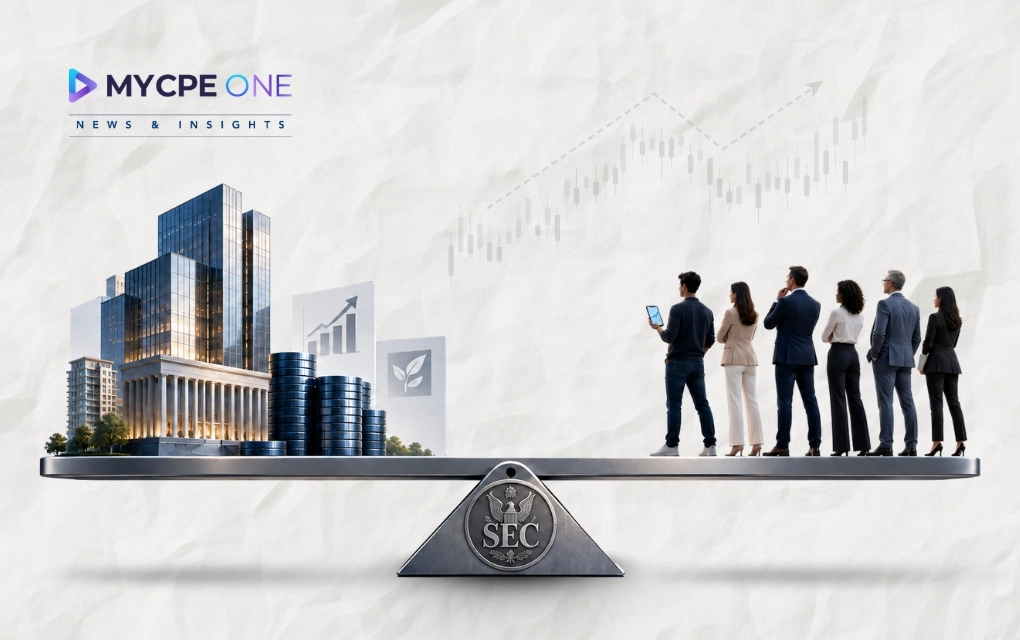
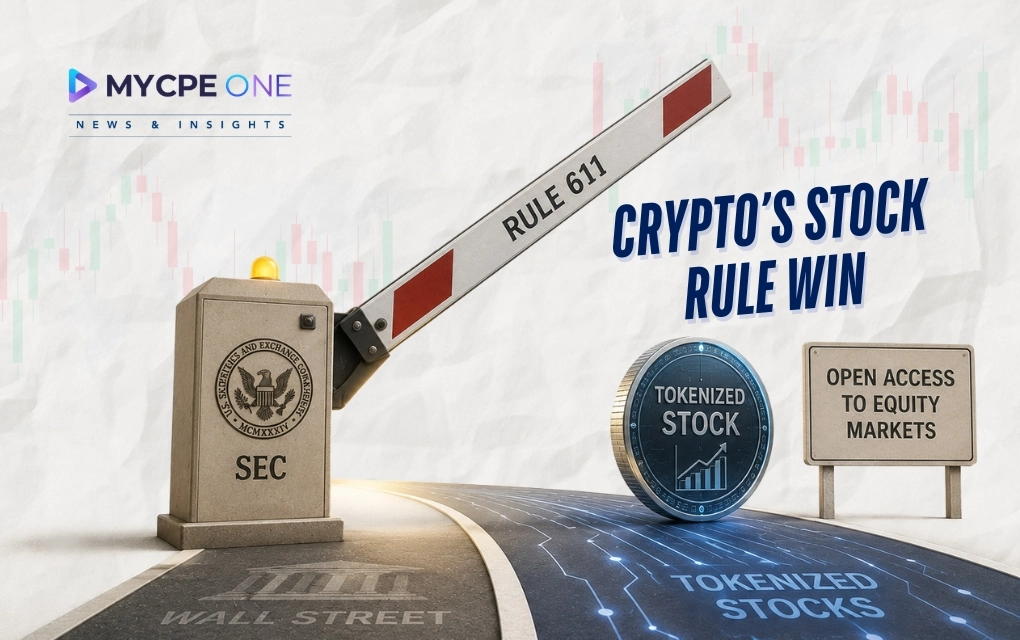
A decades old stock market rule may soon become the biggest opening crypto has been waiting for. The SEC has proposed scrapping two parts of Regulation NMS: Rule 611, known as the trade through rule or Order Protection Rule, and Rule 610(e), which restricts locked and crossed quotations. These rules helped shape the modern U.S. equity market, but they may now be standing in the way of tokenized stocks, DeFi platforms, and blockchain based trading. For Wall Street, this is not just another compliance cleanup. It is a potential rewrite of how stocks could trade when blockchain rails, 24/7 markets, and on chain settlement start bumping into rules built for traditional exchanges.

What Is Rule 611?

Rule 611 was adopted in 2005 to protect investors in a fragmented stock market. It prevents exchanges, alternative trading systems, and other trading centers from executing trades at prices worse than the National Best Bid and Offer, or NBBO. In simple terms, if a better price is available on another venue, your trade should not be filled at a worse price. Rule 610(e) restricts locked and crossed markets. A locked market happens when the best bid equals the best offer. A crossed market happens when the best bid is higher than the best offer. The rule was designed to keep quotes orderly and reduce market confusion.

Together, these rules built much of the current U.S. stock trading system. Exchanges, brokers, market makers, routers, and data feeds all developed around NBBO protection and fast order routing.

The Market Got Too Fast

The SEC believes the market has changed since 2005. Trading is now faster, more automated, and more complex. The agency is questioning whether these rules still protect investors efficiently or whether they now add cost, complexity, and fragmentation. SEC Chair Paul Atkins has long criticized Rule 611 because it focuses heavily on displayed price. His view is that best execution should also consider other factors, such as order size, speed, fill likelihood, trading costs, and execution certainty. The SEC is not saying investor protection no longer matters. It is asking whether competition, transparency, and best execution duties can protect investors with less regulatory machinery. The proposal is not final. The SEC will take public comments before deciding whether to adopt a final rule.

Crypto Gets the Green Light

Crypto platforms benefit because tokenized equities do not fit easily into the old stock market structure. Tokenized stocks are digital versions of traditional shares or stock linked instruments that trade on blockchain based platforms. They could allow faster settlement, 24/7 trading, on chain liquidity, and access through crypto exchanges or DeFi platforms. The problem is Rule 611. If a tokenized stock platform must always check traditional exchanges for the best protected quote before executing a trade, it may rarely be able to trade on its own platform. DeFi systems, especially automated market makers, are not designed like traditional broker routers. They use liquidity pools, code based pricing, slippage, and blockchain timing.

Larry Tabb of Bloomberg Intelligence summed it up clearly: “It’s really hard to have tokenized equities if you have a trade-through rule.” He also noted that these markets move in microseconds. That is why scrapping Rule 611 could be a major unlock. It could make it easier for crypto platforms to offer tokenized stock trading without constantly risking trade through violations. Galaxy Digital’s Alex Thorn said in a recent post on X that the SEC’s move “one of the biggest unlocks yet for tokenized stocks,” because current rules create structural barriers for tokenized U.S. equities in DeFi.

Wall Street Jumps In

Crypto and Wall Street are already preparing for a tokenized stock future. Coinbase has announced plans to launch tokenized stock trading outside the U.S. CEO Brian Armstrong said the products would be “real 1:1 backed tokenized stocks” and would give investors an actual economic claim on company shares on-chain. Coinbase has also pushed back against the trade through rule, arguing that it creates complexity and can lead to worse execution outcomes.

Traditional players are moving too. Bullish, the crypto exchange led by former NYSE President Tom Farley, agreed to acquire transfer agent Equiniti in a $4.2 billion deal. The New York Stock Exchange is exploring blockchain-based trading for tokenized stocks and ETFs. Nasdaq has also discussed token designs that could give public companies more control over tokenized shares. This shows that tokenization is no longer just a crypto side story. It is becoming a Wall Street market structure issue.

The Catch in the Deal

Critics argue that removing Rule 611 could hurt regular investors. The rule helped ensure that retail and institutional investors received fair prices in a fragmented market. Removing it could make execution quality harder to compare and reduce automatic price protection. Joe Saluzzi of Themis Trading questioned the SEC’s direction, asking: “Who’s benefitting here?” His concern is that the SEC may be changing long-standing stock market rules mainly to accommodate crypto platforms.

The risks are real. Tokenized stocks raise major questions around custody, shareholder rights, dividends, voting rights, disclosures, market manipulation, settlement, tax reporting, and investor protection. Financial professionals will need to know whether a tokenized stock is backed by actual shares, whether investors receive dividends, who holds the underlying assets, and how trades are recorded, valued, taxed, and reported.

The Next Big Play

If the SEC finalizes the proposal, tokenized equities could move closer to the mainstream. Crypto exchanges, DeFi platforms, broker-dealers, custodians, transfer agents, and traditional exchanges may all compete to shape the next version of stock trading. The future will likely be hybrid. Some tokenized stocks may be fully backed by real shares. Others may work more like receipts, derivatives, or synthetic exposures. That distinction will matter for investors, auditors, tax professionals, compliance teams, and regulators. For crypto, the benefit is clear: fewer structural barriers to tokenized stock trading. For Wall Street, the challenge is also clear: innovation must not weaken investor trust. Rule 611 was built for the old stock market. If it goes away, it may help open the door to a faster, blockchain-based, always-on version of equities.

Until next time…

Don’t forget to share this story on LinkedIn, X and Facebook

Subscribe now for $199 and get unlimited access to MYCPE ONE, from CPE credits to insights Magazine

📢MYCPE ONE Insights has a newsletter on LinkedIn as well! If you want the sharpest analysis of all accounting and finance news without the jargon, Insights is the place to be! Click Here to Join

Unlock Annual Access to News & CPE Subscription

You’ve reached the 3 free-content piece limit. Unlock unlimited access to all News & CPE resources.
Subscribe Today.

News & Insights

  • Exclusive News & Insights
  • Latest Regulatory Updates
  • Accounting Industry Trends
  • Expert Insights
  • AI-Driven Audio & Summaries
  • Infographics & Videos
  • CPE-Approved Articles
  • Digital Magazine
  • Benchmarking Insights

Unlimited CPE Access for 1 Year

  • 15,000+ Hours of Content
  • 500+ Subject Areas
  • Mandatory Ethics Courses
  • 250+ Compliance Packages
  • 50+ Virtual Conferences and Events Access
  • Format: Live, Audio, Video, E-Books
  • Audio Based Courses & Podcasts
  • Add External Certificates with AI
  • AI Compliance Tracking and Report
  • Instant Certification and Fast Reporting
  • Mobile App Access (iOS and Android)
  • Dedicated Support System
  • Practical Training Programs
  • AI Academy Access
  • Tax Academy Access
  • Audit Academy Access
  • Leadership Academy Access