Join 250,000+
professionals today
Add Insights to your inbox - get the latest
professional news for free.
Join our 250K+ subscribers
Subscribe03 FEB 2026 / SEC UPDATES
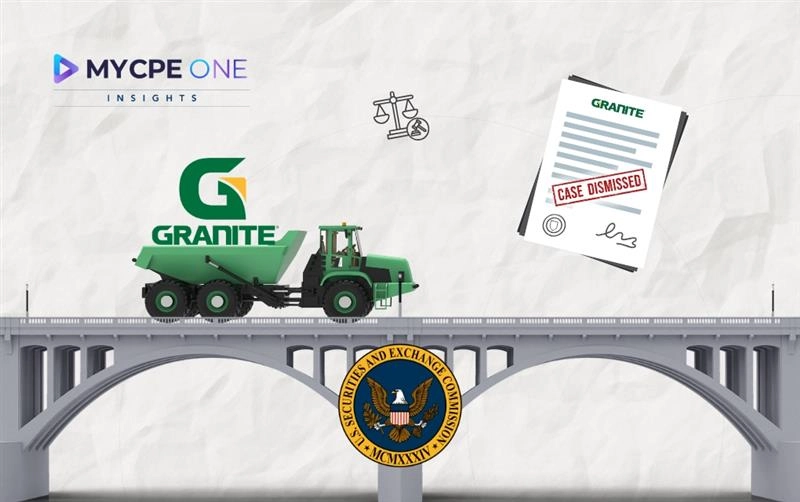
The SEC has abandoned its accounting fraud case against former executive Dale Swanberg, who was tied to major U.S. infrastructure projects, including New York's Kosciuszko Bridge. The SEC could not prove intent, highlighting the fine line between bad accounting outcomes and provable accounting fraud, especially in industries reliant on estimates, timelines, and judgement calls.
Sometimes the loudest SEC moments are the ones that end without a courtroom finale. The SEC’s quiet decision to walk away from its accounting fraud case against a senior executive tied to major U.S. infrastructure projects, including New York’s Kosciuszko Bridge, is one of those moments that makes finance professionals lean back and say, “Wait, what just happened?” On the surface, it looks like a regulator backing down. Dig deeper, and it is something more instructive. This case exposes how narrow the line is between bad accounting outcomes and provable accounting fraud, especially in industries built on estimates, timelines, and judgment calls.
At its core, this was not about fake revenues or hidden shell companies. It was about when losses should have been recognized, and whether delaying that recognition crossed from optimism into deception. The SEC thought it did. After years of discovery and narrowing evidence, it was ultimately decided that it could not prove intent. That distinction is everything.
Accounting fraud cases rarely begin with smoke; they start with estimates that slowly drift. The SEC sued former Granite Construction executive Dale Swanberg in 2022, alleging that he improperly deferred recognizing escalating project costs within the company’s Large Projects Group. These projects involved massive infrastructure builds, dams, bridges, and highways, with price tags in the billions. As costs mounted, the SEC argued losses should have been recognized sooner. Instead, they were allegedly delayed, smoothing reported results until Granite eventually restated multiple years of financial statements.
This is familiar territory for construction accounting. Percentage-of-completion models depend heavily on forecasts that evolve over time. When those forecasts go south, regulators often ask one blunt question: Did management know earlier and choose not to tell investors? Granite ultimately settled with the SEC, agreeing to pay $12 million over control and reporting failures. Swanberg refused to settle. His defense was straightforward. He was a builder, not an accountant. His forecasts were reviewed, approved, and audited. And his pay was not tied to stock price games. That set the stage for a showdown that never quite happened.
This is where things get real, and where accounting fraud cases live or die. As trial approached, the SEC told the court it had reassessed “the facts and circumstances of this case” and that the scope of evidence it intended to present had narrowed. That phrase matters. In enforcement speak, it signals a hard truth: proving accounting fraud requires more than showing estimates were wrong. To win, the SEC must demonstrate scienter, meaning the executive knowingly and intentionally misled investors. That usually requires smoking-gun emails, overridden controls, falsified documentation, or clear evidence someone said, “Let’s hide this.”
After three years of discovery, millions of documents, depositions, forensic reviews, and even access to outside auditors’ work papers, that proof was not there. Forecasts were debated, not concealed. Auditors were aware. Senior leadership approved the assumptions. Hindsight made the numbers look ugly, but courts do not convict based on hindsight. The SEC chose to dismiss the case with prejudice. Translation: this one is done for good.
If you work in accounting, audit, or finance, this is the takeaway you cannot ignore. Restatements attract regulators like moths to a porch light. But restatements are not proof of fraud. They are evidence that earlier judgments did not hold up over time. Courts care about what management knew at the time, not what became obvious later. This case reinforces a critical principle. Accounting fraud is about intent, not imperfection. Estimates can fail. Projects can implode. Costs can balloon. None of that is illegal by itself. What turns judgment into fraud is concealment, manipulation, and deliberate delay meant to mislead. The SEC walked away here because it could not convincingly draw that line. That is a big deal for preparers and auditors who live in gray zones every day.
Here is the part that should make audit committees sweat. While Swanberg cleared his name, Granite Construction still paid a penalty. This split outcome is becoming more common. Regulators can often prove control failures or disclosure weaknesses at the corporate level without being able to pin intent on a single executive. For boards and CFOs, the message is blunt. Weak controls cost money, even when no one goes to jail. The SEC does not need a villain to enforce discipline. Companies can settle to move on. Individuals may fight to protect their reputations. Both paths come with consequences. This is not leniency. It is an enforcement strategy.
Future accounting fraud cases are likely to be fewer, tighter, and harder to prove. The SEC is not retreating. It is recalibrating. Expect fewer gray-area cases built on hindsight and more focus on clear evidence of deception. For professionals, that raises the bar internally. Documentation is your armor. Transparent escalation is your shield. If estimates change, explain why. If losses emerge, record them. If assumptions are aggressive, defend them in real time, not after regulators knock. This case ultimately delivers a simple but powerful lesson. You do not need perfect numbers. You need defensible judgment that survives daylight.
Not every restatement is fraud. Not every bad outcome is a crime. But every accounting decision must be able to explain itself clearly, contemporaneously, and honestly. If this case proves anything, it is that when intent cannot be proven, enforcement stops. The smartest finance teams make sure it never starts.
Until next time…
Don’t forget to share this story on LinkedIn, X and Facebook
Subscribe now for $199 and get unlimited access to MYCPE ONE, from CPE credits to insights Magazine
📢MYCPE ONE Insights has a newsletter on LinkedIn as well! If you want the sharpest analysis of all accounting and finance news without the jargon, Insights is the place to be! Click Here to Join
You’ve reached the 3 free-content piece limit. Unlock unlimited access to all News & CPE resources.
Subscribe Today.
Already have an account?
Sign In