MYCPE ONE
MYCPE ONE LOGO

Join 250,000+
professionals today

Add Insights to your inbox - get the latest
professional news for free.

MYCPE ONE insights

BDO and the £80 Million Question on Audit Negligence

Join our 250K+ subscribers

Join our 250K+ subscribers

Subscribe

03 FEB 2026 / ACCOUNTING & TAXES

CPE Approved

BDO and the £80 Million Question on Audit Negligence

BDO and the £80 Million Question on Audit Negligence

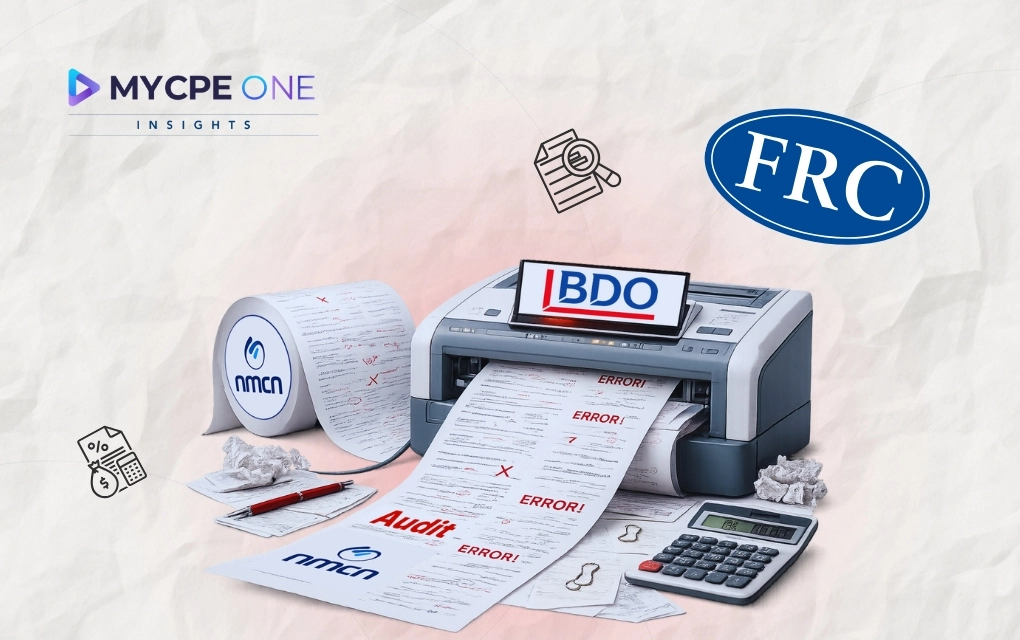
When an audit firm faces an £80 million negligence claim, it is rarely about one missed checklist item. It is about momentum, assumptions, and how professional skepticism slowly fades into comfort. Think less courtroom theatrics from A Few Good Men and more The Big Short, where warning signs were visible, documented, and still rationalised away. That is the backdrop to BDO’s escalating legal and regulatory troubles following the collapse of UK construction group NMCN, a case that shows how audit negligence is often uncovered only when the story is retold by administrators, regulators, and eventually the courts. 

How NMCN Went from Growth to Collapse 

NMCN, formerly North Midland Construction, entered administration in October 2021 after a rapid financial deterioration. This came just months after the company reported nearly £406 million in revenue and £7.7 million in pre-tax profits for the year ended December 2019, figures that had received clean audit opinions from BDO. 

The decline followed a familiar script seen in failures such as Carillion. Financial results were delayed, trading in the company’s shares was suspended, senior executives exited abruptly, and loss estimates escalated sharply. By mid-2021, projected losses for 2020 had ballooned to £43 million, and the accounts were never signed off. Once administrators stepped in, previously audited figures were no longer treated as settled fact, but as evidence to be re-examined. 

Grant Thornton, acting as administrator and later liquidator, identified more than £21 million of material misstatements in NMCN’s 2018 and 2019 accounts. These included overstated revenue, understated costs, and profits recognised on projects that were in fact loss-making. One cited example involved fees recorded before customer agreement, a judgment administrators argue should not have survived basic audit challenge. 

Why BDO Is Under Legal and Regulatory Fire 

Today, BDO is facing scrutiny on multiple fronts. NMCN’s administrators and liquidators have filed a negligence and breach of contract claim exceeding £80 million, alleging that BDO relied excessively on management assertions, failed to detect fake subcontractor invoices, and repeatedly downplayed internal control deficiencies. 

One allegation likely to receive intense scrutiny is that BDO prepared two versions of its 2019 audit opinion, one highlighting a material uncertainty over going concern and another providing a clean opinion. After management submitted revised cash flow forecasts described as significantly more optimistic, the clean opinion was signed. That decision trail will now be examined with the benefit of full audit files, emails, and draft reports. 

In parallel, the Financial Reporting Council has strongly criticised BDO’s audit quality. In its most recent inspection cycle, only 50 percent of BDO audits reviewed required no more than limited improvement, leaving the firm ranked the weakest performer among its peers. The regulator has placed BDO under close supervision and is investigating its audits of both NMCN and Home REIT, the latter now subject to a parallel Serious Fraud Office investigation. 

Key Pressure Points in the NMCN Case 

Area of Focus What Allegedly Failed Why It Matters 
Revenue recognition Fees booked before agreement High litigation risk in construction audits 
Going concern Reliance on optimistic forecasts Central to negligence claims 
Internal controls Deficiencies downplayed Weakens audit defence 
Documentation Draft opinions and emails Discoverable evidence in court 


How Audit Failures Are Exposed After the Fact 

Audit negligence is rarely identified during the audit itself. It typically surfaces after a triggering event, most often insolvency, changes who has both access and incentive to scrutinise the evidence. Administrators operate less like auditors and more like forensic historians, reconstructing events with statutory powers and hindsight. 

In the NMCN case, Grant Thornton compelled production of BDO’s audit files under the Insolvency Act, resulting in court orders and more than £230,000 in legal costs. Once files are produced, audit judgments are tested not on intent but on evidence. Courts and regulators focus on what was challenged, how contradictory information was resolved, and whether professional skepticism was clearly documented or merely assumed. 

Why Mid-Tier Audit Firms Face Higher Stakes 

BDO’s situation highlights the structural tension facing mid-tier audit firms. BDO has been the most successful challenger to the Big Four in winning public interest entity audits and now audits the third-largest number of such entities in the UK. 

That success brings complexity. Listed clients operate under aggressive timelines, rely heavily on estimates, and attract heightened regulatory scrutiny. Fee pressure remains intense, while inspection standards continue to rise. As the FRC has noted, there remains a measurable quality gap between the largest firms and other participants in the public interest entity market. Mid-tier firms are being encouraged to compete at a higher level without any reduction in refereeing standards. 

What This Case Signals for Professionals 

For audit professionals, the NMCN case reinforces that technical compliance alone does not insulate against negligence claims. Courts and regulators focus on judgment, challenge, and evidence. 

For engagement teams, the highest-risk areas remain familiar: 

  • Revenue recognition in long-term and project-based contracts 
  • Going concern assessments that hinge on optimistic forecasts 
  • Internal control deficiencies that are acknowledged but not escalated

For firms, the implications are broader: 

  • Quality management systems must translate into engagement-level behavior 
  • Growth strategies must account for litigation and inspection risk, not just market share 
  • Draft opinions, internal emails, and review notes should be written with the assumption they may one day be read by a regulator or a judge 
  • Audit quality is not tested in the year the opinion is signed. It is tested years later, under adverse conditions.

What Happens Next  

BDO has not yet filed a defense in the NMCN litigation, and proceedings remain stayed while investigations continue. The FRC’s probe into the 2019 audit remains open, with no public updates since it was announced. The outcome will likely influence how audit risk is priced and managed across the mid-tier market, particularly in construction and other estimate-heavy sectors. More broadly, it reinforces an uncomfortable truth familiar to readers of The Big Short or Bad Blood: audit failures are rarely about missing data. They are about how warning signs were interpreted, documented, and ultimately explained away long before anyone thought the story would end badly.

Click here to get your CPE Credit.

Until next time…

Don’t forget to share this story on LinkedIn, X and Facebook

Subscribe now for $199 and get unlimited access to MYCPE ONE, from CPE credits to insights Magazine

📢MYCPE ONE Insights has a newsletter on LinkedIn as well! If you want the sharpest analysis of all accounting and finance news without the jargon, Insights is the place to be! Click Here to Join

Unlock Annual Access to News & CPE Subscription

You’ve reached the 3 free-content piece limit. Unlock unlimited access to all News & CPE resources.
Subscribe Today.

News & Updates

  • Exclusive News & Insights
  • Latest Regulatory Updates
  • Accounting Industry Trends
  • Expert Insights
  • AI-Driven Audio & Summaries
  • Infographics & Videos
  • CPE-Approved Articles
  • Digital Magazine
  • Benchmarking Blogs

Unlimited CPE Access for 1 Year

  • 15,000+ Hours of Content
  • 500+ Subject Areas
  • Mandatory Ethics Courses
  • 250+ Compliance Packages
  • 50+ Virtual Conferences and Events Access
  • Format: Live, Audio, Video, E-Books
  • Audio Based Courses & Podcasts
  • Add External Certificates with AI
  • AI Compliance Tracking and Report
  • Instant Certification and Fast Reporting
  • Mobile App Access (iOS and Android)
  • Dedicated Support System
  • Practical Training Programs
  • AI Academy Access
  • Tax Academy Access
  • Audit Academy Access
  • Leadership Academy Access