MYCPE ONE
MYCPE ONE LOGO

Join 250,000+
professionals today

Add Insights to your inbox - get the latest
professional news for free.

MYCPE ONE insights

How 5K Suspicious Tax Returns Exposed $15M Fraud in Maryland

Join our 250K+ subscribers

Join our 250K+ subscribers

Subscribe

03 APR 2026 / ACCOUNTING & TAXES

How 5K Suspicious Tax Returns Exposed $15M Fraud in Maryland

How 5K Suspicious Tax Returns Exposed $15M Fraud in Maryland

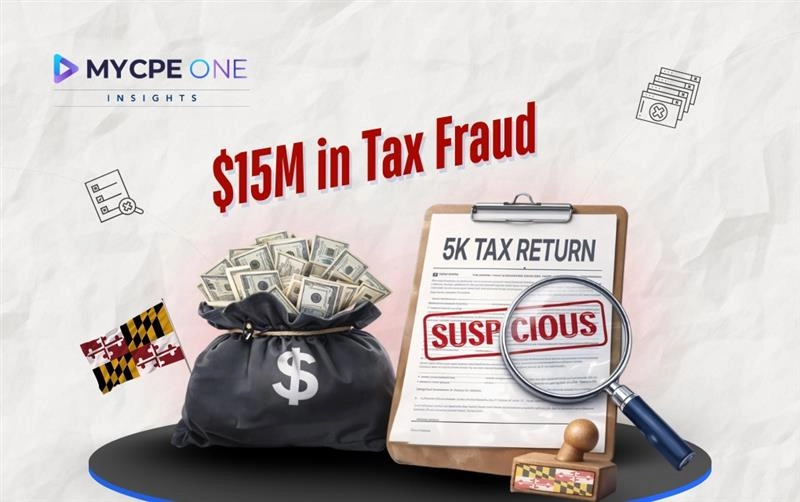
A taxpayer files early, expecting a smooth refund. Weeks later, a notice arrives asking them to verify their identity. Confusion sets in, they already filed, so what changed? In many cases, the answer is simple and unsettling: someone else filed first. It feels like a scene from Catch Me If You Can, but this is real. Maryland recently flagged over 5,000 suspicious returns and blocked more than $15 million in fraudulent refunds ahead of the April deadline. It may look like a win, but it points to something bigger, a fast-growing, tech-driven wave of tax fraud.

Fraud Over Time

Tax fraud in Maryland is not new. What has changed is its scale and sophistication. In 2017, multiple tax preparers were stopped due to suspicious filings. By 2020, nearly 20 preparers were barred, reflecting coordinated attempts to exploit refund systems. More recently, in January 2026, federal prosecutors charged individuals in a scheme spanning 2018 to 2024, involving fabricated dependents, inflated income, and misuse of credits like the Earned Income Tax Credit and education credits, with over $3.5 million in fraudulent refund claims. The pattern is consistent. Fraud evolves, but the strategy remains the same, exploit speed before verification catches up.

During the current filing season, Maryland flagged over 5,000 suspicious returns and prevented more than $15 million in fraudulent refunds from being issued. This reflects a shift toward analytics-based fraud detection, where systems identify anomalies in filing patterns, refund claims, and identity mismatches. Earlier warnings also included phishing attempts impersonating official communication, requesting sensitive data in exchange for promised refunds. The key shift is clear. Fraud is no longer limited to false filings. It now includes identity manipulation, phishing, and coordinated digital tactics.

How the Fraud Actually Works

This type of fraud is built around identity theft and timing, not traditional underreporting. Fraudsters obtain sensitive data such as Social Security numbers (SSN), names, and addresses, often through phishing or data breaches. They file returns early, claiming refunds before legitimate taxpayers act.

Because initial IRS checks rely heavily on name and SSN matching, these returns can pass early validation. Refunds are then directed to prepaid cards or controlled accounts, and quickly withdrawn. Victims typically discover the issue only after receiving notices or attempting to file. What is changing now is the role of artificial intelligence, which allows fraudsters to create more realistic filings, automate processes, and scale operations rapidly.

Understanding Trust Tax

While the Maryland case focuses on identity fraud, trust structures are often used in more complex schemes. In the U.S., trusts are treated as either separate taxable entities or pass-through structures, depending on their type.

Trust TypeKey RuleFiling RequirementDeadline
Grantor TrustIncome reported on individual returnNo separate filingWith Form 1040
Simple TrustMust distribute all incomeForm 1041 if $600+ incomeApril 15
Complex TrustCan retain or distribute incomeForm 1041April 15
Irrevocable TrustSeparate taxpayerForm 1041 requiredApril 15


Fraud involving trusts typically arises when entities are used without real economic activity to generate artificial deductions or refunds. The takeaway is straightforward. Structure alone does not validate a transaction. Substance always matters.

What Professionals Should Watch

For CPAs and tax professionals, this case reinforces several critical responsibilities, and the role is evolving beyond return preparation.

  • Firstly, client identity verification is essential. Using tools like IRS Identity Protection PINs and verifying personal data reduces fraud risk significantly.
  • Secondly, filing early is a key defensive strategy. It reduces the window available for fraudulent filings using stolen identities.
  • Thirdly, professionals must stay alert to phishing attempts, unusual refund activity, and suspicious documentation, reporting issues through IRS Form 3949-A or appropriate channels.
  • Fourthly, in cases involving trusts or entities, strict compliance with Form 1041 rules and deadlines is necessary to avoid penalties and scrutiny.
  • Finally, professionals are no longer just preparing returns. They are acting as a first line of defense in a system under increasing pressure from scale and complexity of fraud.

Where This Is Headed

Fraud is evolving fast, and detection systems are struggling to keep pace. Authorities are increasing the use of analytics, AI tools, and identity verification, while taxpayers face stricter checks. Programs like Identity Protection PINs and early filing are becoming essential safeguards. However, limited resources and high filing volumes mean not all fraud is caught in time. Blocking $15 million is significant, but it highlights a deeper issue, modern tax systems are faster and more exposed. For taxpayers, the priority is simple: protect data and file early. For professionals, accuracy is no longer enough. Proactive monitoring and verification are now critical in a system where fraud can happen before anyone notices.

Until next time…

Don’t forget to share this story on LinkedIn, X and Facebook

Subscribe now for $199 and get unlimited access to MYCPE ONE, from CPE credits to insights Magazine

📢MYCPE ONE Insights has a newsletter on LinkedIn as well! If you want the sharpest analysis of all accounting and finance news without the jargon, Insights is the place to be! Click Here to Join

Unlock Annual Access to News & CPE Subscription

You’ve reached the 3 free-content piece limit. Unlock unlimited access to all News & CPE resources.
Subscribe Today.

News & Updates

  • Exclusive News & Insights
  • Latest Regulatory Updates
  • Accounting Industry Trends
  • Expert Insights
  • AI-Driven Audio & Summaries
  • Infographics & Videos
  • CPE-Approved Articles
  • Digital Magazine
  • Benchmarking Blogs

Unlimited CPE Access for 1 Year

  • 15,000+ Hours of Content
  • 500+ Subject Areas
  • Mandatory Ethics Courses
  • 250+ Compliance Packages
  • 50+ Virtual Conferences and Events Access
  • Format: Live, Audio, Video, E-Books
  • Audio Based Courses & Podcasts
  • Add External Certificates with AI
  • AI Compliance Tracking and Report
  • Instant Certification and Fast Reporting
  • Mobile App Access (iOS and Android)
  • Dedicated Support System
  • Practical Training Programs
  • AI Academy Access
  • Tax Academy Access
  • Audit Academy Access
  • Leadership Academy Access