Join 250,000+
professionals today
Add Insights to your inbox - get the latest
professional news for free.
Join our 250K+ subscribers
Subscribe08 JAN 2026 / ACCOUNTING & TAXES
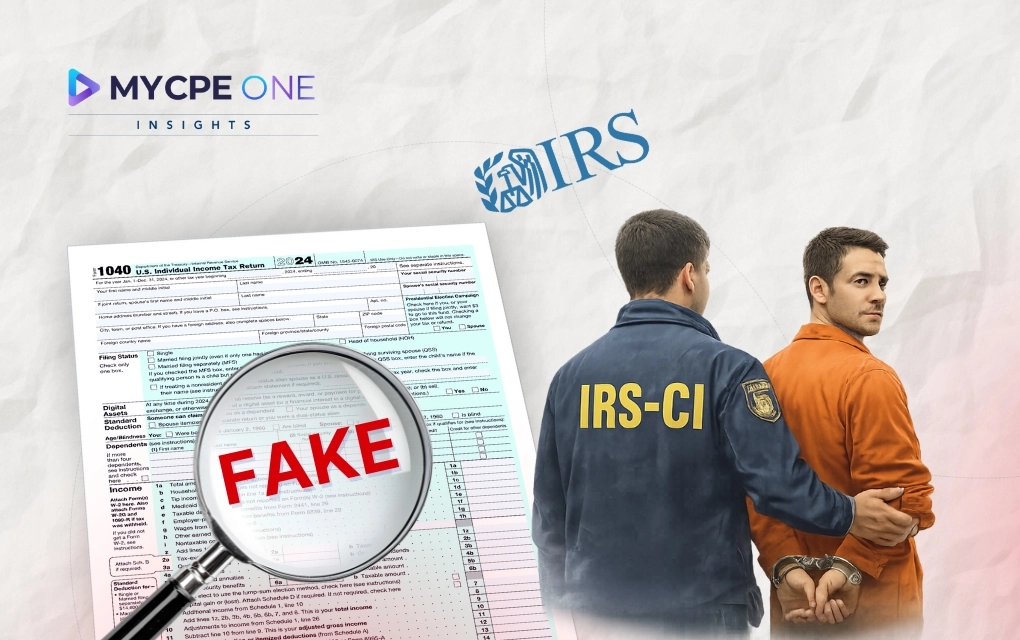
Federal prosecutors in Colorado have indicted Anthony Dattilo, 34, on charges of wire fraud, false claims against the government, and financial transactions involving proceeds tied to unlawful activity. The indictment alleges that Dattilo's fraudulent tax filings prompted the US Treasury to issue more than $3 million in refunds.
There is a line from The Godfather that tends to echo whenever federal prosecutors get involved: “It’s not personal, it’s strictly business.” In tax enforcement, that usually means someone crossed an invisible line, and the IRS decided it was time to stop asking questions quietly. In Colorado, a recent federal indictment is one of those moments where the paperwork stopped being routine and started attracting serious attention. At first glance, this looks like just another fraud case. Dig a little deeper, and it becomes a reminder of how refund claims, electronic filing, and fast moving money can collide in ways that leave taxpayers and professionals exposed.
Refund fraud has been around as long as refunds themselves. Most schemes follow familiar patterns: inflated withholding, invented income, or aggressive use of refundable credits that do not match real life. What tends to separate civil penalties from criminal cases is persistence and scale.
In this case, federal prosecutors allege a pattern of filings that triggered unusually large refunds from the U.S. Treasury. These were not one off submissions. They were structured in a way that passed initial filters and resulted in real money going out the door. As Catch Me If You Can put it, “People only know what you tell them.” When the story looks clean enough, systems can take it at face value, at least for a while. That while matters. Once refund amounts climb into seven figures, someone notices. When they do, IRS Criminal Investigation tends to step in, and the tone shifts fast.
While the indictment does not publicly detail every line item, cases like this tend to follow a familiar playbook. Large refunds usually rely on fabricated withholding, manipulated income figures, or refundable credits claimed at levels that do not align with real employment or business activity. When filings are internally consistent and electronically clean, they can bypass initial filters, especially if spread across multiple submissions.
What often triggers escalation is repetition. Multiple returns, similar data points, and refunds moving quickly once issued tend to light up IRS systems. When funds are transferred, spent, or repositioned soon after hitting bank accounts, that activity becomes part of the case. At that point, the focus shifts from the return itself to the money trail, and that is where criminal charges often take shape.
Federal court filings identify Anthony Dattilo, 34, of Littleton, as the defendant in a case brought by the U.S. Attorney’s Office for the District of Colorado. A federal grand jury returned an indictment alleging wire fraud, false claims against the government, and financial transactions involving proceeds tied to unlawful activity. The government says the alleged conduct led to more than $3 million in refunds being issued. Dattilo is presumed innocent, and the charges remain allegations at this stage. The investigation was conducted by IRS Criminal Investigation, with Assistant U.S. Attorney Tim Neff handling the prosecution.
For practitioners, the most telling detail is not the list of charges, but timing. The refunds were allegedly paid before the scheme was shut down. That reinforces a reality many firms already recognize. Filters and analytics are strong, but they are not foolproof. When filings are consistent, electronically clean, and backed by a story that holds together on paper, they can move through the system longer than anyone would like before scrutiny finally kicks in.
This case is not just about one filer. It reflects how the IRS is thinking about refund integrity right now. Large refunds already attract attention. Large refunds that repeat attract questions. When those refunds move quickly into spending territory, they start pulling criminal scrutiny along with them. The pattern matters as much as the numbers.
It also underscores preparer risk, even when no preparer is named in the indictment. In fraud cases, the government almost always works backward, asking who prepared the returns, who reviewed them, and what questions were raised along the way. Due diligence is not just about checking boxes. It is about judgment that holds up when IRS Criminal Investigation starts following the money.
Most cases like this resolve through plea agreements once the financial records are laid out. Wire fraud combined with multimillion dollar refund claims carries serious exposure under federal sentencing guidelines. Trials happen, but they are uphill battles when the paper trail is clean.
For firms and advisors, the takeaway is practical. When a client insists on a refund that feels too good to be true, slow down. Ask for support. Document the conversation. If something does not smell right, it probably is not. Or, to borrow from Jerry Maguire, “Show me the money.” In tax practice, the unspoken follow up is always, “And show me the proof.”
Cases like this tend to fade from headlines once court dates start piling up, but their impact lingers. Each high dollar refund fraud indictment reinforces the IRS focus on electronic filings, repeat refund patterns, and how quickly money moves once refunds hit bank accounts. For professionals in the trenches, the lesson is not fear, it is discipline. Filing season already asks a lot. Tight timelines, impatient clients, and complex rules come with the job. This case is a reminder that slowing down at the right moment can save years of trouble later. When the numbers stop making sense, trust that instinct. The IRS usually does, even if it takes a while to show its hand.
Until next time…
Don’t forget to share this story on LinkedIn, X and Facebook
Subscribe now for $199 and get unlimited access to MYCPE ONE, from CPE credits to insights Magazine
📢MYCPE ONE Insights has a newsletter on LinkedIn as well! If you want the sharpest analysis of all accounting and finance news without the jargon, Insights is the place to be! Click Here to Join
You’ve reached the 3 free-content piece limit. Unlock unlimited access to all News & CPE resources.
Subscribe Today.
Already have an account?
Sign In