Join 250,000+
professionals today
Add Insights to your inbox - get the latest
professional news for free.
Join our 250K+ subscribers
Subscribe29 SEP 2025 / ACCOUNTING & TAXES
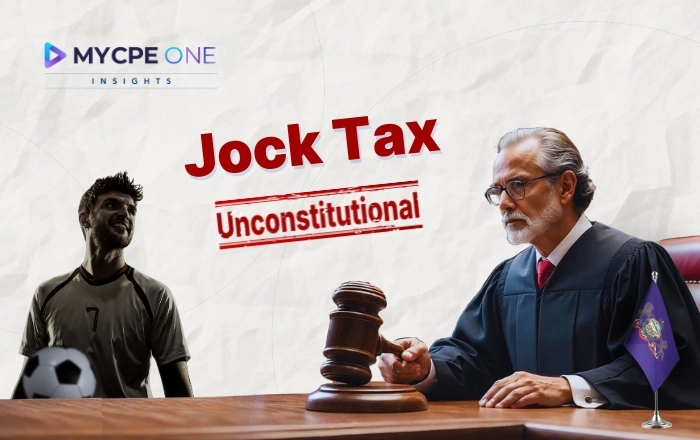
The Pennsylvania Supreme Court has ruled the 3% "jock tax" charged to visiting athletes and entertainers in Pittsburgh unconstitutional. This decision follows a legal challenge from former athletes and sports associations, with the court agreeing that the tax violated the state's Uniformity Clause. The ruling eliminates a significant revenue stream for the city, could prompt refunds estimated in the tens of millions for past payments, sets a precedent that may affect other US cities, and forces Pittsburgh to seek alternative revenues or risk financial tightening.
Imagine you’re suiting up at Acrisure Stadium, PNC Park, or PPG Paints Arena, ready to put on a show for Pittsburgh fans. Then, boom, you’re hit with an extra 3% tax bill just because you’re not a local. For nearly two decades, that’s the “rough deal” visiting athletes and entertainers faced under Pittsburgh’s infamous jock tax. But as of September 25, 2025, that play got shut down. The Pennsylvania Supreme Court ruled the tax unconstitutional, sending ripple effects through city hall, pro sports leagues, and accountants’ spreadsheets alike.
The jock tax wasn’t some quirky Pittsburgh invention. Across the U.S., cities have long sought to capitalise on high-paid athletes and performers who rake in millions on their turf. In Pittsburgh, the math was simple: nonresident pros paid a 3% hit on income earned at the city’s big three stadiums, while residents paid 1% city income tax plus 2% school district tax. City leaders argued that this added up to “rough uniformity.” Translation: locals and nonlocals both ended up near the 3% mark, so it was “all square.” But here’s the kicker, nonresidents don’t pay school district tax, so in reality, outsiders were footing a steeper bill.
By 2019, patience wore thin. Former Penguin Scott Wilson, Islander Kyle Palmieri, and MLB vet Jeff Francoeur sued, backed by the heavyweights of labor, the NFL, NHL, and MLB players’ associations. Their claim? The tax violated Pennsylvania’s Uniformity Clause, which requires taxes to treat everyone in the same category equally. Attorney Ryan McManus effectively argued in court that the city “tries to manufacture uniformity” by citing the 2% school tax, but legally, nonresidents are exempt from paying that. In other words, Pittsburgh was cooking the books to make the numbers appear fair.
The state’s highest court saw right through it. In a 14-page opinion, Justice David Wecht wrote the city “failed to provide concrete reasons” for charging outsiders more. The ruling was unanimous, even if the judges had slightly different legal reasoning. From now on, visiting professionals and performers will only owe the 1% city income tax. That’s a clean break from years of being stuck with a bigger tab simply for being “out-of-towners.”
Let’s talk dollars and cents. Since 2005, Pittsburgh has banked $79 million from the jock tax. In 2025 alone, the city was expected to receive around $6 million. Now, that revenue stream just dried up. Deputy Mayor Jake Pawlak tried to soften the blow, saying it’s “$4 million out of a $700 million budget, it’s not a major change.” Still, in a city with already tight margins, that’s no small potatoes. City Controller Rachael Heisler was more blunt, warning the loss shows why Pittsburgh needs to “focus on cost containment” and chase new revenue sources.
On the other hand, athletes and performers have just scored a huge win. Not only will future paychecks be lighter on tax deductions, but past payments, worth tens of millions, could also be eligible for refunds. As attorney Stephen Kidder, who’s fought and won similar cases in Cleveland, Illinois, and Tennessee, put it: “We look forward to completing the process of securing refunds for the many professional athletes who have been forced to pay this unconstitutional tax.” This isn’t just about Pittsburgh. Cities across the U.S. lean on jock taxes to pad their budgets, especially when hosting marquee teams and events. The ruling puts them on notice: if your tax system isn’t airtight under the Constitution, it won’t hold. It also blows up the idea that you can balance resident and nonresident tax burdens by pointing to different levies. Courts want actual uniformity, not accounting gymnastics.
For Pittsburgh, the options aren’t pretty. The city may need to tighten its budget, reevaluate spending, or explore alternative revenue streams. Mayor Ed Gainey’s office has already warned that the ruling shifts more of the cost burden for city services onto residents. Budget talks next week could even float new tax hikes. For athletes and entertainers, though, this ruling sets a precedent: no more “visitor surcharges” dressed up as fairness. That’s not just a legal victory, it’s a financial one, and a big sigh of relief for players’ unions that have fought this fight nationwide.
Pittsburgh’s jock tax is officially riding the bench. The case serves as a reminder that while cities need funding, they cannot compromise on constitutional fairness. For financial pros, it’s a case study in how municipal revenue strategies can collide head-on with taxpayer rights. For athletes, it’s proof that standing your ground against unfair levies can pay off, literally. The ball’s now in Pittsburgh’s court: either play smarter with budgets or risk more legal smackdowns.
Until next time…
Don’t forget to share this story on LinkedIn, X and Facebook
Subscribe now for $199 and get unlimited access to MYCPE ONE, from CPE credits to insights Magazine
📢MYCPE ONE Insights has a newsletter on LinkedIn as well! If you want the sharpest analysis of all accounting and finance news without the jargon, Insights is the place to be! Click Here to Join
Unlimited CPE for Just $199/Year!
Get CPE credits by reading or listening to approved content. Enjoy unlimited CPE for CPA (US), EA, CMA, CIA, CFE, SHRM, HRCI, and 100+ other designations-all for just $199 per year! (Learn More)
Team Subscriptions Available – Starting at Just $199/Year!
Schedule a no-obligation callYou’ve reached the 3 free-content piece limit. Unlock unlimited access to all News & CPE resources.
Subscribe Today.
Already have an account?
Sign In