Join 250,000+
professionals today
Add Insights to your inbox - get the latest
professional news for free.
Join our 250K+ subscribers
Subscribe24 OCT 2025 / ACCOUNTING & TAXES
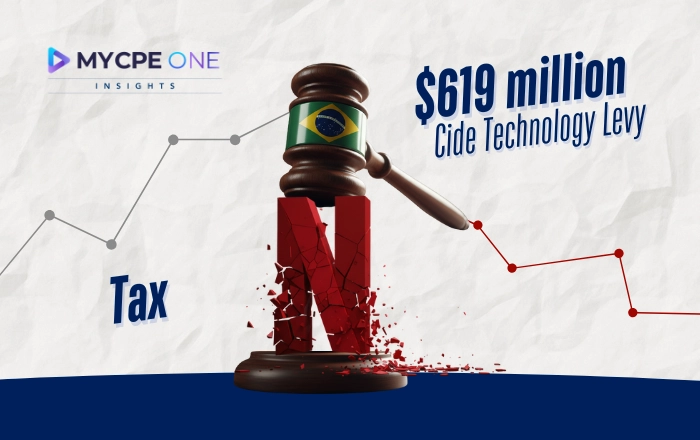
Netflix's stocks experienced a steep drop following a tax dispute in Brazil that led to a larger than expected charge of $619 million on the streaming titan's quarterly report. The situation comes amidst concerns about growth sustainability going into 2026, but Netflix assures investors that the tax setback is a one-time hit and they continue to explore strategic opportunities in advertising, gaming, and potential acquisitions.
Netflix just learned that not all cliffhangers are scripted. The streaming giant’s stock took a wild dive this week, its steepest drop in months. After a surprise twist buried deep in its quarterly report left investors grabbing popcorn for all the wrong reasons. The culprit? Let’s just say Brazil wasn’t handing out five-star reviews. Operating income tumbled to $3.24 billion for the September quarter, about $400 million short of expectations, and while sales of $11.5 billion looked solid on paper, the fine print told a messier story. Investors had been bracing for a blockbuster but instead got a tax subplot that knocked Netflix’s earnings per share down to $5.87. The company insists it’s a one-time hit, but the market’s reaction said otherwise. So, what went wrong? Let’s rewind a bit.
Turns out, Netflix’s hit list isn’t just full of shows, it now includes a tax dispute from Brazil that’s been brewing since 2022. The controversy centers around a national levy called CIDE-Tecnologia, a 10% tax on cross-border payments for technology or services. Here’s the twist: in 2022, Netflix had actually won a lower court ruling saying it wasn’t subject to the tax. But in August 2025, Brazil’s Supreme Court flipped the script, ruling that the tax applies broadly, even to payments that don’t involve technology transfers.
In Netflix’s case, the issue involves payments made by its Brazilian arm to its U.S. headquarters for services that keep those “Next Episode” buttons running smoothly. After the Supreme Court ruling, Netflix reassessed the situation and decided the loss was “probable.” Cue the $619 million charge. CFO Spencer Neumann told investors that the impact was “a one-time provision covering 2022 to 2025” and emphasized that it’s “not specific to Netflix” or even to streaming. Translation: other tech and media firms doing business in Brazil might soon get their own tax wake-up call.
Source: Company Report
Ironically, this all came after a blockbuster content quarter. Netflix dropped KPop Demon Hunters, which became its most-watched movie ever, followed by the second season of Wednesday and a sequel to Happy Gilmore. It even pulled in massive engagement with a Canelo Alvarez vs. Terence Crawford boxing match. Investors had been expecting Netflix to crush it again, especially after the stock hit an all-time high of $1,341.15 on June 30. But by October, reality bit. The tax provision shaved roughly 3.5 percentage points off the operating margin, dropping it from the projected 31.5% to 28%. Still, management tried to reassure investors. “Absent this expense, we would have exceeded our operating income and margin forecast,” Neumann said. The company also noted that future payments related to the dispute will be much smaller and that the tax hit won’t materially impact results going forward. That’s the corporate equivalent of saying, “Yeah, it stung; but we’ll walk it off.”
Wall Street’s reaction? Let’s just say: zero chill. After a 360% stock run over three years; leaving Disney, Apple, and Alphabet in the rearview, Netflix’s surprise tax twist had investors reaching for the remote. The mood turned fast, and at least three brokerages lowered their price targets.
Here’s how the Street summed it up:
The bigger issue for investors isn’t just Brazil. Netflix stopped reporting subscriber numbers earlier this year, leaving analysts squinting at engagement metrics and free cash flow instead. And while free cash flow hit a solid $2.66 billion, the company’s forward P/E ratio near 40 has traders wondering if the valuation’s gotten a bit too spicy.
Despite the stumble, Netflix isn’t exactly down for the count. The company expects $9 billion in free cash flow for the full year, giving it plenty of dry powder for share buybacks, content investments, and potential acquisitions. CEO Ted Sarandos told investors the company is eyeing “strategic opportunities,” including assets owned by Warner Bros. Discovery, but added that Netflix doesn’t “need any deal to achieve our goals.” Or as he put it, “We can and will be choosy.”
Meanwhile, Netflix is doubling down on advertising and gaming, hoping to expand revenue beyond subscriptions. It also has a stacked lineup for the year-end, featuring the final season of Stranger Things, a Knives Out sequel, and new films from Guillermo del Toro and Kathryn Bigelow. Not a bad way to bounce back. But can a slate of crowd-pleasers outweigh tax headaches and valuation jitters? Time will tell. After all, as Warren Buffett once said, “You only find out who’s been swimming naked when the tide goes out.” And for now, Netflix is still in the water, just holding onto a slightly smaller towel.
The Brazil tax debacle might’ve blindsided Netflix, but it’s hardly a sign of doom. The company remains a cash-generating machine with over 300 million global customers, a killer content pipeline, and enviable margins even after the hit. Still, the whole saga is a reminder that even streaming kings aren’t immune to international tax quirks. As global governments tighten fiscal rules, these cross-border disputes could become more common. So, what’s next? Expect Netflix to tighten its global compliance game, stay choosy on acquisitions, and keep milking its IP library like a pro. Investors might be jittery now, but if those Christmas Day NFL streams and Stranger Things finale deliver, the stock could be right back to binging on gains. Because let’s be real, Netflix has survived password crackdowns, Hollywood strikes, and plenty of skeptical analysts. A Brazilian tax bill? Just another episode in the world’s most-watched corporate drama.
Until next time…
Don’t forget to share this story on LinkedIn, X and Facebook
Subscribe now for $199 and get unlimited access to MYCPE ONE, from CPE credits to insights Magazine
📢MYCPE ONE Insights has a newsletter on LinkedIn as well! If you want the sharpest analysis of all accounting and finance news without the jargon, Insights is the place to be! Click Here to Join
Earn CPE Credits by Simply Reading Articles – Starting at Just $199/Year!
50 of the Top 200 Accounting Firms trust MYCPE ONE for their team’s learning—why not you? With 15,000+ approved content hours, 500+ emerging subject areas, and automated compliance tracking, staying ahead has never been easier.
We don’t just create boring tax, accounting, and audit content—our platform offers engaging, insightful, and trending material that your team will actually enjoy while earning CPE credits.
Sign up today, go through the comprehensive list of features and unlock unlimited learning!
You’ve reached the 3 free-content piece limit. Unlock unlimited access to all News & CPE resources.
Subscribe Today.
Already have an account?
Sign In