Join 250,000+
professionals today
Add Insights to your inbox - get the latest
professional news for free.
Join our 250K+ subscribers
Subscribe25 MAR 2026 / BUSINESS
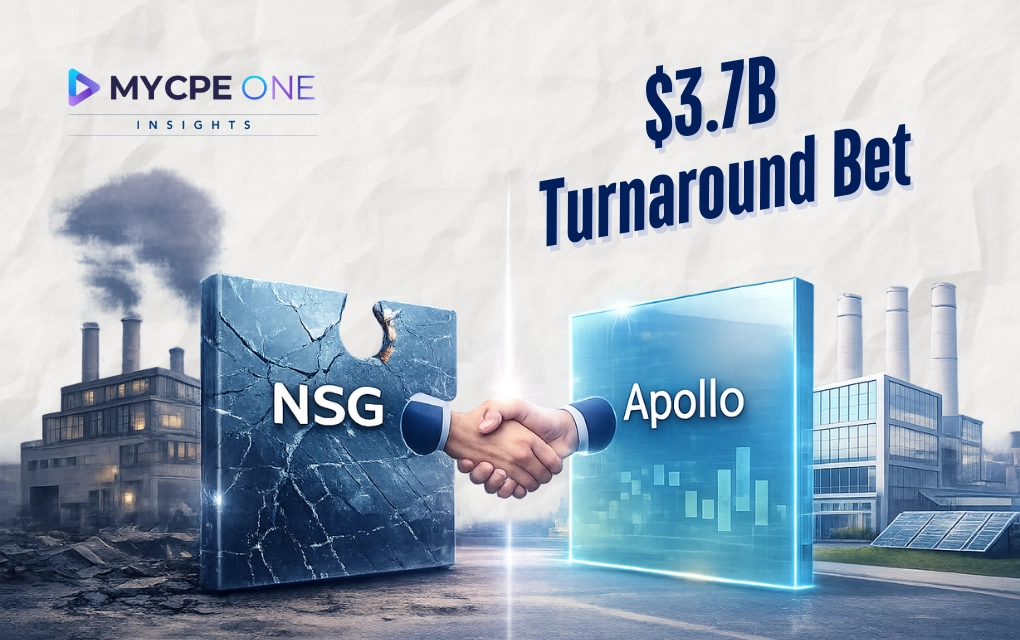
Apollo Global Management has made a $3.7 billion investment in Nippon Sheet Glass (NSG), aiming to reposition the beleaguered Japanese glassmaker for long-term growth. The partnership will address NSG's financial strain due to its 2006 purchase of British glassmaker Pilkington, including substantial debt, diminished demand following the 2008 financial crisis, and competition from Chinese glass producers.
If corporate acquisitions came with warning labels, Nippon Sheet Glass’s 2006 purchase of Pilkington would have read: Handle with extreme caution. Nearly two decades later, the consequences of that deal are still unfolding. Now, Apollo Global Management is stepping in with a $3.7 billion investment to reset the Japanese glassmaker’s balance sheet and reposition it for long-term growth. For accounting and finance professionals, this development is more than deal news. It’s a real-time lesson in leverage, timing, and the evolving role of private equity in corporate turnarounds.
Let’s start with the elephant in the room: the Pilkington acquisition. In 2006, NSG paid about £2.2 billion for the 200-year-old British glassmaker Pilkington. The logic was strategic scale: expand beyond Japan, absorb a global footprint, and play in architectural, automotive, and specialty glass. On paper, it looked like a classic globalization move. Except that several things went wrong, and many would say they went wrong in predictable ways from a risk-management perspective.
NSG itself admitted that profitability and balance sheet repair through “internal efforts alone” would take considerable time, with no clear visibility of success. That’s the core reason the Pilkington acquisition did not yield strong results: strategy unaligned with financing realities and market cycles, plus insufficient cushion for macro stress.
Despite those structural headwinds, NSG’s top line did not collapse. Over the past four fiscal years (ending March 31):
Growth accelerated in FY2023 and FY2024 due to post-pandemic recovery and rising demand in the automotive and renewable energy sectors. However, momentum slowed in FY2025 amid inflationary pressures and weaker construction activity. For finance professionals, this reflects a familiar pattern: stable revenue performance constrained by high leverage and cost pressures. NSG’s core operations remain viable, but its capital structure has limited profitability and strategic investment capacity, setting the stage for Apollo’s intervention.
Enter Apollo Global Management. The firm has agreed with NSG’s principal lenders to inject equity and convert about ¥140 billion (~$880 million) of debt into equity. NSG will also issue new shares equal to roughly ¥165 billion (~$1.0 billion) to Apollo. The upshot is a balance sheet reset: equity support replaces part of the leverage that drove cost of capital to burdensome levels. For practitioners tracking private equity flows and international deals, this marks Apollo’s largest investment in Japan to date, following earlier deals such as Panasonic Automotive Systems and Mitsubishi Chemical’s fiber business.
But why now? Four practical drivers:
Apollo’s strategy isn’t just balance sheet engineering. Practitioners will recognize common themes from successful restructurings:
Apollo’s investment in NSG is part of a broader shift in global capital flows toward Japan. Berkshire Hathaway’s recent $1.8 billion investment in Tokio Marine Holdings highlights this trend. Several structural factors explain Japan’s rising appeal:
NSG’s struggles were not a mystery. High leverage, cyclical markets, and execution gaps defined two decades of underperformance after Pilkington. Apollo’s investment isn’t a hopeful bet. It’s a calculated reset: a cleaner balance sheet, renewed strategic focus, and a multi-year runway that aligns financial engineering with market realities. For professionals who live in the details of cash flows, leverage, and strategic capital allocation, this deal offers a live case study of how complex global manufacturing can be repositioned when capital, strategy, and execution finally align.
Until next time…
Don’t forget to share this story on LinkedIn, X and Facebook
Subscribe now for $199 and get unlimited access to MYCPE ONE, from CPE credits to insights Magazine
📢MYCPE ONE Insights has a newsletter on LinkedIn as well! If you want the sharpest analysis of all accounting and finance news without the jargon, Insights is the place to be! Click Here to Join
You’ve reached the 3 free-content piece limit. Unlock unlimited access to all News & CPE resources.
Subscribe Today.
Already have an account?
Sign In