Join 250,000+
professionals today
Add Insights to your inbox - get the latest
professional news for free.
Join our 250K+ subscribers
Subscribe25 NOV 2025 / BUSINESS
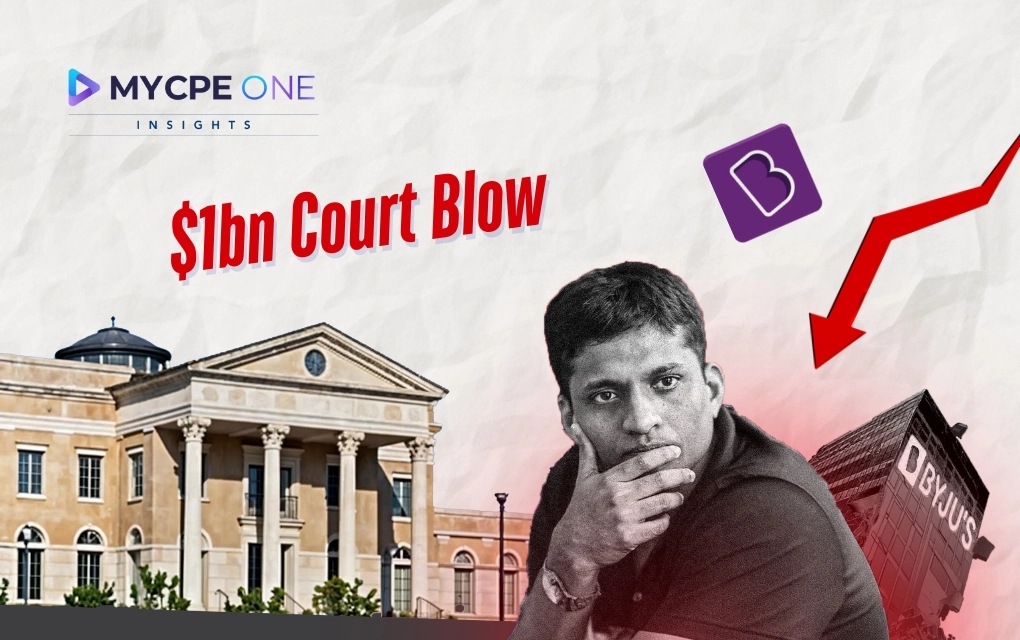
Byju Raveendran has been ordered by the US Bankruptcy Court to pay over $1 billion following financial mismanagement and allegations of fraudulent transfer of $533 billion, leading to one of the most dramatic corporate declines. This case, involving missed deadlines and negligence such as delayed audits and filings, rapid and poorly integrated acquisition and general disregard for regulations, highlights the importance of governance and financial discipline in maintaining a sustainable company.
A billion-dollar judgment isn’t just a legal bill. It’s a public autopsy of a system that cracked long before the court stepped in. The US Bankruptcy Court’s decision ordering Byju Raveendran to personally cough up more than $1 billion reads like the final act of a company that went from pandemic-era glory to full-blown governance disaster. And for professionals across accounting, audit, tax, and finance, this saga isn’t just another corporate downfall. It’s a front row seat to what happens when hype tries to outrun controls, documentation, and basic financial discipline.
When a founder doesn’t show up in court, lenders don’t just get annoyed; they take the wheel. The billion-dollar ruling wasn’t a dramatic courtroom showdown; it was a default judgment. The court entered the order after Raveendran repeatedly blew off discovery deadlines, skipped hearings, and ignored a $10,000-a-day contempt penalty that has ballooned into hundreds of thousands of dollars. The judge called the situation “extraordinary,” “unique,” and unlike anything he had seen.” That’s courtroom-speak for this is wild.
This wasn’t about a simple late filing. Lenders alleged that $533 million from a $1.2 billion Term Loan B mysteriously exited the US through a web of transfers, moving first to a tiny Miami hedge fund that once listed its address at a pancake chain, and then offshore via a UK entity. In February, a US court ruled that this chain qualified as a “fraudulent transfer.”Once Raveendran didn’t appear to explain the missing money, lenders walked away with a global, enforceable claim worth $1.07 billion. Silence is expensive.
At its peak, Byju’s flexed a $22 billion valuation and snapped up companies faster than its finance team could consolidate them. Aakash, WhiteHat Jr, Epic, Great Learning, the list read like a shopping spree. But the back office was running on fumes. Missed audits. Delayed filings. Unverified revenue from multi-year programs. Refund requests that didn’t match recognized revenue. Auditors waved red flags. Deloitte resigned. Independent directors quit. Investors wrote down their stakes. Soon the cracks became impossible to plaster over.
Then came the salary delays, the email blaming an “artificially induced crisis,” and the founder pledging his only home to keep payroll alive. In the US, Byju’s Alpha Inc. filed for bankruptcy because it didn’t have funds to defend ongoing litigation. And the valuation? Byju’s is now raising money at a post-money valuation of $225–250 million, a stunning 99% crash from its peak. That’s not a dip; that’s a nosedive. Meanwhile, investors have called for an EGM to remove Raveendran entirely, marking one of the most dramatic reversals of founder power in Indian startup history.
The future isn’t just uncertain; it’s messy, global, and nowhere near over. Here’s what’s coming:
Here’s the blunt breakdown, no sugarcoating:
Byju’s isn’t just startup gossip, it’s a live case study:
Byju’s once represented what digital learning could become. Today, it represents the cost of ambition that outgrew its guardrails. The $1 billion+ ruling isn’t the beginning of the end; it’s the legal translation of years of delayed audits, shaky revenue recognition, aggressive borrowing, global fund movement, and leadership decisions that ignored both accountants and courts. For every financial professional reading this, the takeaway couldn’t be clearer: Growth is optional. Controls are not.
Until next time…
Don’t forget to share this story on LinkedIn, X and Facebook
Subscribe now for $199 and get unlimited access to MYCPE ONE, from CPE credits to insights Magazine
📢MYCPE ONE Insights has a newsletter on LinkedIn as well! If you want the sharpest analysis of all accounting and finance news without the jargon, Insights is the place to be! Click Here to Join
Unlimited CPE for Just $199/Year!
Get CPE credits by reading or listening to approved content. Enjoy unlimited CPE for CPA (US), EA, CMA, CIA, CFE, SHRM, HRCI, and 100+ other designations—all for just $199 per year! (Learn More)
Team Subscriptions Available – Starting at Just $199/Year!
Schedule a no-obligation callYou’ve reached the 3 free-content piece limit. Unlock unlimited access to all News & CPE resources.
Subscribe Today.
Already have an account?
Sign In