Join 250,000+
professionals today
Add Insights to your inbox - get the latest
professional news for free.
Join our 250K+ subscribers
Subscribe28 NOV 2025 / BUSINESS
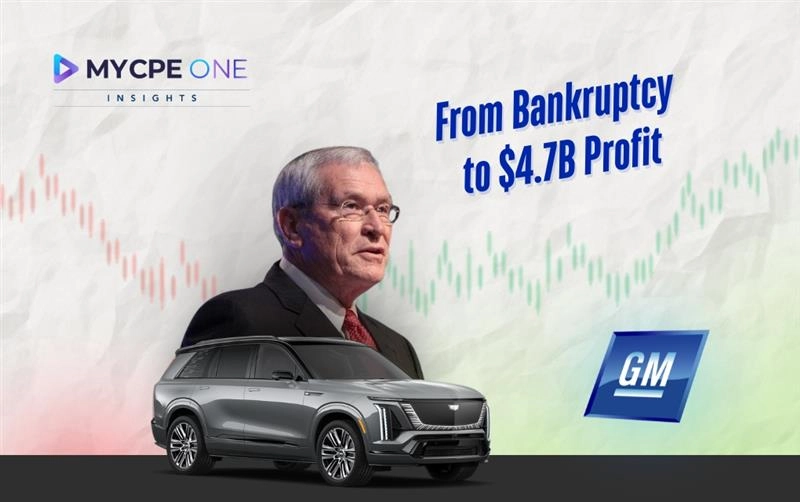
Ed Whitacre, a former AT&T executive, led a financial recovery of General Motors in 2009, despite the automobile company's $85 billion debt and daily losses of $85 million. Amid a lack of clarity in leadership, Whitacre implemented cost-saving strategies such as discontinuing brands and implementing a two-tier wage system, leading to GM reporting a $4.7 billion profit in 2010, just 18 months post-bankruptcy, and the launch of a $20.1 billion IPO.
Let’s start with this: imagine being asked to fix a sinking ship, except it’s on fire, full of debt, and built by a committee that no one can identify. That was General Motors in 2009. Enter Ed Whitacre, the Texan who’d just retired from AT&T, didn’t know a carburetor from a catalytic converter, and walked into Detroit like a man sent to reboot a mainframe, not rebuild an automaker. He didn’t bring a flashy turnaround slogan or PowerPoint deck. He brought something rarer: common sense.
By the summer of 2009, GM was losing $85 million a day and drowning in $85 billion of unfunded pensions. American taxpayers had fronted $50 billion to keep the lights on, buying 60% ownership of the company. For perspective: that’s like buying a house that’s already half on fire and hoping a telecom executive can teach it how to stop smoking. The company had filed for Chapter 11 on June 1, 2009, marking the largest industrial bankruptcy in U.S. history. Bureaucracy was the real boss. To redesign a cupholder required 47 slides and a conference call that could outlast a Senate hearing. As one analyst quipped at the time: “GM isn’t a car company. It’s a pension fund that happens to make cars.” So, what’s the phone guy supposed to do with that?
When Whitacre arrived in Detroit, he met GM’s then-CEO, Fritz Henderson, who could quote production figures like an auctioneer. But when Ed asked for an org chart, Fritz didn’t have one. “It’s all in my head,” he said. That was red flag number one. Red flag number two? Fritz had 20 direct reports, all of whom apparently reported to each other, too. Meetings looked more like family reunions than strategy sessions. Whitacre’s telecom instincts kicked in. “If you can’t tell me who does what,” he later wrote, “you probably don’t know what anyone’s doing.” Within months, he replaced 70% of senior leadership. The old guard called it chaos. The board called it survival.
GM had become addicted to slide decks, the corporate equivalent of comfort food. Every idea, no matter how trivial, came dressed in animation and pie charts. Whitacre banned PowerPoint altogether. “If you can’t explain it in five minutes,” he told his team, “You don’t understand it.” The change was instant. Three-hour meetings dropped to thirty minutes. Executives who hid behind slides were suddenly exposed to daylight, and questions. Millions were saved in wasted time and bad decisions.
Accountants everywhere could relate: fewer slides, cleaner ledgers.
GM had eight overlapping brands; Pontiac, Saturn, Hummer, Saab, Buick, Chevy, Cadillac, GMC, each with its own dealers, marketing budgets, and corporate fiefdoms. Whitacre pulled a move straight out of private equity playbooks: he killed the weaklings. Pontiac, Saturn, Hummer, and Saab were shut down. That decision alone saved $2 billion annually in brand overhead. He wasn’t sentimental. “We’re not here to debate horsepower,” he told his team. “We’re here to win.”
Out of 47 U.S. manufacturing plants, many were running at just 60% capacity. Whitacre closed 14, shifted production to stronger sites, and boosted efficiency above 85% utilization. That’s lean operations in plain English. Lower fixed costs, better asset turnover, and fewer headaches for the cost accountants who had been watching depreciation eat their souls.
The toughest fix came under the hood of GM’s labor structure. Whitacre negotiated a two-tier wage system:
Painful? Absolutely. But it worked. GM’s total labor cost per hour dropped from $70 to under $50, restoring competitiveness with foreign automakers. Roughly 47,000 jobs were cut, but GM went from “government motors” to “good margins” in record time.
By 2010, just 18 months post-bankruptcy, GM posted a $4.7 billion profit, its first since 2004. That same year, it launched a $20.1 billion IPO, then the largest in history. The U.S. Treasury recovered about $39 billion of its $50 billion investment. In short: taxpayers didn’t get every dollar back, but they did get a living, breathing GM instead of a liquidation sale. As one board member said afterward, “We didn’t just dodge the bullet. We rebuilt the gun.”
Here’s the quiet brilliance of Whitacre’s strategy: he didn’t pretend to be an auto guy. He focused on structure, accountability, and speed, things you can audit. When he took the CEO role (temporarily, he swore), he didn’t start designing sedans. He started rebuilding reporting lines, demanding shorter decks, and forcing managers to explain decisions in plain English. Whitacre once said in an interview, “GM didn’t need more vision. It needed more action.” You can almost hear the collective nodding from finance departments everywhere.
GM’s resurrection wasn’t magic; it was math. Here’s what Whitacre’s financial triage looked like:
In accounting terms, Whitacre converted a distressed asset into a going concern, without a single “synergy” slide.
By 2014, Whitacre had stepped aside, and GM handed the keys to Mary Barra, a 33-year veteran and the first woman to run a major automaker. Barra wasn’t just maintaining the machine. She was reengineering it for the electric age with the Ultium platform, GM’s bid to power everything from a Silverado to a Cadillac SUV on one modular EV battery system. By 2025, GM expects to sell over a million EVs annually, many on Ultium. From a bailout to a billion-dollar battery plan, that’s a full fiscal circle.
Whitacre’s legacy wasn’t in horsepower or design. It was in culture, a stubborn insistence that numbers should make sense and meetings should end before lunch.
GM went from a taxpayer liability to a profitable public company in under two years. It’s not often you see a $50 billion turnaround that sticks. Whitacre didn’t bring an automotive revolution; he brought discipline. He proved that leadership isn’t about knowing every nut and bolt; it’s about tightening the right ones. So, next time someone in your office says “we need a strategic framework,” try asking them if they can explain it in five minutes. If not, tell them Ed Whitacre’s rule applies. Five minutes. No slides. Just results
Until next time…
Don’t forget to share this story on LinkedIn, X and Facebook
Subscribe now for $199 and get unlimited access to MYCPE ONE, from CPE credits to insights Magazine
📢MYCPE ONE Insights has a newsletter on LinkedIn as well! If you want the sharpest analysis of all accounting and finance news without the jargon, Insights is the place to be! Click Here to Join
Earn CPE Credits by Simply Reading Articles – Starting at Just $199/Year!
50 of the Top 200 Accounting Firms trust MYCPE ONE for their team’s learning—why not you? With 15,000+ approved content hours, 500+ emerging subject areas, and automated compliance tracking, staying ahead has never been easier.
We don’t just create boring tax, accounting, and audit content—our platform offers engaging, insightful, and trending material that your team will actually enjoy while earning CPE credits.
Sign up today, go through the comprehensive list of features and unlock unlimited learning!
You’ve reached the 3 free-content piece limit. Unlock unlimited access to all News & CPE resources.
Subscribe Today.
Already have an account?
Sign In