MYCPE ONE
MYCPE ONE LOGO

Join 250,000+
professionals today

Add Insights to your inbox - get the latest
professional news for free.

MYCPE ONE insights

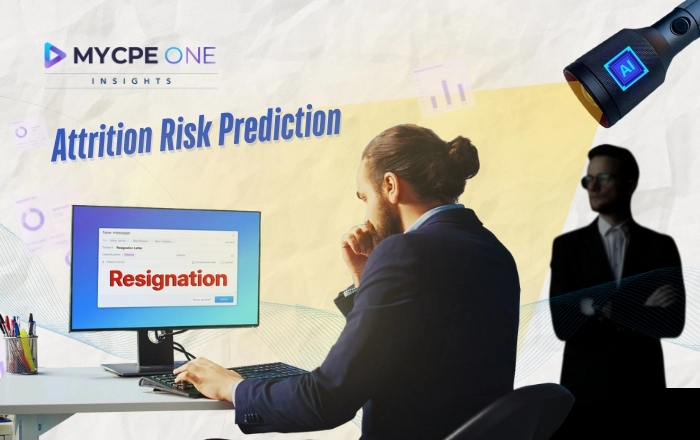
How Employers Use AI to Track Early Signs of Quitting

Join our 250K+ subscribers

Join our 250K+ subscribers

Subscribe

05 SEP 2025 / BUSINESS

How Employers Use AI to Track Early Signs of Quitting

How Employers Use AI to Track Early Signs of Quitting

Job hopping is out, job hugging is in. The U.S. quit rate is scraping a decade low as jittery workers cling to steady paychecks. Yet while employees hold tighter to their desks, employers are leaning on artificial intelligence to figure out who might let go next. Once upon a time, managers relied on their gut instincts, missed happy hours, and had sudden “doctor’s appointments.” Now? Forget hunches. HR has algorithms, and they claim to know you’re ready to quit before you do. And that’s where today’s story kicks in: how AI is turning workplace whispers into data points, reshaping retention strategies, and raising big questions about trust.

When Software Starts Reading the Room

IBM has bragging rights here. Its predictive attrition program, powered by Watson, boasts a 95% accuracy rate and has saved roughly $300 million by reducing turnover. The program examines data such as commute times, pay compared to peers, promotions, and overtime. Translation: If you’ve been grinding without recognition, the system probably has you marked as a high-risk flight. Other models are raising the bar. A GPT-5 tool trained for attrition scored 0.92 on accuracy benchmarks, way ahead of traditional methods. It notices shorter Slack messages, a shift in email tone, or mysteriously “broken” webcams. What appears to be normal work fatigue could actually be the algorithm quietly adding you to a watchlist.

Here’s the menu of signals most systems are quietly chewing on:

  • Email sentiment shifts toward more formal or negative tones.
  • Skipping team brainstorms or dialing down participation.
  • Declining optional meetings and company mixers on your calendar.
  • Steering clear of high-visibility projects you used to volunteer for.
  • Give shorter replies or fewer proactive updates.
  • Dropping out of training programs and certifications.
  • Showing subtle dips in productivity or quality.
  • Clocking in later, clocking out earlier, or requesting more days off.

As Gavin Yi, who runs global ops for Yijin Hardware, put it: “In high-skill sectors like ours, losing even one core team member can set a production timeline back weeks. That’s why AI tools that help identify disengagement or flight risk can be handy as long as they’re used transparently.”

Watching Your Every Move

Financial educator Sarthak Ahuja lit up Instagram with a claim that firms are feeding Zoom transcripts into ChatGPT. The AI scans for disengagement cues, like swapping “we” for “you guys,” or keeping your camera off. The output? A ranked “retention risk matrix” that tells managers exactly who needs a nudge this week. It sounds slick, but critics warn it could backfire. Instead of helping, it might be used to block promotions or micromanage employees already stressed out. One commenter nailed it: “Wow! Rather than use AI to improve retention, they are using it to predict who is going to leave.” Fair question, are we talking about support, or surveillance with a fancy label?

Genpact Takes it Up a Notch

Then there’s Genpact, which ties part of its leaders’ bonuses to employee “mood scores” generated by an AI bot named Amber. Forget clunky annual surveys; Amber chats with staff multiple times a year, checks sentiment, and provides a score. A dip in that score? Suddenly, management has skin in the game. In 2020, Genpact linked 10% of executive bonuses to maintaining the needle. That’s one way to get bosses listening. Genpact didn’t stop there. They layered in AI learning platforms, virtual watercoolers, and even voice clones for training content. Employees who dedicate just 15 minutes a day to its learning modules show three times higher engagement and retention. Not bad for something that started as an experiment in 2018.

The Good, The Bad, and The Ethical Mess

So, is this a no-brainer win for companies? Not quite. Sure, AI might flag burnout early, but it can also misread cultural or neurodivergent communication styles. Plus, in regions like the EU, certain people analytics are a legal minefield. Genpact admits that up to 25% of its AI efforts are dedicated to just clearing privacy and ethics reviews. And let’s not forget the human context. As Gavin Yi, a manufacturing exec, put it: “AI can be a flashlight, but it shouldn’t be a spotlight.” Sometimes disengagement signals family stress, not disloyalty. Fire up the wrong intervention and you risk losing someone who just needed support.

On the flip side, employees aren’t powerless. If you want to keep your digital footprint from screaming “I’m outta here,” here are some guardrails:

  • Keep your email tone and meeting engagement steady.
  • Don’t suddenly ghost training programs.
  • Communicate openly with managers before concerns snowball.
  • Inquire about the monitoring systems in place at your company.
  • Save a record of your wins so the algorithm doesn’t write your story for you.

And if you’re truly planning to exit, know that even your calendar habits might tip your hand. As Yi says, “AI can help employers predict attrition, but it can’t prevent it on its own.”

The Takeaway

For the accountants, CFOs, and HR leaders reading this, the numbers don’t lie: attrition costs can crush a balance sheet, and AI retention tools are already saving hundreds of millions. But the line between insight and intrusion is thin. Ask yourself: are you using AI to keep employees engaged, or just to keep them in line? Benjamin Franklin once quipped, “An ounce of prevention is worth a pound of cure.” Maybe the 2025 twist is that the ounce comes from an algorithm. The question is, will employees see it as a safety net… or as one more reason to log out for good?

Until next time…

Don’t forget to share this story on LinkedIn, X and Facebook

Subscribe now for $199 and get unlimited access to MYCPE ONE, from CPE credits to insights Magazine

📢MYCPE ONE Insights has a newsletter on LinkedIn as well! If you want the sharpest analysis of all accounting and finance news without the jargon, Insights is the place to be! Click Here to Join

Transforming Finance & Accounting Operations for Enterprises!

We help 100+ clients streamline F&A operations with our full-suite outsourcing services-eliminating the need for in-house teams. Partner with us for Top-tier finance & accounting talent, Cutting-edge technology, and World-class infrastructure.

Our Full-Suite F&A Services Include:

  • Accounts Payable Services
  • Finance & Accounting Consulting
  • Financial Planning & Analysis (FP&A)
  • Invoice-to-Cash Services
  • Record-to-Report Services
  • Procure-to-Pay Services

We collaborate with CPA and accounting firms to drive real business value.

Schedule a no-obligation discovery call

Unlock Annual Access to News & CPE Subscription

You’ve reached the 3 free-content piece limit. Unlock unlimited access to all News & CPE resources.
Subscribe Today.

News & Insights

  • Exclusive News & Insights
  • Latest Regulatory Updates
  • Accounting Industry Trends
  • Expert Insights
  • AI-Driven Audio & Summaries
  • Infographics & Videos
  • CPE-Approved Articles
  • Digital Magazine
  • Benchmarking Insights

Unlimited CPE Access for 1 Year

  • 15,000+ Hours of Content
  • 500+ Subject Areas
  • Mandatory Ethics Courses
  • 250+ Compliance Packages
  • 50+ Virtual Conferences and Events Access
  • Format: Live, Audio, Video, E-Books
  • Audio Based Courses & Podcasts
  • Add External Certificates with AI
  • AI Compliance Tracking and Report
  • Instant Certification and Fast Reporting
  • Mobile App Access (iOS and Android)
  • Dedicated Support System
  • Practical Training Programs
  • AI Academy Access
  • Tax Academy Access
  • Audit Academy Access
  • Leadership Academy Access