Join 250,000+
professionals today
Add Insights to your inbox - get the latest
professional news for free.
Join our 250K+ subscribers
Subscribe23 APR 2026 / BUSINESS
Nestlé's China business has suffered a significant decline in revenue due to internal missteps, changing consumer behavior, and increased competition from local players like Yili and Mengniu. In response, Nestlé is planning a "China 2.0" strategy involving product localization, digital channels expansion, cost discipline, and a more autonomous operating model to renew its market position.
For years, Nestlé treated China like its golden goose. Today, that bird looks more like it’s running on fumes. Over the last three years, Greater China revenue has slipped from about CHF 5 billion in 2023 to roughly CHF 4.9 billion in 2024 and hovering around CHF 4.8–4.9 billion in 2025. That slowdown is not just a rounding error, it’s a signal. Add to that a 10.3% drop in global net profit to CHF 5.1 billion in the latest half-year results, and you start to see the bigger picture: China isn’t pulling its weight anymore, and it’s dragging on Nestlé’s global performance. So, what exactly went wrong? And more importantly, can Nestlé fix it?
Source: Financial Times
Nestlé didn’t just enter China; it practically wrote the playbook for Western companies. Since opening its first Shanghai office in 1908 and helping build China’s dairy industry in the 1980s, the company had a serious first-mover advantage. The early formula was simple: premium products, strong distribution, and global brand trust. Chinese consumers, especially parents, were willing to pay up for safety and quality. Infant nutrition became a powerhouse category, and brands like Nescafé, KitKat, and Maggi became household staples. But here’s the kicker: that success planted the seeds of today’s problems.
While Nestlé leaned on its global reputation, local players like Yili and Mengniu were getting scrappy. They studied consumer behavior, adapted to regional tastes, and moved faster in pricing and distribution. Nestlé kept playing yesterday’s game while China rewrote the rules.
If you look under the hood, Nestlé’s China disarray comes from a three-part squeeze: internal missteps, external pressure, and a shifting consumer mindset.
Nestlé built its China business on premium pricing built for a rising middle-class era. Today’s China is slower-growing, more price-sensitive, and pretty skeptical of “foreign premium” for everything.
The result? Nestlé got squeezed in the middle: too expensive for the value-driven, and not quite “luxury-enough” for the ultra-high-end.
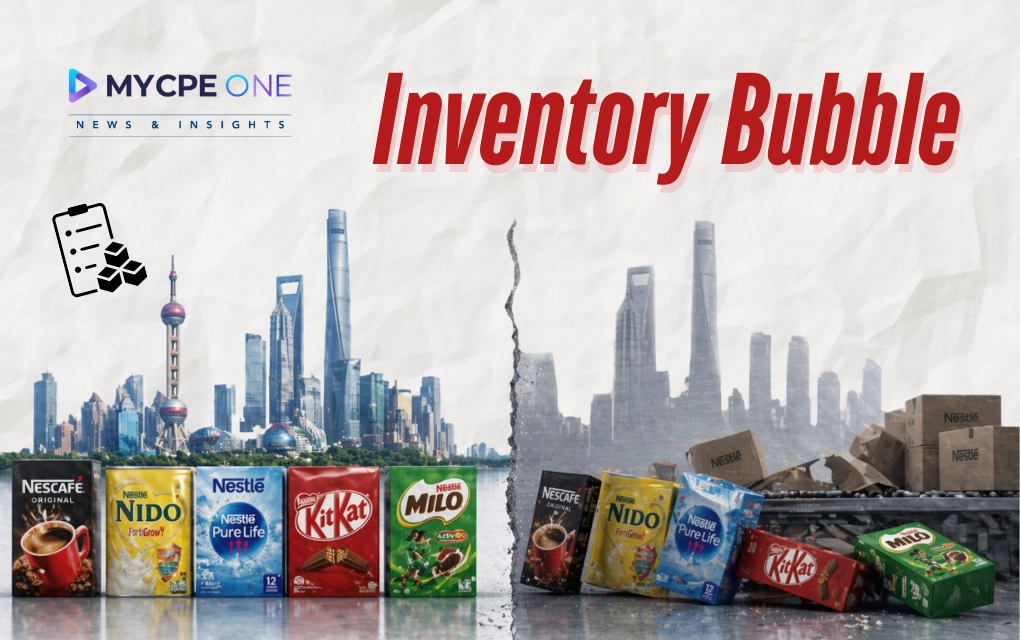
Former executives and distributors have pointed to “channel stuffing” as a major internal misstep. In plain terms, Nestlé pushed more inventory into the market than it could actually sell, just to hit internal targets.
Global giants like Nestlé used to win on brand equity and supply chain scale. In China, those don’t matter as much anymore.
Nestlé’s problems aren’t just internal. China’s declining birth rate is affecting infant nutrition, one of Nestlé’s most important categories.
Let’s call it what it is: China has become Nestlé’s weakest major market. Sales in the region dropped over 10% last year, and it has declined in six of the past seven years. Organic growth has been negative, and categories that once drove performance are now flat or shrinking. Internally, leadership turmoil hasn’t helped. CEO changes, executive scandals, and strategic resets have created instability at the top. Not exactly a confidence booster for a market that demands agility.
Nestlé isn’t throwing in the towel. It’s playing a “China 2.0”, and if you squint, you can see the pieces of a turnaround coming together.
Nestlé’s top brass now talk about “developing products that Chinese consumers actually want” instead of “global products with a Chinese label.”
Back in 2016, Nestlé already tried to pivot to China online, and the bet mostly worked, at least for categories that moved fast through e-commerce. Now, the company is doubling down.
Nestlé’s global CEO, Mark Schneider, has spent years reshaping the portfolio toward high-growth, high-margin categories. In China, the same playbook is kicking in.
Historically, China reported to global zones and followed relatively centralized strategies. Now, Nestlé is trying the reverse:
Nestlé’s China story is a wake-up call for every global brand. Being first doesn’t guarantee staying on top. Markets evolve, consumers change, and strategies that worked yesterday can become liabilities overnight. The real question is not whether Nestlé can survive in China. It’s whether it can reinvent itself fast enough to matter again. Because in today’s China, if you’re not acting local, you’re already behind.
Until next time…
Don’t forget to share this story on LinkedIn, X and Facebook
Subscribe now for $199 and get unlimited access to MYCPE ONE, from CPE credits to insights Magazine
📢MYCPE ONE Insights has a newsletter on LinkedIn as well! If you want the sharpest analysis of all accounting and finance news without the jargon, Insights is the place to be! Click Here to Join
You’ve reached the 3 free-content piece limit. Unlock unlimited access to all News & CPE resources.
Subscribe Today.
Already have an account?
Sign In