MYCPE ONE
MYCPE ONE LOGO

Join 250,000+
professionals today

Add Insights to your inbox - get the latest
professional news for free.

MYCPE ONE insights

Kone’s $34B Bet on the US Market With TK Elevator

Join our 250K+ subscribers

Join our 250K+ subscribers

Subscribe

01 MAY 2026 / BUSINESS

Kone’s $34B Bet on the US Market With TK Elevator

Kone’s $34B Bet on the US Market With TK Elevator

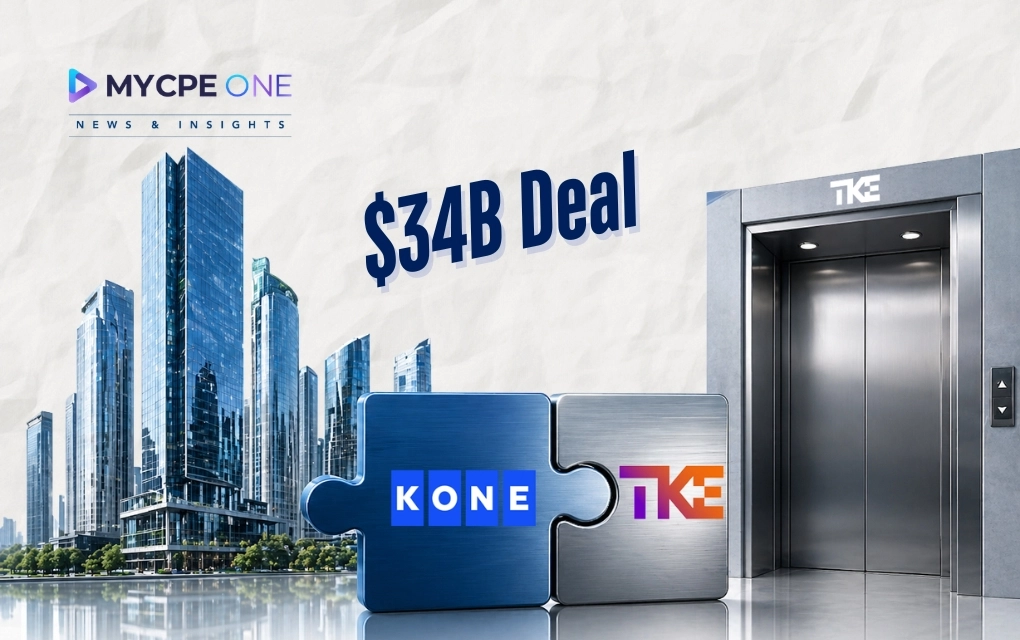
Walk into any high-rise in Manhattan, and you’ll hear it, the quiet hum of elevators doing their thing. No one thinks twice about it. Until someone decides to own a big chunk of that hum globally. That’s exactly what Finland’s Kone just signed up for with its €29.4 billion ($34.4 billion) acquisition of TK Elevator. On paper, it looks like a classic scale play. In reality, it’s one of those deals where the upside is obvious, but the margin for error gets real tight, real fast. Let’s unpack what’s actually going on here.

Is this about elevators or something bigger?

At first glance, this looks like an industrial consolidation story. Two major players combine, become the biggest in the world, and call it a day. Not quite. This deal is really about control over a very predictable, cash-generating business model. Elevators are not just about selling units anymore. The real money sits in maintenance and modernization. Once a company installs an elevator, it often services it for decades. That’s recurring revenue with sticky customers. Post-acquisition, about 65% of the combined company’s revenue is expected to come from service and modernization. That’s the holy grail in industrial businesses. Stable cash flows, higher margins, and less dependency on new construction cycles.

Source: Bloomberg

Think of it like owning a subscription business disguised as infrastructure. And here’s where it gets interesting. Kone has historically been strong in Asia. TK Elevator brings serious muscle in North America, especially the U.S., where service contracts and installed base density drive profitability. This isn’t just expansion. It’s a geographic puzzle falling into place.

Private equity finally gets an exit

Let’s talk about the other side of the table.

Advent and Cinven bought TK Elevator in 2020 for about €17 billion. Fast forward to 2026, and they’re exiting at an enterprise value of €29.4 billion ($34.4 billion). That’s a solid outcome, especially in a market where private equity has struggled to offload assets lately. But this isn’t a clean, all-cash goodbye. Only €5 billion comes in cash. The rest comes in Kone stock, and there’s a 180-day lock-up. That means the sellers are still tied to market performance for a while. If volatility kicks in, they’re not exactly walking away untouched. In plain terms, they’ve taken chips off the table, but they’re still sitting at the poker table.

This also tells you something about current deal markets. Liquidity is not what it used to be. Even marquee exits are getting creative with structure.

The real dealmakers in the room?

Now comes the part that every CPA, deal advisor, and corporate finance team knows can make or break the story. Antitrust. This deal effectively shrinks the global elevator market from four major players to three. That’s the kind of consolidation that regulators tend to scrutinize closely, especially in Europe and the U.S. Kone’s management seems confident. They’ve done this dance before. They even attempted a similar acquisition back in 2020, so they’re walking in with more clarity this time.

Still, the timeline says everything. Closing is expected no earlier than mid-2027. That’s a long runway, and a lot can change in 12 to 18 months. There’s also talk of potential divestments. Analysts estimate that remedies could involve shedding up to around 15% of TK Elevator’s assets. That chips away at the very synergies the deal is supposed to deliver. So, the question becomes: how much value leaks out during the approval process?

Debt, dilution, and that uncomfortable question

This deal is expensive. Not just in absolute terms, but in balance sheet impact. Early estimates suggest pro forma leverage could hover around 4x net debt to EBITDA. That’s higher than peers like Otis. For a company that prides itself on a strong balance sheet, that’s a noticeable shift. Kone plans to refinance bridge loans and maintain an investment-grade profile. They’re also banking on €700 million in annual synergies and future cash flow growth to smooth things out. That’s all reasonable. But it assumes execution goes according to plan. Anyone who’s lived through large integrations knows that synergy targets look clean in Excel and messy in real life. Integration across 100,000 employees in 100 countries is not exactly plug-and-play.

What does this mean for firms and finance teams?

Let’s bring this back to the ground level.

If you’re sitting in a CPA firm, advising clients in industrials, infrastructure, or real estate, this deal touches more than you might think.

  • First, expect ripple activity across the sector. Competitors like Otis and Schindler are not going to sit still. Pricing strategies, service contracts, and M&A activity could shift.
  • Second, valuation benchmarks change. When a deal of this size resets expectations, it influences how similar assets get priced. That matters for audits, impairments, and transaction advisory work.
  • Third, regulatory scrutiny becomes a bigger theme. Clients considering consolidation will need to think harder about antitrust exposure, especially in concentrated industries.

Smart Move?

There’s a line from Warren Buffett that fits here: “Price is what you pay, value is what you get.” Kone is clearly paying up. The strategic logic makes sense: a stronger U.S. presence, higher service revenue, and scale advantages. But the execution bar just got higher. Between regulatory approvals, integration complexity, leverage concerns, and market volatility, there’s not a lot of room for things to go sideways. At the same time, sitting still wasn’t really an option either. In industries where scale and service density drive economics, falling behind can hurt just as much. So here we are. A deal that looks clean on the surface carries real strategic weight and quietly asks a tough question: In a world chasing scale, how much risk are companies willing to absorb to get there? That’s something worth keeping an eye on over the next 18 months.

Until next time…

Don’t forget to share this story on LinkedIn, X and Facebook

Subscribe now for $199 and get unlimited access to MYCPE ONE, from CPE credits to insights Magazine

📢MYCPE ONE Insights has a newsletter on LinkedIn as well! If you want the sharpest analysis of all accounting and finance news without the jargon, Insights is the place to be! Click Here to Join

Unlock Annual Access to News & CPE Subscription

You’ve reached the 3 free-content piece limit. Unlock unlimited access to all News & CPE resources.
Subscribe Today.

News & Updates

  • Exclusive News & Insights
  • Latest Regulatory Updates
  • Accounting Industry Trends
  • Expert Insights
  • AI-Driven Audio & Summaries
  • Infographics & Videos
  • CPE-Approved Articles
  • Digital Magazine
  • Benchmarking Blogs

Unlimited CPE Access for 1 Year

  • 15,000+ Hours of Content
  • 500+ Subject Areas
  • Mandatory Ethics Courses
  • 250+ Compliance Packages
  • 50+ Virtual Conferences and Events Access
  • Format: Live, Audio, Video, E-Books
  • Audio Based Courses & Podcasts
  • Add External Certificates with AI
  • AI Compliance Tracking and Report
  • Instant Certification and Fast Reporting
  • Mobile App Access (iOS and Android)
  • Dedicated Support System
  • Practical Training Programs
  • AI Academy Access
  • Tax Academy Access
  • Audit Academy Access
  • Leadership Academy Access