

Join 250,000+
professionals today
Add Insights to your inbox - get the latest
professional news for free.
Join our 250K+ subscribers
Subscribe27 APR 2026 / BUSINESS
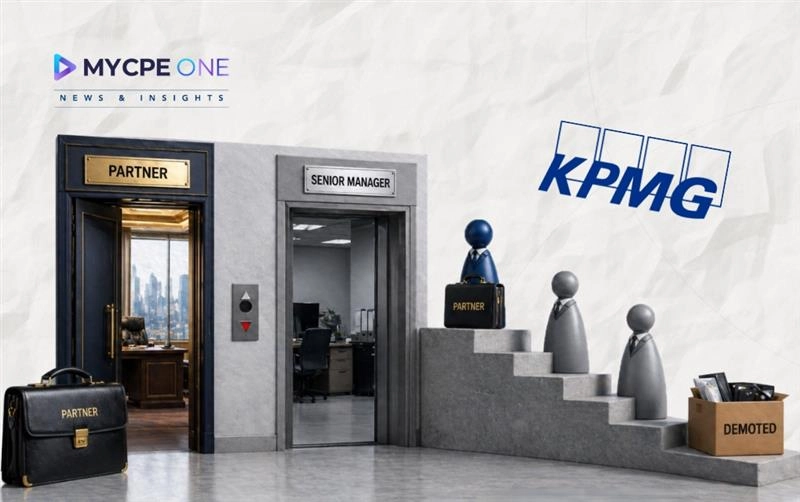
KPMG has cut around 10% of its US audit partners to align with changing economic conditions and increased automation. This strategic move indicates a shift in the industry, reducing high-ranking roles and automating processes, thus altering the traditional "golden ticket" partnership model among the Big Four (KPMG, EY, PwC and Deloitte).
The partner title just lost its lifetime warranty. For decades, making partner at a Big Four firm felt like locking in a golden ticket, steady profits, prestige, and a long runway to retirement. That playbook is now getting flipped. KPMG’s move to cut roughly 10% of its U.S. audit partners, about 100 roles, is not just a headcount adjustment, it is a signal that the economics of the profession are shifting under the hood. And here’s the kicker: this is happening at the same time firms are investing heavily in AI and rethinking how work gets done. So, what looks like a people story is really a strategy story.
The Big Four are quietly rewriting what partnership means. Traditionally, equity partners owned a slice of the firm and shared in profits. Now, that ownership is being rationed. KPMG and EY have already started moving some equity partners into salaried roles, effectively keeping the title but removing access to the profit pool. Why? Because the math has changed. Firms expanded aggressively during the pandemic, expecting consulting demand to keep booming. That demand cooled. What didn’t cool was the cost base. Now you’ve got too many senior professionals and not enough growth to justify the same level of payouts.
KPMG’s own explanation makes it clear this is strategic, not personal: “This action is connected to a multiyear strategy to align the size, shape and skills of our team.” Translation: fewer people get a seat at the profit table.
This is not about trimming underperformers. It is about protecting margins. KPMG has around 1,400 partners and managing directors in its U.S. audit practice, and the cuts target only a portion of that group. At the same time, its audit business is still growing, covering about 10% of SEC-listed companies, though still trailing Deloitte at 15% and EY at 13%. So why cut if business is growing? Because growth is not fast enough.
Voluntary retirements did not materialize at the pace firms expected.
When revenue growth slows, firms have two choices:
They chose option two.
Let’s not sugarcoat it, consulting is where the pressure is showing up first. Big Four firms built massive consulting arms over the last decade. But now, with clients tightening budgets and governments pulling back on spending, that growth engine is cooling.
That shift is forcing a rethink:
Here’s the deal: if you are not bringing in business, your seat at the top is no longer safe. This fundamentally changes consulting culture. The old promise, work your way up and eventually cash in, is getting replaced by a performance treadmill.
This is not a KPMG-only story. EY is already making similar moves. Deloitte and PwC face the same pressures: slower consulting growth, higher costs, and the need to maintain partner profitability. Even mid-tier firms are watching closely. Expect this to ripple outward in three ways:
In plain terms, the Big Four are setting the tone, and everyone else is likely to copy the playbook.
While firms are trimming the top, they are also reshaping the bottom. KPMG’s new monthly close AI assistant is a perfect example. Built with Google Cloud and Workday, it helps automate financial close processes, from data gathering to variance analysis. As one executive put it, the goal is to “close faster with greater confidence while freeing professionals to focus on higher-impact strategic work.” Sounds efficient. It is. But it also means fewer people are needed to do the same work. So now you have a double effect:
That is not a coincidence. That is a strategy.
Across the Big Four, equity partner ranks are being thinned. That helps protect profit per partner in the short term. But it also hints at something deeper. When firms start shrinking the top layer, it often signals that growth is becoming less predictable. The industry is not in trouble, but it is no longer in hyper-growth mode. Think of it like this: When the pie stops expanding, the slices get smaller, unless you reduce the number of people at the table. And that is exactly what is happening.
If you are in accounting, finance, or consulting, this shift matters. The partner title is no longer a finish line. It is a performance contract.
To stay competitive, professionals will need to:
The “job for life” mindset is fading fast.
KPMG’s partner cuts are not an isolated move. They are part of a broader reset across the Big Four. Firms are balancing slower growth, rising costs, and new technology by reshaping both ends of their structure. Fewer equity partners at the top. More automation at the bottom. If there is one takeaway, it is this: Partnership is no longer about tenure. It is about value creation, every single year. And that shift is going to define the next decade of professional services.
Until next time…
Don’t forget to share this story on LinkedIn, X and Facebook
Subscribe now for $199 and get unlimited access to MYCPE ONE, from CPE credits to insights Magazine
📢MYCPE ONE Insights has a newsletter on LinkedIn as well! If you want the sharpest analysis of all accounting and finance news without the jargon, Insights is the place to be! Click Here to Join
You’ve reached the 3 free-content piece limit. Unlock unlimited access to all News & CPE resources.
Subscribe Today.
Already have an account?
Sign In