Join 250,000+
professionals today
Add Insights to your inbox - get the latest
professional news for free.
Join our 250K+ subscribers
Subscribe30 APR 2026 / BUSINESS
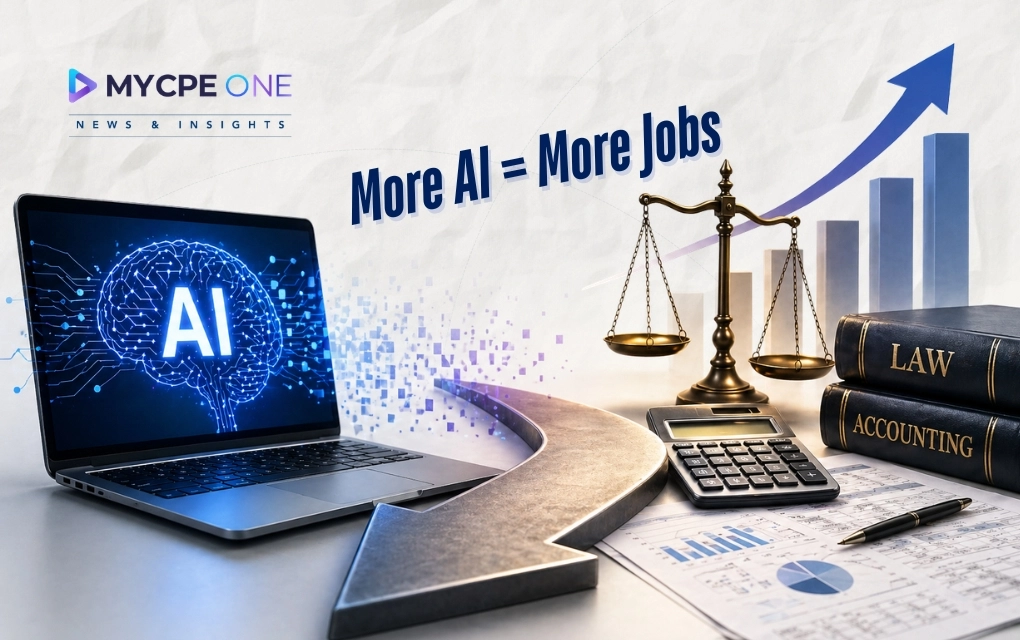
Apollo's Chief Economist Torsten Sløk has proposed that AI may create more professional jobs in the legal and consulting sectors, as it makes these services cheaper and thus increases demand. However, concerns arise about the potential decrease in entry-level positions as more tasks are automated, which could disrupt traditional career progression and require firms to rethink professional training across industries.
AI has turned the office into a weird productivity potluck. Everyone brings a tool, nobody agrees on the recipe, and somehow output keeps rising. Apollo’s Torsten Sløk recently revived Jevons paradox for the AI economy: when technology makes work cheaper, demand can grow instead of shrink. He argues cheaper legal, consulting, and financial services could expand the market and create more professional jobs.
Back in 1865, economist William Stanley Jevons noticed something odd. When steam engines became more efficient, coal usage did not fall. It surged. Efficiency made coal cheaper to use, so industries found more ways to use it. Fast forward to 2026, and Apollo’s chief economist Torsten Sløk is applying the same logic to AI. His argument is simple: if AI makes legal research, financial modeling, audit testing, or tax prep cheaper, demand for those services should expand, not shrink.
For lawyers, that could mean more contract reviews, more compliance checks, more litigation prep. For accountants, it could mean more advisory work, more forecasting, and more scenario planning for clients who previously could not afford it. On paper, that sounds like a win. Lower cost, higher demand, bigger industry. But here is the uncomfortable question: more work for whom?
The accounting profession has seen this movie before. QuickBooks did not kill accounting firms. It wiped out a chunk of bookkeeping work and pushed value toward CPAs who could interpret the numbers. The pie grew, but fewer people got a slice at the entry level. Law firms face a similar pattern. AI can now draft memos, summarize case law, and review contracts at a pace that used to require teams of junior associates. That does not eliminate legal work. It changes how firms staff it.
Source: Fortune
Recent data points are starting to show the cracks. Research cited by the Dallas Fed found a 13% decline in employment for workers aged 22 to 25 in AI-exposed roles since 2022. The shift is subtle. Firms are not firing large numbers of juniors. They are just hiring fewer of them. That matters because both law and accounting rely on apprenticeship. Nobody becomes a partner by skipping the early grind. If AI eats the training layer, firms may end up with fewer professionals who know how to exercise judgment when things get messy. And things always get messy.
If you scroll through headlines, you would think AI is already wiping out jobs. Tech layoffs dominate the conversation. But that view comes from a very specific corner of the economy. In software, AI works cleanly. Code either runs or it breaks. Engineers can test outputs quickly. Feedback loops are tight. That makes it easier to reduce headcount while maintaining output. Now walk into a CPA firm during busy season or a law office handling complex litigation. The environment looks very different. Data is scattered. Client information is incomplete. Systems do not talk to each other. And the cost of a mistake is not a broken app. It is a regulatory issue, a tax error, or a legal liability. That slows everything down.
Enterprise data backs this up. Around 72% of companies report having at least one AI use case in production, but only about 28% consider their adoption mature. Daily usage among employees sits far lower than leadership claims. For lawyers and accountants, this means the “replace everyone” narrative feels off. The real story looks more like “add AI on top of already messy workflows and figure it out as you go.”
Morgan Stanley found that AI-heavy industries drove 1.7 percentage points of the 2.4 percentage-point productivity growth in 2025. That is not a rounding error. That is a major shift in output. But here is the catch. Productivity gains do not distribute evenly. There is a growing view inside firms that AI amplifies top performers. A strong senior associate or manager can now produce more, faster, with fewer people supporting them. That sounds efficient, and it is. But it also raises a tough question: what happens to the middle and bottom layers?
Source: Fortune
Imagine a tax team that once had one manager and three associates. If AI lets the manager and one strong associate handle the same workload, the firm may not replace the other two when they leave. For law firms, the same logic applies. Fewer junior associates drafting first versions. More reliance on experienced lawyers reviewing AI-assisted work. Higher expectations for speed and output. The industry grows. The structure shifts.
The Jevons-style argument suggests that cheaper services will expand demand. That is already visible. More startups need accounting. More regulation drives legal work. More complexity creates more advisory opportunities. But the workforce story is not just about total jobs. It is about how those jobs are distributed. A world with more legal work but fewer junior associates is possible. A world with more financial analysis but fewer entry-level accountants is possible. And there is another wrinkle people are not talking about enough: pricing.
Today’s AI tools are cheap relative to their actual cost. That may not last forever. If access becomes more expensive or shifts toward large enterprise contracts, smaller firms and individual professionals could face a tougher environment. So, the current productivity boom may be a phase, not a permanent setup.
AI is not about to wipe out lawyers and accountants. If anything, it may expand both fields by making services more accessible and more scalable. But expansion at the industry level does not guarantee stability at the career level. The real shift is structural. Fewer traditional entry points. More pressure on mid-level roles. Greater leverage for top performers. And a growing need for firms to rethink how professionals are trained. So yes, AI might create more lawyers and accountants. Just not in the way most people expect.
Until next time…
Don’t forget to share this story on LinkedIn, X and Facebook
Subscribe now for $199 and get unlimited access to MYCPE ONE, from CPE credits to insights Magazine
📢MYCPE ONE Insights has a newsletter on LinkedIn as well! If you want the sharpest analysis of all accounting and finance news without the jargon, Insights is the place to be! Click Here to Join
You’ve reached the 3 free-content piece limit. Unlock unlimited access to all News & CPE resources.
Subscribe Today.
Already have an account?
Sign In