Join 250,000+
professionals today
Add Insights to your inbox - get the latest
professional news for free.
Join our 250K+ subscribers
Subscribe16 MAR 2026 / BUSINESS
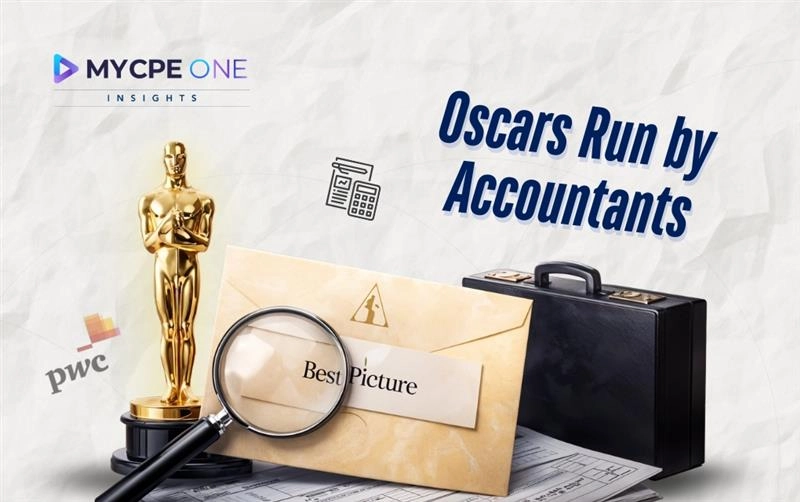
Accountancy firm PricewaterhouseCooper (PwC) has been responsible for the vote counting and verification process for the Academy Awards since 1935, a tradition established after irregular voting activity was suspected in the 1930s. This arrangement emphasizes the importance of transparency, verification, and rigorous controls, especially in high-profile circumstances, creating an analogy that prepares accountants for assurance work and highlights the significance of independent verification and confidentiality in their respective fields.
When Paul Thomas Anderson walked onstage at the 98th Academy Awards and heard “One Battle After Another” announced as Best Picture, the room erupted. Six Oscars, a long overdue directing win, and a night Hollywood will talk about for years. But here’s the funny part. By the time the envelope opened on March 15, 2026, the real work had already been done. Not by actors. Not by directors. By accountants. For nearly a century, PricewaterhouseCoopers (PwC) has quietly handled one of the most sensitive vote counts in entertainment. Thousands of ballots, 24 award categories, and one tiny envelope that the entire world waits for. In other words, the Oscars run on something every CPA understands well: controls, verification, and a lot of careful counting.
The Academy did not always rely on accountants. In fact, the whole arrangement started because Hollywood could not trust itself. Back in the 1930s, voting was handled internally by industry insiders. Then came the Bette Davis controversy in 1934. Despite rave reviews for her role in Of Human Bondage, Davis was not nominated for Best Actress. Critics, fans, and even other actors smelled something fishy. Rumors spread that studio bosses had pressured Academy members to vote against her because the film was produced by a rival studio.
The backlash was loud. One actor reportedly summed up the mood with a line that still feels familiar in governance circles: something’s rotten here. That scandal pushed the Academy to bring in an independent third party. Price Waterhouse, now PwC, was hired in 1935 to oversee vote counting. The logic was simple. If auditors could verify corporate financials, they could certainly verify award ballots. Nearly ninety years later, the firm still holds the job.
Each year, members of the Academy of Motion Picture Arts and Sciences cast ballots across multiple stages. The process begins with shortlists in technical categories like sound or visual effects. Then come nominations within the Academy’s 19 professional branches, which include actors, directors, writers, editors, and cinematographers. The final voting round opens to all eligible members across 24 categories. Ballots are submitted through a secure online system, then tabulated and verified by PwC. The counting alone takes roughly 1,700 work hours each year. Best Picture is the real brain teaser. Unlike most awards, it uses a preferential ballot system. Voters rank films in order of preference. If no film gets more than 50% of first-place votes, the lowest-ranked film drops out, and its votes shift to the next choice. The process repeats until one film crosses the majority threshold.
For accountants, this looks less like a simple tally and more like a multi-step assurance engagement. Multiple review layers confirm that the final outcome matches the ballots. Controls exist at every stage. And when the results are final, they disappear into secrecy that would make a compliance officer smile.
Once winners are confirmed, the names are printed and placed inside the Academy’s signature envelopes. Two identical sets exist, one for each side of the stage. Here’s the part that feels like a spy thriller. The final results are not widely documented. PwC partners overseeing the count memorize the winners before sealing the envelopes. No written tally sheets circulate backstage. Two briefcases hold the envelopes. On Oscar day, those briefcases travel to the Dolby Theatre in separate cars using different routes. Not even the show’s producers know the winners. If that sounds dramatic, remember that the ceremony runs live in front of millions of viewers. A leak would ruin the whole thing. And the paper envelope still matters. In a world obsessed with digital systems, the Academy deliberately sticks with physical cards. No server to hack. No database to leak. Sometimes old school works just fine.
If you watched the Oscars in 2017, you probably remember the moment. For a few surreal minutes, La La Land appeared to win Best Picture. Acceptance speeches began. The stage filled with cast and producers. Then the correction came. Moonlight was the real winner. The presenters had been handed the wrong envelope, the Best Actress card for Emma Stone instead of the Best Picture card. The mistake reportedly happened when a PwC partner backstage was distracted by a phone. Talk about an awkward night at the office.
PwC apologized, and the Academy tightened its procedures immediately. Despite the global attention the incident received, PwC was not publicly fined or charged a monetary penalty by the Academy. The real cost was reputational rather than financial. Cell phones were banned backstage. Presenters now confirm envelope labels before stepping onstage. A third PwC partner sits in the control room during the broadcast to monitor the process. Even the envelope design changed. Category names now appear more prominently, and envelopes are numbered and tracked using controls similar to audit chain of custody procedures. For accountants, the lesson felt familiar. A system can work for decades. One human error can still slip through. So, you build stronger controls and keep moving.
It may sound odd to compare an award show to professional assurance work, but the parallels are pretty clear. The same principles can apply inside accounting firms as well. Many CPA firms run confidential client surveys, partner evaluations, or internal feedback programs where credibility matters. Separating responsibilities for collecting responses, analyzing results, and reporting insights can strengthen trust in the process. Independent verification of survey results, similar to the Oscar vote tabulation process, can also produce feedback that leadership can confidently use to drive real operational improvements. The Oscars rely on independence, verification, confidentiality, and chain of custody. Those same principles drive audit engagements, financial reporting oversight, and regulatory compliance.
Until next time…
Don’t forget to share this story on LinkedIn, X and Facebook
Subscribe now for $199 and get unlimited access to MYCPE ONE, from CPE credits to insights Magazine
📢MYCPE ONE Insights has a newsletter on LinkedIn as well! If you want the sharpest analysis of all accounting and finance news without the jargon, Insights is the place to be! Click Here to Join
You’ve reached the 3 free-content piece limit. Unlock unlimited access to all News & CPE resources.
Subscribe Today.
Already have an account?
Sign In