Join 250,000+
professionals today
Add Insights to your inbox - get the latest
professional news for free.
Join our 250K+ subscribers
Subscribe16 APR 2026 / BUSINESS
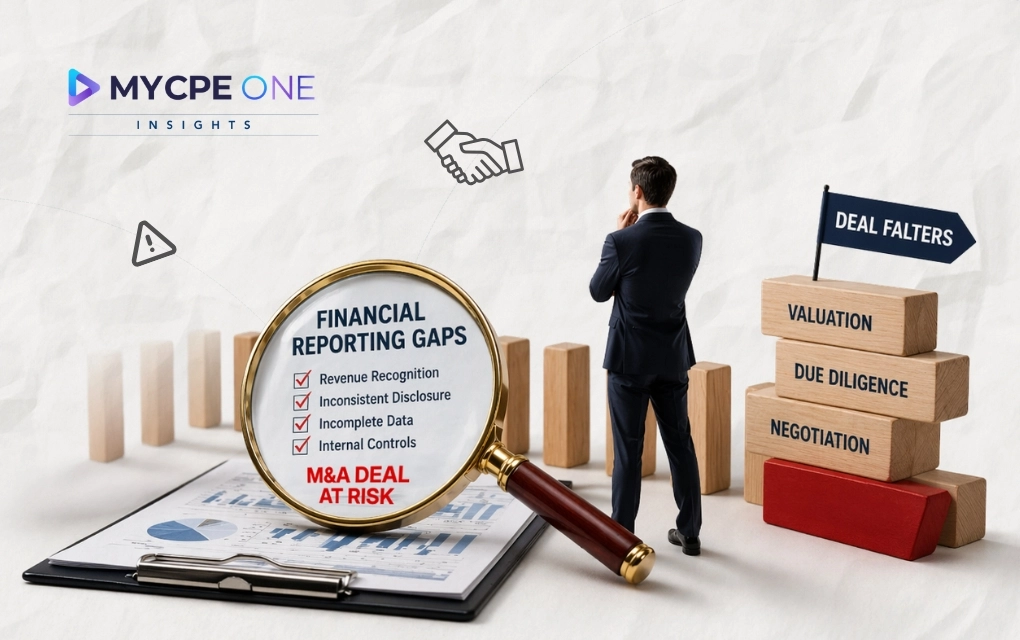
Due to weak and inconsistent financial reporting, many businesses, despite having significant revenue and buyer interest, are seeing their deals fall apart during the due diligence stage. The trend of tightened scrutiny indicates a shift in the marketplace and it is crucial that a company’s financials withstand this increased inspection to secure ideal valuations and prevent deals from failing before closing.
Private equity is knocking harder than ever, retirement-age founders are lining up exits, and the middle market looks like it is having a moment. But here is the reality check: a lot of deals are getting close, then falling apart when buyers finally dig into the numbers. Growth is getting companies in the room. Weak financial reporting is pushing buyers right back out. In today’s market, a new category is quietly growing: “almost sellable” companies. They have the revenue, the story, and the buyer interest. What they do not have is clean, defensible financials that can survive serious diligence.
This is not a new lesson, just one the market keeps relearning. Take Microsoft’s Nokia deal. In 2014, Microsoft paid about $7.9 billion for Nokia’s phone business, betting it could build a third smartphone ecosystem. Within a year, it wrote off roughly $7.6 billion and eventually absorbed more than $10 billion in total losses, including restructuring and layoffs. Analysts called it a “monumental mistake.” The issue was not messy books, it was worse: the economics never worked. But the takeaway still hits home today. Whether it is strategy failure or reporting failure, once the numbers do not hold up, the deal story collapses fast. Now fast-forward to today’s middle market. The difference? Deals are not failing after closing, they are failing before closing, right in diligence.
Right now, private capital is flooding the market:
That shift matters. Smaller companies often scale revenue faster than they scale finance.
Advisers are seeing the same pattern again and again:
Tom Gabbert summed it up cleanly: deals do not fall apart at the beginning, they fall apart when diligence findings hit valuation.
Financial reporting gaps are not just accounting issues. They signal deeper control problems. Buyers immediately start asking:
Common red flags buyers uncover:
Scott Ehrlich pointed out that many buyers struggle to even interpret non-GAAP reporting, forcing them to either spend more time or reduce price for uncertainty. Once confidence drops, valuation usually follows.
This is the part founders often underestimate.
Financial gaps are rarely isolated. They point to weak internal infrastructure:
Buyers treat these as forward-looking risks, not past mistakes.
They assume:
If the numbers do not hold up, the business model itself comes into question.
Buyers are not guessing anymore. They are testing everything. Here is how they catch issues early:
Data traceability checks
Process reviews
System signals
Target-specific tests
Even small inconsistencies can snowball into credibility issues fast.
Across recent middle-market deals, the same pitfalls keep showing up:
These are not edge cases anymore. They are becoming standard diligence findings.
Companies that close strong deals typically start 12–24 months in advance. The core focus areas are:
This is a long game, not a last-minute fix. Top sellers do one thing differently: they reduce friction. They show:
They answer questions before buyers even ask them.
Diligence is only getting sharper. AI tools, deeper benchmarking, and faster analysis mean weak reporting will be exposed earlier. The gap between prepared and unprepared companies will widen.
There is no middle ground anymore. Private equity is still hungry. Deals are still happening. But the rules have changed. Growth gets you noticed. Clean financials get you paid. If your numbers cannot hold up under pressure, the deal isn’t almost done, it’s already at risk.
Until next time…
Don’t forget to share this story on LinkedIn, X and Facebook
Subscribe now for $199 and get unlimited access to MYCPE ONE, from CPE credits to insights Magazine
📢MYCPE ONE Insights has a newsletter on LinkedIn as well! If you want the sharpest analysis of all accounting and finance news without the jargon, Insights is the place to be! Click Here to Join
You’ve reached the 3 free-content piece limit. Unlock unlimited access to all News & CPE resources.
Subscribe Today.
Already have an account?
Sign In