Join 250,000+
professionals today
Add Insights to your inbox - get the latest
professional news for free.
Join our 250K+ subscribers
Subscribe03 DEC 2025 / BUSINESS
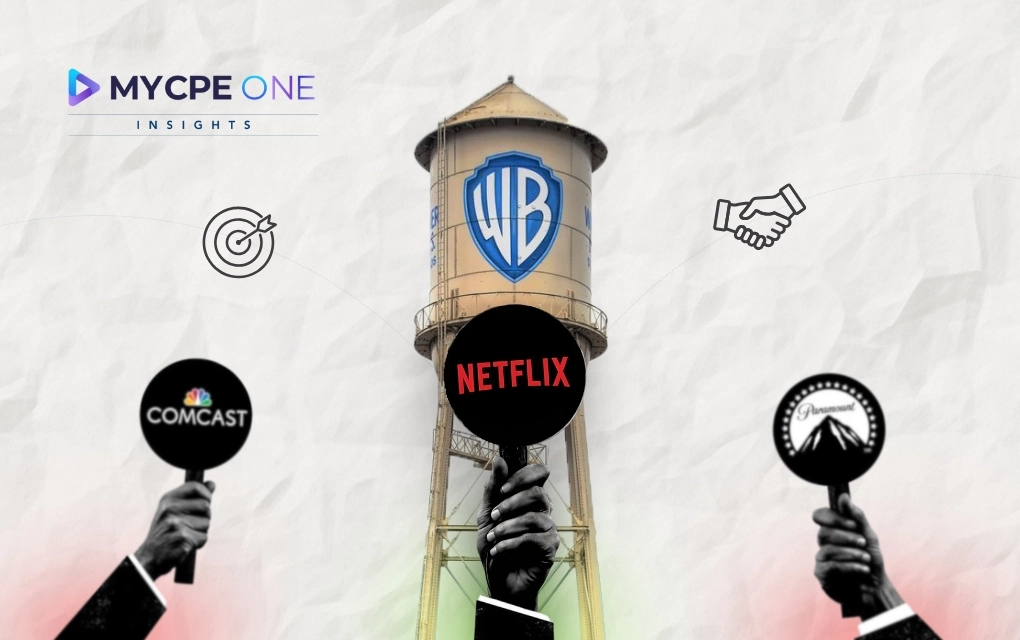
Netflix is acquiring Warner Bros. Discovery in an $83 billion deal, in what is considered the most significant media merger of the decade. The move could potentially transform Netflix into a dominant force in the streaming market, offering unprecedented access to a large catalogue of content, although it will also face significant challenges including financial risk, potential talent losses, and heightened regulatory scrutiny.
If you woke up tomorrow and found HBO, DC, Harry Potter, CNN, and half of Hollywood sitting behind your Netflix login, would that feel like convenience or way too much power in one place? That’s no longer a hypothetical. Netflix is officially acquiring Warner Bros. in an $83 billion cash-and-stock deal, a move that instantly becomes the most consequential media merger of the decade. The deal values Warner Bros. Discovery at $27.75 per share and closes only after the TV networks, CNN, TNT, TBS, Discovery Channel, and others, are spun off into a separate company called Discovery Global. Bloomberg also confirmed Netflix agreed to a $5 billion breakup fee if regulators block the deal, underscoring how aggressively Netflix wanted this win. So how did we get here, what pushed Netflix to break its “build, don’t buy” rule, and what happens now that the world’s largest streamer owns Hollywood’s most prestigious catalogue?
Warner Bros Discovery has been in restructuring mode since the 2022 WarnerMedia–Discovery merger left it with more than 40 billion dollars in debt and a shrinking cable business. By mid-2025, WBD finally accepted what the market had been signaling: the cable side and streaming side no longer belong together. The board approved a plan to split into two companies by mid-2026: a Streaming & Studios entity, and a separate Global Networks business holding CNN, TNT, and the rest of the linear bundle. Then came the calls. Paramount Skydance signaled interest in buying all of WBD. Comcast floated merging WBD with NBCUniversal and Peacock. Netflix, normally a “build, don’t buy” operator, requested due diligence on the studio and streaming assets only, hiring Moelis to evaluate a bid.
If this setup sounds familiar, it echoes our earlier Insights piece on Switzerland’s shutdown of the inheritance tax revolution: how far can you push a system before you risk losing the capital it depends on? WBD is choosing disruption, while potential buyers try not to panic regulators.
Paramount Skydance
Comcast
Here’s the state of play as of December:
| Bidder Name | Offer Style | Estimated Price | Target Assets | Competitive Edge |
| Netflix | Mostly Cash Loan | No confirmed $30/share | Studio/Streaming (HBO, DC, Harry Potter) | Massive content moat + global subscriber scale |
| Paramount Skydance | All Cash | $24–$25/share | Full company (incl. CNN, TNT) | Full-company acquisition + deep financing |
| Comcast | Potential Merger | TBD | NBCU synergy with Peacock | Scale + cross-platform bundling |
Netflix is positioning itself as the cleanest antitrust path, because it wants the studio/streaming assets only, not CNN, TNT, or other cable networks that typically trigger regulatory headaches. Paramount Skydance is offering the highest all-cash number visible so far, but would have to absorb the whole cable portfolio, which could weigh down future profitability.
Comcast’s pitch is synergy. But merging Peacock, NBCUniversal, and Max is a lot of moving parts and would invite scrutiny from regulators still sensitive after the AT&T–Time Warner years. WBD insiders say 30 dollars per share has become the unofficial “real number,” echoing longtime investor John Malone. So far, none of the bidders have publicly crossed it.
On paper, Netflix’s logic is straightforward and very “no-brainer”:
• HBO + Netflix = unmatched premium content
• DC and Harry Potter instantly fix Netflix’s franchise weakness
• Max’s subscriber base strengthens churn control
• HBO’s ad value supercharges Netflix’s growing ad tier
Content depth, pricing leverage, and bundling power, not just more shows, are the real goals here.
Another clue: Netflix quietly removed casting support from most newer TVs and newer Chromecast devices. Users now need the TV’s native app or older devices, and ad-supported plans lose casting entirely.
Is that strictly about underused tech? Maybe. But for a company currently pitching “bundles, lower churn, controlled environments” to regulators, that timing feels like a strategic heads-up. We saw a similar dynamic in the Cum-Ex analysis: systems gaps become control points, and regulators eventually notice. Streaming is heading toward the same reality.
If Netflix lands WBD’s studio and streaming arm, the company becomes the default front door for premium scripted television worldwide. That includes HBO’s prestige slate, Warner’s film library, DC, and iconic franchises like Harry Potter.
Potential impacts:
• Netflix could surpass 500 million subscribers globally
• Content concentration intensifies, pushing mid-tier services toward niche roles
• Competitors like Amazon, Disney, and Apple might be forced into acquisitions
• Regulators in the U.S. and EU will examine bundling, pricing power, and data control
But Netflix would inherit major risks:
• Integration tension between Netflix’s algorithm-first culture and Warner’s old-school studio workflows
• Heavy financing requirements and WBD’s remaining debt
• Potential talent losses if creators resist a more tech-driven production environment
This is scale vs risk, plain and simple.
Streaming is not fading; it is consolidating in real time. If Netflix walks away with WBD’s premium IP library, the company jumps from dominant to nearly untouchable. But the debt load, cultural friction, and regulatory spotlight could slow it down just as it tries to take it up a notch. The most accurate takeaway for accounting, tax, and finance pros: Whoever wins this auction will reshape the streaming economics of the next decade. Netflix may emerge as Hollywood’s new anchor, or it may learn the hard way that even giants hit limits. Either way, the next few months will reveal whether we are witnessing a bold expansion or the beginning of a long antitrust tug-of-war that no one wants to referee.
Until next time…
Don’t forget to share this story on LinkedIn, X and Facebook
Subscribe now for $199 and get unlimited access to MYCPE ONE, from CPE credits to insights Magazine
📢MYCPE ONE Insights has a newsletter on LinkedIn as well! If you want the sharpest analysis of all accounting and finance news without the jargon, Insights is the place to be! Click Here to Join
Scale Your Accounting Firm the Smart Way with MYCPE ONE!
Your Trusted Offshore Partner for CPAs and Accounting Firms.
Struggling to scale? Let MYCPE ONE’s offshore accounting team help you grow faster and more efficiently.
With 500,000+ vetted professionals across 40 offices in 2 countries, we provide you access to top talent and advanced technology, all while handling the hiring process for you.
Trusted by 3,000+ firms, including 45+ BDO Alliance Firms and 40+ of the Top 200 Accounting Firms!
Start building your offshore dream team today with MYCPE ONE!
Scale smarter. Save bigger. Stay ahead.
You’ve reached the 3 free-content piece limit. Unlock unlimited access to all News & CPE resources.
Subscribe Today.
Already have an account?
Sign In