Join 250,000+
professionals today
Add Insights to your inbox - get the latest
professional news for free.
Join our 250K+ subscribers
Subscribe21 JAN 2026 / BUSINESS
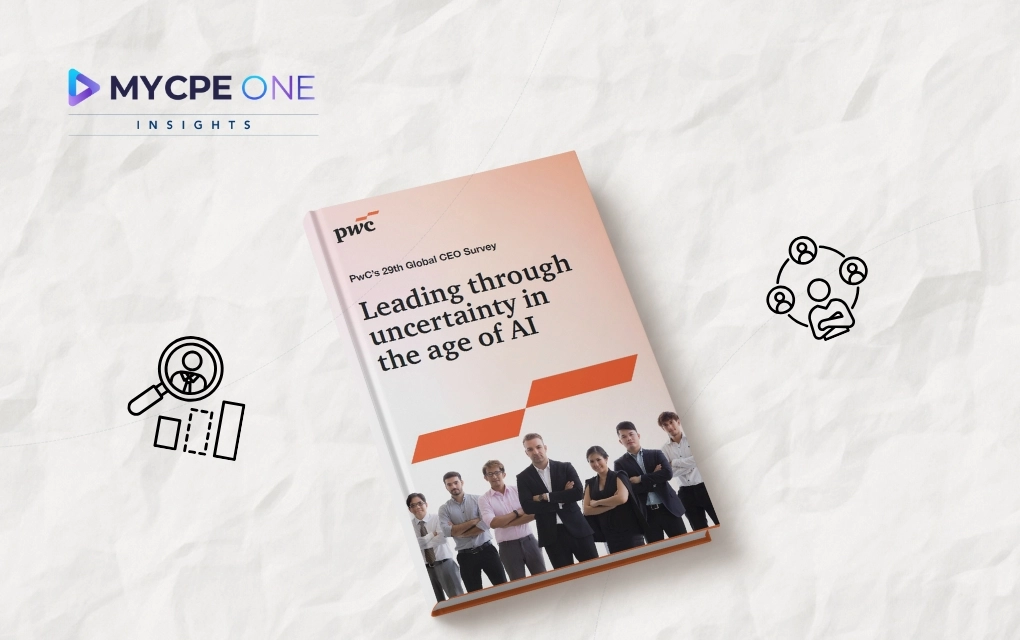
PWC’s 29th Global CEO Survey reveals a significant drop in CEO confidence in future revenue growth, despite increasing AI investments. This lack of confidence stems from a misalignment between technology and traditional business structures, and a persistent belief in reliance on basic business principles and robust systems.
I keep thinking about an old habit my father had. Every Sunday morning, before the house woke up, he would take out a small radio, the kind with a stiff dial, and tune it slowly. No rush. Just a patient twist until the static softened. He used to say, “If you move too fast, you miss the station.” At the time, it felt quaint. Maybe even a little stubborn. There is a scene in Apollo 13 where engineers dump everything on a table and say, “This is what we have to work with.” No speeches. No drama. Just hands on the basics. The movie never made that part flashy. It lingered instead on the silence between ideas. I have felt that same silence lately. In boardrooms. In earnings calls. In the pauses after someone says, “We’re rolling out AI everywhere.” The room goes quiet, not because people disagree, but because no one quite knows what to say next. It reminds me of that radio dial. Too much movement. Not enough listening. Maybe that’s what makes this moment feel strange. Not loud, not chaotic, just slightly off-tune.
When Mohamed Kande, PwC’s global chairman, says the CEO role has changed more in the past year than in the previous twenty-five, he is not describing a single shock. He is describing a stacking effect. Running today’s business. Changing it while it is still running. And somehow building tomorrow’s version at the same time. The numbers around confidence tell a softer but more revealing story. In PwC’s 29th Global CEO Survey, released in January 2026 in Davos, only about 30% of CEOs said they were very confident in revenue growth over the next twelve months. That is down from 38% a year earlier and 56% in 2022. Five years is not a long time, but the drop feels heavy.
Source: Fortun.com
What makes it more puzzling is that this dip sits next to enormous activity. More than half of CEOs still plan international investments in 2026. Technology remains the top sector. AI budgets are growing, not shrinking. So, the question is not whether leaders are trying. It is whether effort translates into belief. Confidence, in this case, seems less about optimism and more about whether leaders trust the machinery they are building. And right now, many do not.
Source: The Straits Times
There is a simple mental model that keeps resurfacing for me: speed does not replace structure. Charlie Munger used to talk about the danger of skipping steps, especially when something feels inevitable. Progress can make discipline feel optional, right up until it is not. AI has that feeling of inevitability. PwC surveyed 4,454 CEOs across 95 countries, and by Kande’s own words, no one is debating adoption anymore. Everyone is going for it. Yet only about 10-12% report clear cost or revenue benefits. 56% say they are getting nothing. That is not underperformance. That is misalignment.
Source: Fortun.com
The MIT study from August that found roughly 95% of generative AI pilots failing sits uncomfortably beside the hype. Not because the technology is flawed, but because the conditions around it often are. Clean data. Clear processes. Governance that people actually follow. None of these are glamorous. All of them are slow. The lens here is not technological maturity, but organisational honesty. AI does not tolerate mess very well. It reflects it. When leaders talk about execution gaps, they are often pointing at their own foundations, whether they mean to or not.
Applying that lens makes the current tension easier to see. CEOs are not facing a lack of tools. They are facing a surplus. AI promises scale, speed, and insight, but only if the underlying system can carry the load. PwC’s analysis shows companies applying AI broadly see profit margins nearly four percentage points higher than those that do not. That difference is meaningful, but it is also selective. The leaders seeing returns tend to have done the unsexy work first. Data hygiene. Process clarity. Decision rights. Kande keeps calling this “the basics,” which sounds almost too simple for Davos. But simple does not mean easy.
This also spills into how careers are shaped. The old apprenticeship model, where juniors learned by grinding through tasks, is thinning out as AI absorbs routine work. What replaces it is still unclear. Kande talks about system thinking over task execution. That sounds right, but it is also vague. Teaching someone how a system behaves under pressure is harder than teaching them how to complete a checklist. Geography adds another layer. The US remains the top investment destination, cited by about 35% of CEOs. Tariffs, cyber exposure, and geopolitical risk are weighing differently by region. About 22% of US CEOs report high exposure to tariff-related financial losses in 2026. These are not abstract risks. They sit directly inside operating models. Through all this, CEOs are being asked to move faster without losing control. That is a tough ask. Even for people who have been around the block.
The fragile part is not the technology. It is incentives. When boards demand rapid AI results while rewarding short-term financial optics, corners get cut. Data governance becomes a slide, not a practice. Pilots multiply. Accountability blurs. There is also a human risk. When leaders say they are “doing AI,” employees often hear uncertainty wrapped in confidence. That gap breeds quiet resistance. Or worse, quiet compliance without understanding. Cyber risk climbing from 24 to 31% of CEOs citing it as a major threat is not a coincidence. Complexity invites exposure.
Another question lingers. If only a small group of companies can translate AI into returns, does that widen an already uncomfortable divide? Kande notes that companies pulling back from investment due to geopolitical uncertainty are growing about two percentage points slower, with margins roughly three points lower. That is not catastrophic, but it compounds. Are we building systems that can absorb shock, or just ones that look sharp in calm weather? And how many leaders really know the answer, versus hoping they do?
I think back to that radio. Once the signal was locked in, my father would stop touching it. He did not fiddle. He trusted the structure he had set. There is something unfashionable about that kind of restraint. Kande urges leaders to look back fifty or a hundred years, not five. Railroads. Early internet infrastructure. Long periods of confusion before payoff. That perspective does not remove uncertainty, but it changes its weight.
There is a line often attributed to Peter Drucker, though the wording shifts: “The best way to predict the future is to create it.” I have always felt that line was incomplete. Creation requires patience with basics, not just vision. Maybe this moment is less about embracing change and more about sitting with it long enough to understand what it asks of us. Turning the dial slowly. Letting the static fade on its own.
Until next time…
Don’t forget to share this story on LinkedIn, X and Facebook
Subscribe now for $199 and get unlimited access to MYCPE ONE, from CPE credits to insights Magazine
📢MYCPE ONE Insights has a newsletter on LinkedIn as well! If you want the sharpest analysis of all accounting and finance news without the jargon, Insights is the place to be! Click Here to Join
You’ve reached the 3 free-content piece limit. Unlock unlimited access to all News & CPE resources.
Subscribe Today.
Already have an account?
Sign In