Join 250,000+
professionals today
Add Insights to your inbox - get the latest
professional news for free.
Join our 250K+ subscribers
Subscribe02 MAR 2026 / BUSINESS
The Big Four consultancy firms – Deloitte, EY, KPMG, and PwC – are adjusting their focus from automation and AI tools back to human judgement, following a realization that automated systems cannot replace the value of experiential learning and quality judgement. Amid concerns of diminishing apprenticeship culture, reputational scandals, and the impact of AI on the traditional consultancy model, these firms are highlighting the irreplaceable skills like empathy, leadership, storytelling, and human contribution for maintaining client trust and ensuring competitive survival.
For two years, Big Four boardrooms sounded like Silicon Valley pitch decks. AI was the rocket ship. Slides showed exponential curves. Internal tools multiplied. Junior workflows were fed into large language models like offerings to the efficiency gods. Then something shifted. Not because AI fizzled out. It didn’t. But because the human equation started to wobble. Now Deloitte, EY, KPMG, and PwC are recalibrating. Not loudly. Not with press releases declaring a U-turn. But the internal language has changed. The emphasis has changed. The investment lens has changed. They are rediscovering something they always sold but briefly sidelined: judgment. And that pivot tells us a lot about where consulting, and professional services more broadly, is heading next.
AI didn’t creep into consulting. It kicked the door in. McKinsey’s chief executive recently said the firm has the equivalent of 20,000 AI agents supporting 40,000 staff. That is not experimentation. That is structural integration. Across firms, proprietary tools now handle research drafts, data analysis, benchmarking, and documentation. EY’s internal AI platforms streamline early-career tasks like data entry and initial analysis. The pitch was clean and compelling:
On paper, it looked like operational poetry.
But consulting has always relied on a pyramid model. A wide base of junior talent doing analytical apprenticeship work, narrowing toward senior advisers and partners. AI does not just flatten that pyramid. It threatens to hollow it out. If the machines do the grunt work, where exactly do apprentices build the instincts that later command premium fees? Some industry observers are already talking about a shift toward an “obelisk” structure: fewer layers, heavier reliance on concentrated expertise. Elegant, perhaps. But culturally fragile. Because consulting does not just sell analysis. It sells belief.
Management consulting is what economists call a credence good. Clients cannot easily judge quality upfront. They buy trust. They buy confidence. They buy the sense that someone smart is willing to put their name behind the advice. As Kroll’s chief executive, Jake Silverman, put it bluntly, clients ultimately ask: what do you think, and are you prepared to stand behind it? That is not a software question. That is a human one. The problem is that the aura, the “magic,” has taken a few hits. Reputational scandals, regulatory scrutiny, audit controversies, and AI missteps have chipped away at the shine. Bain faced a temporary UK government tender ban. A former McKinsey partner was convicted of obstruction of justice. The Big Four have dealt with audit-related controversies across multiple geographies.
At the same time, generative AI has commoditized slices of consulting output. If a client’s in-house team can generate a respectable first-pass strategy deck using AI tools, what exactly justifies premium fees? Not formatting. Judgment. And that realization is why firms are circling back to something that never should have been sidelined in the first place.
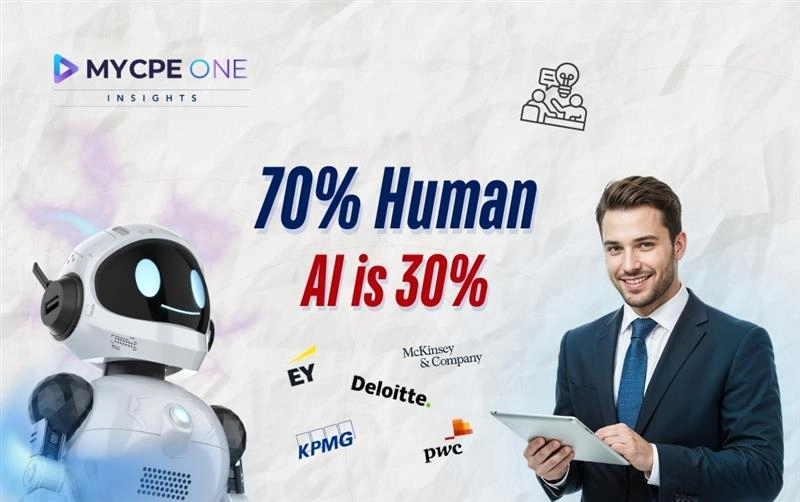
Across major firms, there is a noticeable pivot in tone. “Soft skills” are now framed as “human skills.” EY’s UK consulting leadership openly emphasizes investing in judgment, empathy, leadership, and storytelling. Boston Consulting Group says 70% of AI value comes from human contribution, with only 10% from algorithms and 20% from data and tech. That is not corporate fluff. That is strategic positioning. Firms have realized that when everyone has access to AI, the algorithm becomes table stakes. The edge shifts to interpretation, persuasion, and accountability. They are rebuilding in-person mentoring. BCG introduced pod models to connect junior staff more closely with seniors. Firms are investing again in coaching and community-building. Surveys show more than half of consultants now want greater face-to-face engagement, and flexible working has overtaken salary as a key driver of satisfaction.
Source: FT
This is not nostalgia. It is competitive survival. Because AI can synthesize data and simulate scenarios. It cannot absorb boardroom tension. It cannot read political undercurrents. It cannot take reputational heat when a recommendation backfires. Consulting, at its core, is a trust business. And trust does not scale automatically.
Let’s not sugarcoat it. PwC recently announced plans to cut around 175 junior audit roles in the UK and trimmed pay increases to 2.5%, below last year’s 3% and well below the 9% bump seen in 2022. The firm cited changing client demand and lower attrition. Similar headcount reductions have occurred at other firms, sometimes framed as AI-driven efficiency. But demand cycles and client insourcing are part of the story too. It is getting harder to win work. Clients are more sophisticated buyers. AI enables them to bring more routine analysis in-house. So yes, AI is reshaping workflows. But the slowdown in graduate hiring and tighter compensation policies reflect broader market recalibration as well. This is where the rubber meets the road. Firms must simultaneously:
That is a lot of spinning plates. And Gen Z professionals are not blindly buying prestige anymore. Surveys show younger employees prioritize ethics and alignment. Many say they would turn down work or quit if values clash. In other words, the old brand halo is not enough. You cannot just fake it till you make it anymore.
This is not the time to panic. It is also not the time to cling to the pre-AI past. The opportunity is in the overlap.
Finally, understand the commercial reality. Technology scales output. Humans scale trust. In a credence-based industry, trust carries pricing power.
The firms that win this decade will not be the ones with the flashiest AI dashboards. They will be the ones that integrate AI without eroding the apprenticeship model, without hollowing out culture, and without losing sight of what clients actually pay for. Consulting’s first AI phase was infatuation. The second was optimization. Now comes integration. And here is the kicker: once the magic fades, substance is all that remains. For professionals watching from inside or outside the Big Four, the message is clear. Master the tools. Sharpen your judgment. Guard your reputation like it is billable inventory. Because in a room full of algorithms, the most valuable seat still belongs to the person willing to stand behind the answer.
Until next time…
Don’t forget to share this story on LinkedIn, X and Facebook
Subscribe now for $199 and get unlimited access to MYCPE ONE, from CPE credits to insights Magazine
📢MYCPE ONE Insights has a newsletter on LinkedIn as well! If you want the sharpest analysis of all accounting and finance news without the jargon, Insights is the place to be! Click Here to Join
You’ve reached the 3 free-content piece limit. Unlock unlimited access to all News & CPE resources.
Subscribe Today.
Already have an account?
Sign In