Join 250,000+
professionals today
Add Insights to your inbox - get the latest
professional news for free.
Join our 250K+ subscribers
Subscribe30 DEC 2025 / BUSINESS
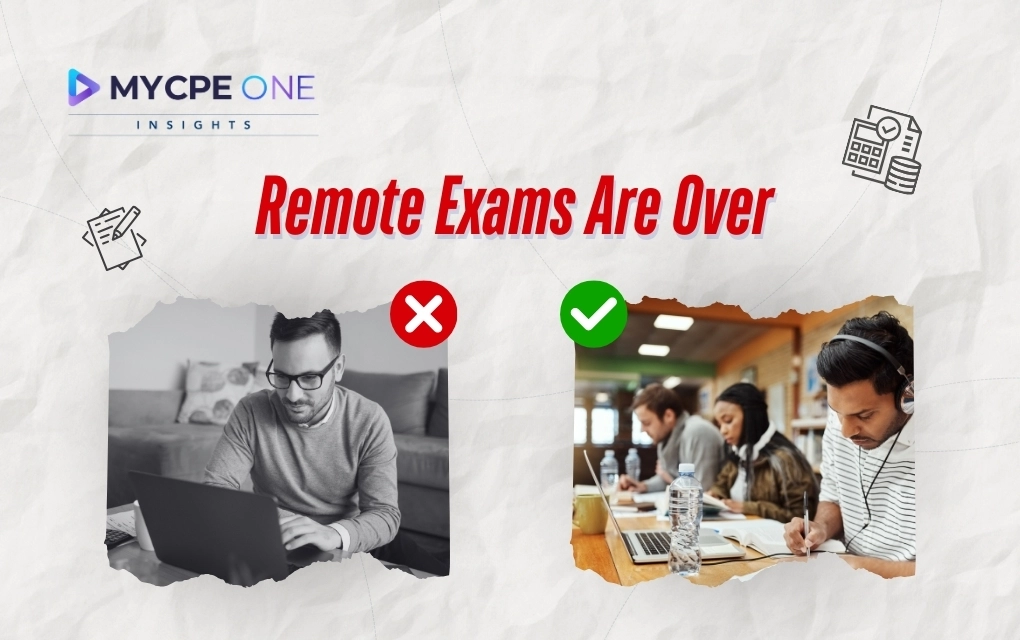
The Association of Chartered Certified Accountants (ACCA) has decided to stop remote exams from March onwards, due to increasing issues with cheating using AI technology. The decision follows several cheating scandals within the professional accounting industry that resulted in significant fines for major companies.
The living room desk, the webcam stare, the nervous glance at the Wi-Fi router. For a few years, professional accounting exams felt more like a home surveillance experiment than a rite of passage. That era is ending. The world’s largest accounting body just decided the couch has officially lost exam privileges. From March, the Association of Chartered Certified Accountants is pulling the plug on remote exams, pushing candidates back into physical test centers unless there is a truly exceptional reason not to. The reason is simple and uncomfortable. Cheating got smarter. Fast.
Remote invigilation was born out of necessity. Lockdowns froze exam halls, and the profession needed a workaround to keep the pipeline moving. It worked, at least for a while. Students could qualify from home, careers stayed on track, and nobody had to drive six hours to a testing center while pregnant or exhausted. Then artificial intelligence showed up like an uninvited guest who reads the room and ignores it anyway. ACCA chief executive Helen Brand told the Financial Times that cheating systems are now outpacing safeguards. That is not a tech issue. That is a reality check. One student described friends snapping photos of exam questions and feeding them straight into an AI chatbot. Clean. Quick. Hard to catch. At some point, you stop patching the holes and admit the ship needs a different route.
This decision did not happen in a vacuum. The accounting profession has spent the past few years cleaning up exam misconduct scandals that refuse to stay buried. In the U.S., Canada, Australia, and the Netherlands, Big Four firms have paid millions in penalties after staff cheated on internal ethics and training exams. EY alone agreed to a $100 million settlement with U.S. regulators in 2022 after dozens of employees were caught cheating and the firm misled investigators. That number still makes people wince. The PCAOB fined Dutch arms of Deloitte, PwC, and EY $8.5 million in June for widespread exam misconduct. KPMG’s Dutch unit followed earlier with its own penalties. Regulators in the UK have been blunt. Cheating is not hypothetical. It is happening. A lot. And while these internal firm exams are separate from ACCA qualification tests, the reputational spillover is real. When trust slips, everyone pays.
Let’s be honest. This is not about lazy students alone. AI has lowered the barrier in a way the profession did not fully anticipate. You do not need a hidden formula up your sleeve anymore. You need a phone, a camera, and decent lighting. Brand herself acknowledged that even in-person exams are not immune. People have always tried tricks. Notes in socks. Scribbles on arms. Mirrors. Human creativity is undefeated when incentives are wrong. But remote exams scale the problem. When thousands of candidates sit high-stakes tests behind screens, the odds tilt. As Brand put it, there are very few high-stakes exams left that still allow remote invigilation. Accounting is simply catching up. Universities are already walking the same path. Pen and paper essays are back. Google and McKinsey have dialed back remote interviews. The pattern is clear. When assessment matters, proximity matters.
Here is the twist. ACCA is not running away from AI. Quite the opposite. The body is overhauling its flagship qualification for the first time in a decade, adding heavier focus on AI, blockchain, and data science. Brand says AI has fundamentally shifted the skills accountants need. That is not marketing talk. Firms are investing aggressively in AI tools to boost efficiency, automate testing, and streamline analysis. The downside? Junior auditors risk losing hands-on learning as machines take over routine work. You cannot build judgment if software does all the thinking.
So, ACCA’s answer is simulation. New modules will push candidates into real-time scenarios that test skepticism, decision-making, and adaptability rather than rote memorization. Less static exams. More applied thinking. In other words, AI broke the exam model, so the exam model is being rebuilt to reflect an AI-first profession. Funny how that works.
This shift is not painless. Remote exams opened doors for people with caregiving duties, health constraints, or geographic barriers. For some, it was the only reason qualification stayed possible. Is there a middle ground? ACCA says exceptions will exist. But the default has changed. Integrity won the argument. That raises a few uncomfortable questions. How do you balance access with trust? How much friction is acceptable to protect professional credibility? And how do you test judgment in a world where machines can answer faster than humans think? As the saying goes, trust takes years to build and minutes to torch. Accounting lives on trust. Lose that, and everything else is noise.
This is not about nostalgia for exam halls. It is about signaling. ACCA is telling regulators, firms, and the public that qualifications still mean something. That effort still matters. That shortcuts are not part of the deal. For students, the message is clear. Show up. Do the work. Phones stay dark. AI stays outside. For firms, it is another reminder that culture does not stop at client work. Training, ethics, and assessments count. Regulators are watching. Closely. And for the profession as a whole, this feels like a line in the sand. Technology will keep advancing. People will keep testing boundaries. But some things, like trust, still need a room, a desk, and a proctor who can see your socks. No free passes. No magic buttons. Just pencils, pressure, and proof you earned it.
Until next time…
Don’t forget to share this story on LinkedIn, X and Facebook
Subscribe now for $199 and get unlimited access to MYCPE ONE, from CPE credits to insights Magazine
📢MYCPE ONE Insights has a newsletter on LinkedIn as well! If you want the sharpest analysis of all accounting and finance news without the jargon, Insights is the place to be! Click Here to Join
You’ve reached the 3 free-content piece limit. Unlock unlimited access to all News & CPE resources.
Subscribe Today.
Already have an account?
Sign In