MYCPE ONE
MYCPE ONE LOGO

Join 250,000+
professionals today

Add Insights to your inbox - get the latest
professional news for free.

MYCPE ONE insights

Wood Group Hit With £13M Fine Over Misleading Financial Results

Join our 250K+ subscribers

Join our 250K+ subscribers

Subscribe

06 MAR 2026 / BUSINESS

Wood Group Hit With £13M Fine Over Misleading Financial Results

Wood Group Hit With £13M Fine Over Misleading Financial Results

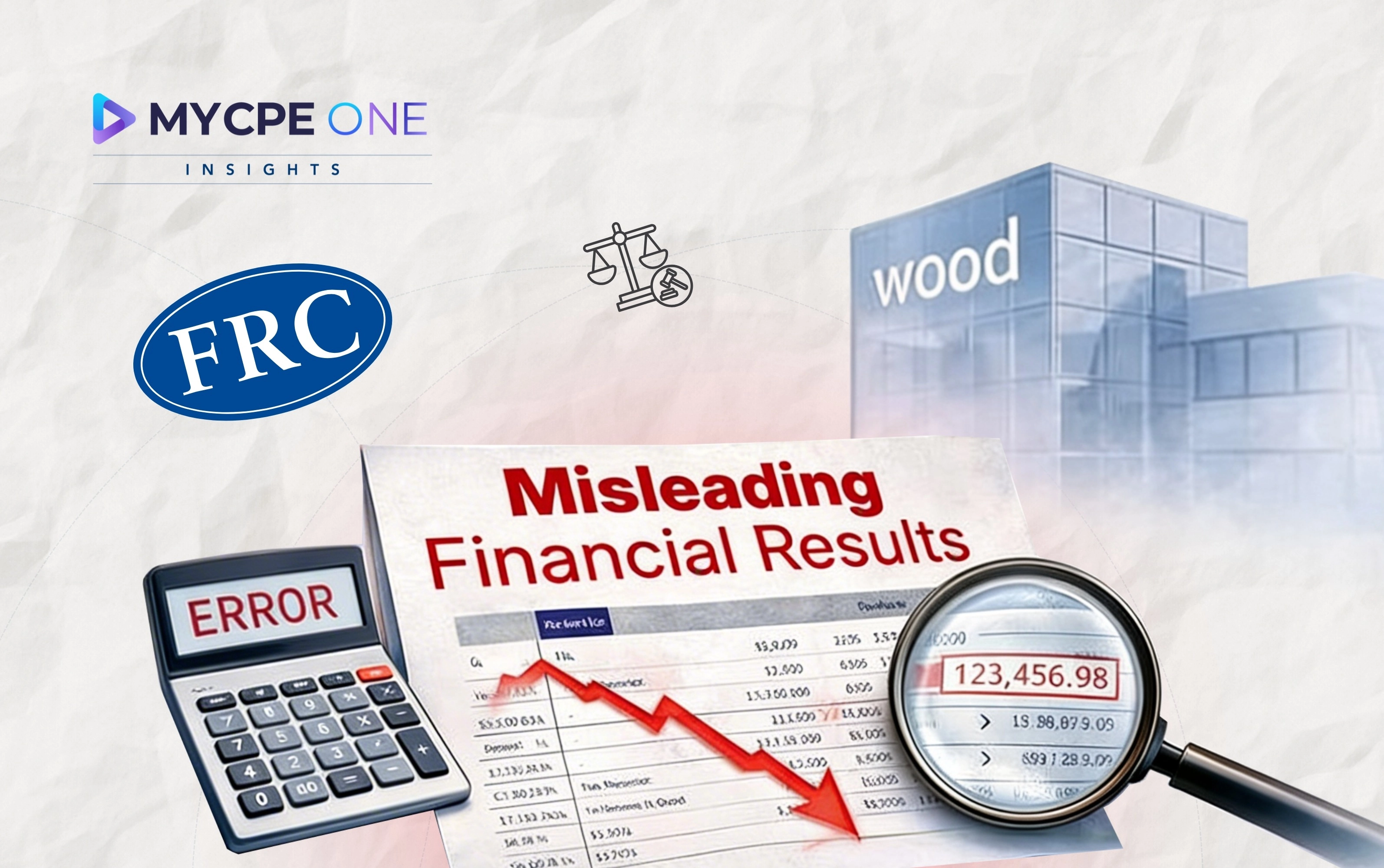
Every accountant has seen that moment. The spreadsheet looks fine at first glance. Then one number feels off. You dig deeper and suddenly the whole thing starts wobbling like a loose floorboard. That uncomfortable feeling sits at the center of the latest enforcement action from the UK’s Financial Conduct Authority. John Wood Group, the Aberdeen engineering firm known for its work on oil and gas infrastructure, just picked up a £12.9 million ($17.4M) fine for publishing financial results the regulator says were inaccurate and misleading. For professionals who live inside financial reporting, this story hits a familiar nerve. It raises an old question with fresh urgency: when results start slipping, how much pressure creeps into the accounting process? Because once judgment bends even a little, things can go sideways fast.

When Did “Close Enough” Start Looking Acceptable?

The FCA’s findings cover financial disclosures released between January 2023 and November 2024. According to the regulator, Wood Group published inaccurate information in its full-year results for 2022 and 2023 and again in its half-year 2024 reporting. The issue was not a single bad estimate. Regulators pointed to a pattern. Certain underperforming engineering projects triggered accounting judgments that leaned toward preserving previously reported financial outcomes. In plain English, the company appeared reluctant to let declining project performance show up clearly in the numbers.

The FCA said Wood Group failed to take reasonable care to ensure its market announcements were not false or misleading. That language carries weight in securities regulation because investors rely on those disclosures when pricing risk. Steve Smart, the FCA’s enforcement director, summarized the problem bluntly: investors depend on accurate information to make decisions. And this time, the information did not pass that test.

Was This Accounting Judgment… or Management Pressure?

Things became more complicated once an independent review entered the picture. In late 2024, Wood Group hired Deloitte to examine its financial reporting after large write-offs tied to legacy engineering contracts. These were “lump sum turnkey” projects, arrangements where contractors take on full design and construction risk for a fixed price. Anyone who has worked with these contracts knows they can turn ugly if costs spiral. Deloitte’s review uncovered deeper concerns. Investigators found what they described as material weaknesses in financial culture within the company’s projects business. There were also failures in communication between operational units and the central finance team.

More troubling, the review suggested management pressure existed to maintain previously reported financial results even as certain contracts deteriorated. That tension is familiar territory in accounting. Warren Buffett once said, “Managers who always promise to make the numbers will at some point be tempted to make up the numbers.” The quote circulates in accounting circles for a reason. Pressure rarely arrives in dramatic fashion. It often shows up quietly through optimism, delayed recognition of losses, or assumptions that feel just a bit too convenient. Before long, judgment starts drifting.

How Does a Reporting Issue Turn into a Market Meltdown?

Once Wood Group’s reporting problems surfaced, the consequences moved quickly. The company delayed multiple financial announcements while it worked to restate its numbers. Its shares were eventually suspended from trading on the London Stock Exchange in May 2025 after the firm failed to publish its results on time. Investors did not stick around to wait for clarity. Between late 2024 and mid 2025, Wood Group’s share price collapsed dramatically, wiping out a large portion of its market value. At one point, the stock had lost roughly 85% from earlier levels. That kind of decline does not happen because of one accounting adjustment. It reflects lost confidence. Markets can tolerate bad news. They struggle with uncertainty. If investors start wondering whether the financials reflect reality, they usually hit the exit button first and ask questions later. Accounting professionals know this dynamic well. Trust is the real currency behind financial reporting. Once that trust cracks, rebuilding it takes years.

Did Corporate Culture Play a Bigger Role Than Accounting Rules?

One of the most revealing elements of the case was not the accounting itself, but the language used to describe internal culture. Investigators highlighted failures in financial oversight within the project's business unit. Information that should have reached auditors reportedly did not always flow properly. In another twist, the company’s chief financial officer stepped down in early 2025 after admitting he had misstated his professional qualifications. That detail raised additional questions about governance at the firm. None of this helps credibility when regulators are already examining financial reporting. Corporate culture rarely appears in financial statements, yet it often drives the behavior behind them. A healthy finance culture encourages uncomfortable conversations early. A weaker one tends to bury problems until they grow into something regulators cannot ignore.

Every CPA firm has seen a version of this story with clients. Imagine an engineering client with several large fixed-price contracts. A project manager insists cost overruns are temporary. The controller delays recognizing losses because the project might recover. A quarter later, the loss doubles. At that point, everyone in the room knows what happened. The numbers were not technically wrong at first. They were just overly optimistic. Multiply that scenario across several projects in a public company, and the problem becomes a regulatory investigation.

Why Did the Fine Shrink by 30%?

Interestingly, the FCA originally considered a much larger penalty. The potential fine reached about £18.5 million. It was reduced by 30% after Wood Group cooperated with regulators and agreed with the findings. That discount is common in enforcement actions. Regulators often reduce penalties when companies accept responsibility and work with investigators rather than fighting the process. Still, even the reduced fine is only part of the story. Wood Group’s bigger financial hit came elsewhere. The company recently agreed to be acquired by a Dubai-based engineering firm, Sidara, for roughly £216 million. That figure tells its own tale.

Sidara had previously explored a deal valued at around £1.58 billion before the reporting issues surfaced. By the time the acquisition moved forward, the price had dropped dramatically. Accounting problems rarely stay confined to accounting. They spill into valuations, deals, investor confidence, and leadership stability.

What Should Accounting Professionals Be Watching Now?

For accountants, auditors, and finance leaders, this case is less about a single company and more about familiar warning signs.

  • The first is project accounting risk. Large engineering contracts often involve estimates about future costs, delays, and performance milestones. Small shifts in assumptions can swing reported profits dramatically.
  • The second is cultural pressure around financial targets. When management feels committed to maintaining previous results, accounting judgment can slowly lean in that direction.
  • The third is the control structure. Weak communication between operational units and finance teams leaves gaps where reporting errors can hide.

Regulators on both sides of the Atlantic have increased scrutiny around these areas. The SEC, PCAOB, and FCA have all emphasized governance, internal controls, and transparency in recent enforcement actions. That trend is unlikely to slow down.

The Real Lesson Hidden in This Case

At the end of the day, this story is not really about a £13 million fine. It is about what happens when financial reporting starts drifting away from operational reality. Most accounting problems do not start as fraud. They start as optimism. Then optimism turns into delay, delay turns into pressure, and pressure eventually produces numbers that no longer reflect the underlying business. Charlie Munger once joked that if you mix incentives and accounting, you get interesting outcomes. Wood Group’s experience offers a fresh reminder of that idea. For professionals reviewing financials today, the question worth asking is simple. Are the numbers telling the real story, or just the story everyone hopes to see?

Until next time…

Don’t forget to share this story on LinkedIn, X and Facebook

Subscribe now for $199 and get unlimited access to MYCPE ONE, from CPE credits to insights Magazine

📢MYCPE ONE Insights has a newsletter on LinkedIn as well! If you want the sharpest analysis of all accounting and finance news without the jargon, Insights is the place to be! Click Here to Join

Unlock Annual Access to News & CPE Subscription

You’ve reached the 3 free-content piece limit. Unlock unlimited access to all News & CPE resources.
Subscribe Today.

News & Updates

  • Exclusive News & Insights
  • Latest Regulatory Updates
  • Accounting Industry Trends
  • Expert Insights
  • AI-Driven Audio & Summaries
  • Infographics & Videos
  • CPE-Approved Articles
  • Digital Magazine
  • Benchmarking Blogs

Unlimited CPE Access for 1 Year

  • 15,000+ Hours of Content
  • 500+ Subject Areas
  • Mandatory Ethics Courses
  • 250+ Compliance Packages
  • 50+ Virtual Conferences and Events Access
  • Format: Live, Audio, Video, E-Books
  • Audio Based Courses & Podcasts
  • Add External Certificates with AI
  • AI Compliance Tracking and Report
  • Instant Certification and Fast Reporting
  • Mobile App Access (iOS and Android)
  • Dedicated Support System
  • Practical Training Programs
  • AI Academy Access
  • Tax Academy Access
  • Audit Academy Access
  • Leadership Academy Access