Join 250,000+
professionals today
Add Insights to your inbox - get the latest
professional news for free.
Join our 250K+ subscribers
Subscribe27 MAR 2026 / ECONOMY
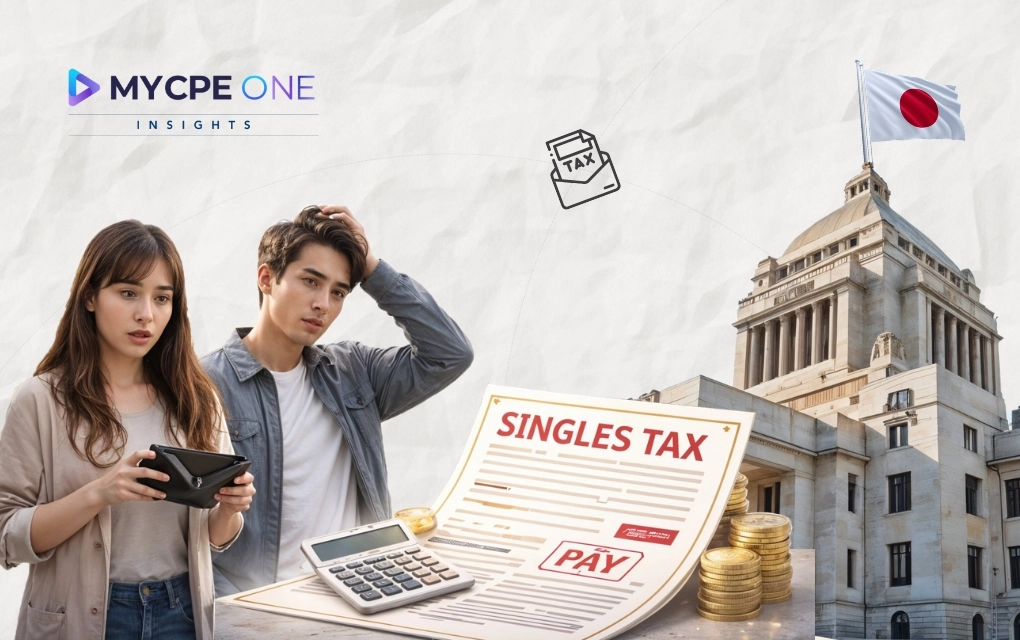
Japan's government has introduced a policy, popularly and inaccurately referred to as a "singles tax," intended to fund child-rearing support through additional payments to public health insurance premiums. The policy, which will impact all citizens regardless of marital status or parenthood, has sparked controversy as the direct benefits are largely skewed towards households with children, leading to greater resentment among single and childless workers who already feel disadvantaged by the current system.
Some policy ideas arrive with a clean title and a clean message. This one showed up wearing a fake mustache. Japan’s so-called “singles tax” sounds like the government woke up and decided unmarried adults needed a special bill in the mail. That is not what is happening. The real policy is a new contribution tied to public health insurance premiums, created to help fund child-rearing support. Everyone in the system pays, not just single people. Still, the nickname stuck because the politics feel a little too on the nose: a country with fewer babies, more older citizens, and more one-person households has decided to ask the whole working population to help cover the tab. For people already feeling squeezed, that lands with a thud. Japan is imposing this contribution because its demographic math looks rough. Birthrates have fallen, the population is aging, and policymakers want more support for child allowances, pregnancy assistance, and childcare capacity. The public argument starts when people ask a fair follow-up: if the burden falls on everyone, but the direct benefits flow mostly to households with children, is this social solidarity, or is it a transfer from one strained group to another?
Because catchy labels can do real damage, and this one hit a nerve. Japan is not introducing a literal bachelor tax. Officials have pushed back on that label, and the policy's structure supports them. The new Child and Childcare Support Fund will be financed through small add-on payments to public health insurance premiums. Starting in 2026, contributors will pay an average amount that begins around a few hundred yen per month, with the burden gradually rising over time. Married people pay. Childless couples pay. Parents pay. Single workers pay. Foreign residents in the system may pay too, depending on their insurance participation. So, the nickname is technically wrong.
Source: Bloomberg
But the nickname survives because people understand what the spreadsheets imply. Families with children will receive far more back through allowances and support measures than they contribute. Non-parents will not. That makes the levy feel, in practice, like a charge imposed on those outside the child-rearing lane. It is not a tax on being unmarried. It is a universal contribution whose benefits skew heavily toward one group. In politics, that distinction matters less than policymakers wish. You can call it a contribution, a support fund, or a civic duty. Plenty of workers will still look at the deduction on their payslip and say, “Come on, man.”
That is where this story gets real for accountants, payroll teams, and finance leaders. Japan’s single-person households now make up the largest household category, a major social shift from the old multigenerational model. That matters because the people being asked to contribute are not some small fringe group of carefree urban loners living out a sitcom plot. Many are younger workers delaying marriage because wages feel tight. Others are elderly people living alone after losing a spouse. Some are married without children. Some are foreigners working in Japan. Policy shorthand makes them sound like one block. Reality does not.
The backlash also reflects a broader truth: many singles already believe the system gives them the short end of the stick. Japan’s tax code offers spousal deductions and dependent-related relief that single residents cannot claim. One example in the material you shared shows that a taxpayer earning ¥10 million (≈ $66,000–$67,000) annually could save about ¥111,000 (≈ $740–$750) in yearly taxes if married to a non-earning spouse. That means the new child-support contribution does not arrive in a vacuum. It lands on top of an existing structure that many already see as more generous to traditional family units. When people say this feels like “one battle after another,” that is not just internet whining. That is accumulated frustration.
In practical terms, the repercussions could run in several directions.
That is the part finance professionals should watch closely. A policy can work on paper and still create trust problems if people think the burden falls unevenly.
That is the trillion-yen question. Japan will likely move ahead unless political pressure forces tweaks. Families may welcome the added support, while singles and childless workers will see it as another line item on an already stretched paycheck. That tension is not going anywhere. The bigger issue is effectiveness. A small payroll-linked contribution alone is unlikely to change why people delay marriage or skip having kids, think housing costs, job security, and work culture. If policymakers want results, they may need to ease pressure earlier in people’s lives, not add to it. That is the story. Past attempts at explicit bachelor taxes failed. Present policy spreads the cost across everyone. The future depends on one thing: whether people believe the system is fair. If they don’t, the nickname will stick longer than the policy itself.
Until next time…
Don’t forget to share this story on LinkedIn, X and Facebook
Subscribe now for $199 and get unlimited access to MYCPE ONE, from CPE credits to insights Magazine
📢MYCPE ONE Insights has a newsletter on LinkedIn as well! If you want the sharpest analysis of all accounting and finance news without the jargon, Insights is the place to be! Click Here to Join
You’ve reached the 3 free-content piece limit. Unlock unlimited access to all News & CPE resources.
Subscribe Today.
Already have an account?
Sign In