Join 250,000+
professionals today
Add Insights to your inbox - get the latest
professional news for free.
Join our 250K+ subscribers
Subscribe02 JUN 2026 / ECONOMY
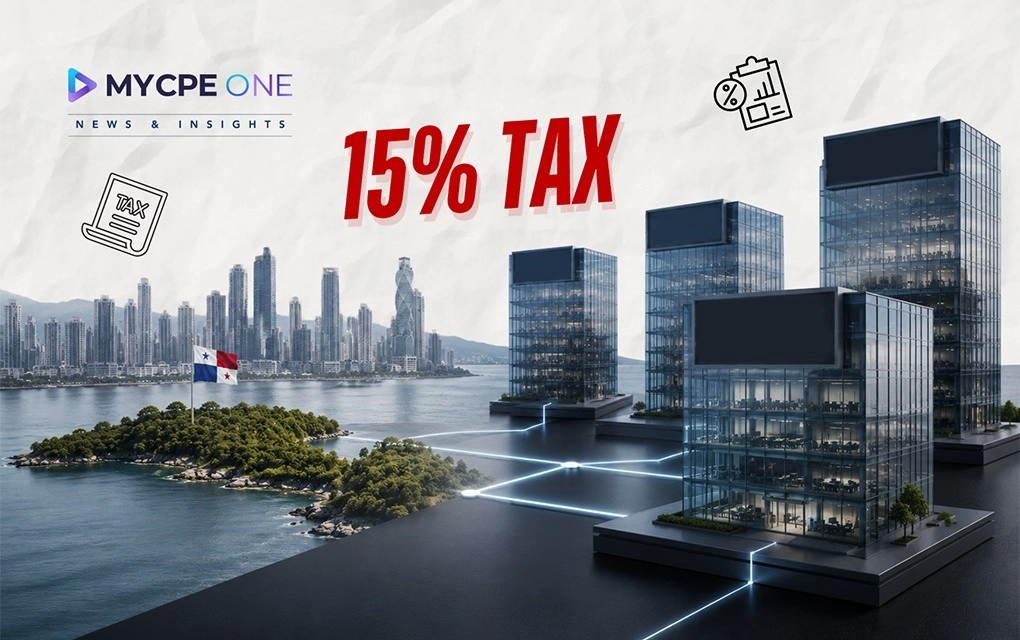
Panama has implemented a 15% tax on certain types of foreign income earned by offshore companies with no demonstrable economic activity in the country. The decision was a response to international pressure, particularly from the European Union, to end Panama's reputation as a tax haven, in a broader context of increasing global demand for tax transparency.
Panama just sent the offshore world a polite but expensive message: if your company lives here only on paper, the free ride may be over. For decades, Panama’s territorial tax system made it a favorite parking spot for foreign wealth, holding companies, and passive income structures. The pitch was simple. If income came from outside Panama, Panama usually did not tax it. That was great for wealthy foreigners, family offices, and advisers who wanted a clean offshore setup. It was less great for global regulators still haunted by the Panama Papers. Now Panama has approved a 15% tax on certain passive foreign income earned by shell style entities that cannot prove real economic activity in the country. The new rules target income such as dividends, interest, royalties, capital gains, and foreign real estate income. Companies that want to avoid the levy must show qualified personnel, physical facilities, strategic decision making in Panama, and real operating expenses. That changes the tone. Panama is not ending offshore finance. It is telling offshore users to bring substance, pay tax, or move.
Panama did not wake up one morning and decide to annoy wealthy clients for sport. The timing comes from international pressure, especially from the European Union. Panama remains on the EU list of non cooperative jurisdictions for tax purposes. That label can hurt more than a country’s pride. It can raise due diligence questions, increase banking friction, scare off legitimate foreign investment, and make multinational groups think twice before using Panama in tax structures. The EU updates the list twice a year, with the next revision scheduled for October 2026. That gives Panama a tight deadline to show real progress before regulators take another look. The government wants to move before the label sticks even harder.
The reform also fits the broader global tax mood. The OECD’s tax transparency work, the global minimum tax discussion, stronger beneficial ownership rules, and tougher bank compliance standards all point in the same direction. Countries can still compete for capital, but they need credible rules. The old “mailbox company with no people” model now looks like a bad sequel nobody asked for. Panama’s Finance Minister Felipe Chapman has framed economic substance as central to getting Panama off the EU list. That explains the urgency. The country wants to keep its territorial tax identity while proving it no longer offers an easy shelter for passive income with no real business footprint.
Panama could lose some offshore business as shell companies close or move elsewhere. Corporate service providers may feel that impact first. But the country could gain higher quality investment. The 15% tax raises revenue, while the substance rules encourage companies to hire staff, lease offices, and spend money locally. For accountants, lawyers, and advisers, the shift may mean less incorporation work and more compliance and restructuring services. The outcome depends on execution. Clear and predictable rules could improve Panama’s reputation and support EU delisting efforts. Poor implementation could push capital elsewhere. Best case: more real business activity and stronger credibility. Worst case: capital flight and continued reputational challenges.
If you use a Panama entity to earn passive foreign income, you may need to prove real economic substance in Panama or face a 15% tax. The rules target certain multinational group entities that receive foreign passive income and cannot meet substance requirements. Exemptions apply to sectors such as merchant marine and regulated financial institutions. For many investors and family offices, the key questions are simple: Who makes decisions? Where are they made? Does the company have staff, an office, and real operations in Panama?
In practice, there are three options:
For advisers, this means offshore planning now requires more than forming a company. Documentation, reporting, and proof of real activity matter more than ever.
As Panama tightens rules on shell companies, Bali is positioning itself as a future financial hub for global investors, banks, and family offices. Indonesia hopes to attract international capital through special incentives and a business-friendly environment. But success will depend on more than lifestyle appeal. Investors also need legal certainty, trusted banking systems, and clear regulatory standards. The connection between Panama and Bali is simple: modern financial centers can no longer rely on paper companies alone. Real economic activity and substance are becoming essential requirements worldwide.
Panama’s new 15% tax marks a shift away from the traditional offshore model built on passive income and minimal local presence. While some investors may leave, others will strengthen their operations to meet substance requirements. For wealthy individuals, multinational groups, and their advisers, the key takeaway is clear: structure alone is no longer enough. As global regulators demand greater transparency, jurisdictions that combine attractive tax policies with genuine economic activity will be best positioned to attract and retain international capital.
Until next time…
Don’t forget to share this story on LinkedIn, X and Facebook
Subscribe now for $199 and get unlimited access to MYCPE ONE, from CPE credits to insights Magazine
📢MYCPE ONE Insights has a newsletter on LinkedIn as well! If you want the sharpest analysis of all accounting and finance news without the jargon, Insights is the place to be! Click Here to Join
You’ve reached the 3 free-content piece limit. Unlock unlimited access to all News & CPE resources.
Subscribe Today.
Already have an account?
Sign In