
Join 250,000+
professionals today
Add Insights to your inbox - get the latest
professional news for free.
Join our 250K+ subscribers
Subscribe28 MAY 2026 / ECONOMY
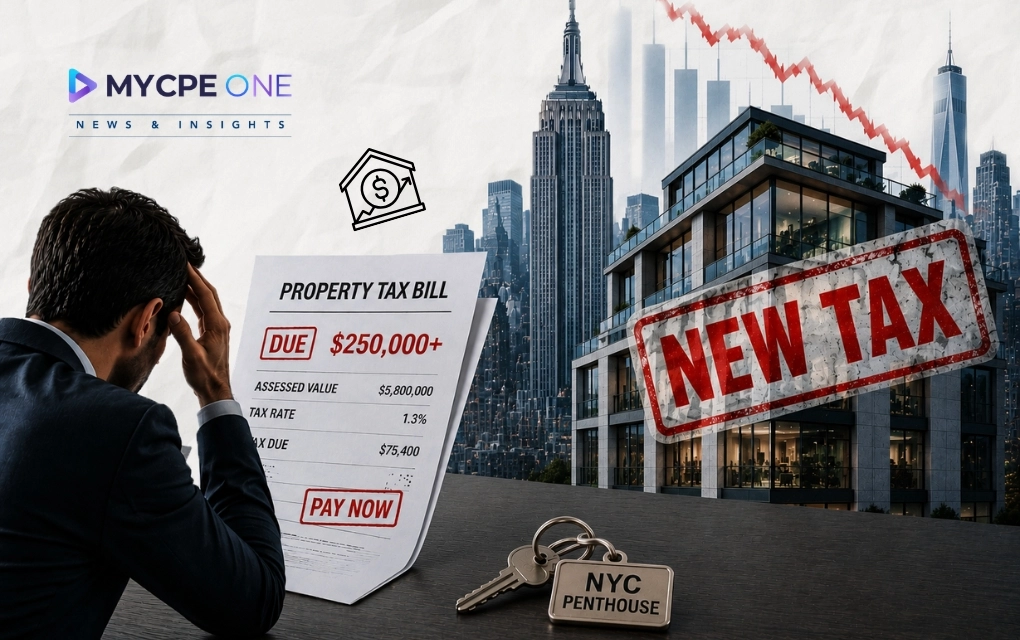
New York and Florida are redefining property taxes in diametrically opposed ways. New York has imposed a "pied-à-terre" tax on luxury second homes, potentially generating $500 million annually, while Florida Governor Ron DeSantis proposes to gradually eliminate property taxes on primary homes. These changes reflect the national affordability debate and question who should bear the cost of living in America, marking a shift in state taxation strategies.
For years, property taxes sat in the background like the office copier. Everyone complained about them, nobody loved them, and most people assumed they’d always be there humming away. Then New York and Florida decided to flip the script from opposite directions, and suddenly property taxes became the main character in America’s affordability debate. One state wants to squeeze luxury second homes for another $500 million. The other wants to wipe property taxes off primary homes almost entirely. That’s not just politics talking. It’s a flashing neon sign that states are scrambling to answer the same uncomfortable question: who should carry the cost of living in America now?
New York lawmakers approved a new “pied-à-terre” tax as part of the state’s $268 billion budget package. Starting July 1, owners of luxury second homes in New York City will face annual surcharges ranging from 0.8% to 1.3% for single-family homes and as high as 6.5% for condos and co-ops under the state’s temporary valuation system. The tax targets non-primary residences valued above $5 million, though condos and co-ops initially face lower thresholds because New York’s property valuation system remains, frankly, a bit of a mess. During the first two years, many Class 2 properties with “market values” above $1 million could fall into the tax pool. Critics immediately called it symbolic politics. Supporters called it overdue fairness. Truth sits somewhere in the middle.
New York City needs revenue badly. Office vacancy issues, affordability pressure, infrastructure costs, migrant support spending, and slower-than-expected commercial recovery continue to pound municipal finances. The city estimates the tax could generate roughly $500 million annually. Still, tax professionals know projections on behavioral taxes often age like unrefrigerated sushi. People change behavior. Investors restructure ownership. Residency classifications suddenly become very important. CPAs and tax attorneys across New York probably smelled billable hours the moment this proposal dropped.
While New York sharpened its tax pencil, Florida Governor Ron DeSantis essentially walked into the room and said: “What if we just stop taxing primary homes altogether?” His proposal would gradually eliminate property taxes for most homesteaded Florida residents by dramatically increasing the homestead exemption. Initially, exemptions would rise to $250,000, eliminating property taxes for roughly 60% of homeowners. Eventually, the exemption could climb to $500,000, covering an estimated 92% of homeowners statewide. DeSantis framed the issue as protecting working Floridians instead of wealthy seasonal residents buying $25 million homes in Palm Beach for a few months each year.
“If some billionaire from Brazil is buying, tax them,” he said during the announcement. That line landed because it taps into something bigger happening across the country. Americans increasingly view housing not just as shelter, but as a dividing line between economic security and financial stress. The old assumption that rising home values automatically make people wealthier feels shaky when insurance premiums, groceries, healthcare, and mortgage costs all keep climbing too. As Morgan Housel wrote in The Psychology of Money, “A good decision is one that works for you.” States are now applying that logic to taxation itself. New York says luxury nonresidents should pay more. Florida says full-time residents should pay less. Both arguments poll surprisingly well.
A Brookings Institution report found that 45.5% of U.S. households in 2024 did not earn enough to cover basic necessities where they lived, as housing, transportation, healthcare, and childcare costs outpaced wage growth. Another $1,000 in annual expenses would push 3 million more households over the edge. That changes how people view property taxes. For many retirees and middle-income homeowners, they no longer feel like a civic contribution but another financial strain, even as states still need revenue for schools, police, firefighters, transit, and infrastructure.
The result is a growing political push to tax “someone else” instead: second-home owners, out-of-state buyers, wealthy investors, institutional landlords, and luxury property holders. At the same time, mobility has made tax planning easier. High earners relocate faster than governments once expected, shifting residency to places like Florida or Texas or restructuring ownership through trusts and LLCs. Remote work only accelerated the trend. A decade ago, changing state residency sounded dramatic. Now it sounds routine.
Clients are no longer just asking about deductions. They’re asking where they should live, retire, invest, or establish residency. Tax planning conversations increasingly sound like life planning with spreadsheets. New York CPAs may soon spend more time documenting residency tests and structuring ownership around pied-à-terre rules. Florida CPAs may face the opposite challenge: helping clients qualify for homestead benefits and navigate relocation planning.
Then comes the compliance headache. New York’s proposal still leaves major questions unresolved around valuations, appeals, and enforcement. Tax professionals know what follows: more regulations, tighter definitions, and plenty of gray areas. It feels a bit like the housing version of The Big Short. Everyone sees stress in the system, but nobody agrees where the real crack begins.
More than a dozen states already debate major property tax reforms or limitations. Rising home prices, affordability concerns, and voter frustration keep pushing the issue higher politically. At the same time, local governments remain addicted to property tax revenue because it’s stable, predictable, and difficult to avoid compared to income taxes. That creates an awkward reality: politicians want to promise relief while cities still need cash. Some states may shift toward taxing luxury or secondary ownership more aggressively. Others may expand residency exemptions. Some may push transaction-based taxes instead. Others could increase sales or tourism taxes to offset housing relief.
Nobody fully agrees on the solution because the underlying problem runs deeper than taxes alone. Housing supply remains tight. Wage growth remains uneven. Inflation still lurks in the background like an unpaid parking ticket. Yet one thing feels increasingly clear: the old property tax model is entering its stress-test era. And accountants, whether they asked for it or not, are now sitting in the front row.
Until next time…
Don’t forget to share this story on LinkedIn, X and Facebook
Subscribe now for $199 and get unlimited access to MYCPE ONE, from CPE credits to insights Magazine
📢MYCPE ONE Insights has a newsletter on LinkedIn as well! If you want the sharpest analysis of all accounting and finance news without the jargon, Insights is the place to be! Click Here to Join
You’ve reached the 3 free-content piece limit. Unlock unlimited access to all News & CPE resources.
Subscribe Today.
Already have an account?
Sign In