Join 250,000+
professionals today
Add Insights to your inbox - get the latest
professional news for free.
Join our 250K+ subscribers
Subscribe22 APR 2026 / ECONOMY
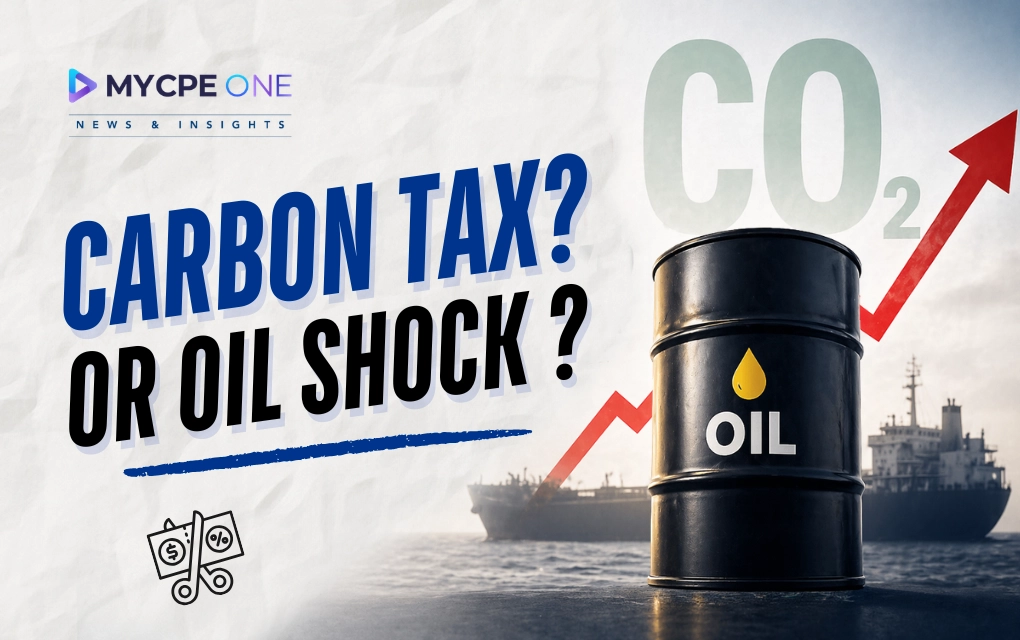
Policy and economic experts are debating the impacts of surging crude oil prices on the global climate policy framework, with some arguing that geopolitical pressures have effectively created a de facto carbon tax. The indirect costs and increased volatility of energy prices related to these political struggles may further complicate the implementation of a formal global carbon pricing framework.
Oil markets do not usually double as climate policy tools. Yet here we are, watching crude prices swing like a policy lever while diplomats argue about carbon taxes that may or may not exist next year. That disconnect sits at the center of today’s climate debate. On one side, economists are calling for structured, predictable carbon pricing. On the other, geopolitics is doing the job in a messy, unpredictable way. If you are running a firm, advising clients, or modeling costs, that gap is not theoretical. It is already hitting the numbers.
Let’s start with the claim making rounds in policy circles. Some economists argue that recent oil price spikes tied to U.S. pressure on Iran and disruptions near the Strait of Hormuz have effectively increased crude prices by roughly $40 to $50 per barrel. That is about the same bump many models associate with an “optimal” global carbon tax. Sounds clever. It is also a bit tongue in cheek. There is no formal tax here. No legislation, no revenue mechanism, no redistribution model. Just supply shocks, shipping risks, and a market reacting in real time. Still, the outcome matters. Higher oil prices push businesses and consumers toward efficiency and alternatives, which is exactly what a carbon tax is supposed to do. But here’s the catch. A designed carbon tax comes with intent and structure. This version comes with volatility.
One week, shipping routes through the Red Sea and Strait of Hormuz are restricted. The next, they reopen, then close again. At one point, more than 150 ships were stuck or rerouted, with some vessels adding weeks to their journeys around Africa. That is not policy clarity. That is chaos pricing. For a CFO or tax advisor, that difference matters. Would you rather plan around a $50 per ton carbon price or guess where oil lands next quarter?
While markets improvise, policymakers are stalled. The International Maritime Organization has spent three years working toward a global shipping emissions framework. The idea is simple on paper. Charge ships for emissions above a threshold and use the proceeds to fund cleaner fuel and support lower income countries. Shipping alone accounts for about 3% of global emissions, so this is not small potatoes. At one point, 176 countries were close to agreeing. Then politics stepped in. The U.S. pushed back hard, warning of tariffs, visa restrictions, and port penalties if the framework moved forward. The result? Momentum faded. A vote got delayed. Consensus cracked.
Now proposals are splintering. Some countries want a trading system instead of fees. Others want to scrap the pricing element entirely. A few island nations, facing rising sea levels, are pushing for even stronger measures. So here we are. A coordinated global carbon price, the thing economists have been advocating for decades, is stuck in negotiation mode. Meanwhile, oil prices are doing their own thing based on geopolitical stress. It raises a fair question. If markets are already pushing energy costs higher, does that reduce urgency for formal policy, or make it more necessary?
Look at the UK for a moment. It is not abandoning carbon pricing, but it is reshaping it. After fully phasing out coal in 2024, the UK announced it will scrap its Carbon Price Support levy by April 2028. That levy added about £18 per ton on top of its emissions trading system. Officials now say the policy has done its job and keeping it would only add cost pressure. The UK is not alone. Across Europe, policymakers are trying to balance decarbonization goals with rising energy bills. Some are cutting electricity taxes or shielding industries from green levies. There is a clear pattern. Climate policy is running into cost sensitivity.
At the same time, the UK Emissions Trading System still prices carbon at around £49 per ton. So, the signal remains, just streamlined. This is where things get interesting. Governments are not walking away from carbon pricing. They are adjusting how visible and painful it is. Now layer in global oil volatility. If geopolitical risks keep energy prices elevated, governments may feel less pressure to impose additional carbon costs. Or they may double down to bring order to the chaos. Which way this goes is still up in the air.
While policy debates drag on, the cost side is quietly escalating. BloombergNEF estimates that global climate damages hit $1.4 trillion in 2024. That number is not just large. It is two to three times higher than earlier forecasts tied to widely used economic models. And those damages are not linear. They compound. The planet hit about 1.6 degrees Celsius above pre industrial levels last year. Atmospheric CO2 reached roughly 424 parts per million. These are not abstract metrics. They feed directly into insurance costs, supply chain disruptions, infrastructure damage, and ultimately, financial statements. One updated model suggests the “optimal” carbon price could now be closer to $190 per ton, far above current levels. That is a massive gap between where policy is and where economics says it should be.
For firms, this is not just an ESG talking point. It is risk exposure. Think about a mid sized manufacturing client. Energy costs fluctuate, insurance premiums rise after extreme weather events, and supply chains stretch due to shipping disruptions. None of this shows up neatly as a “carbon tax,” but it hits margins all the same. It is like paying the bill without seeing the invoice.
This is where things move from theory to practice.
In textbooks, carbon pricing is elegant. Set a global price, let markets adjust, and fund the transition. In reality, it is a patchwork of politics, market shocks, and partial policies. Today’s situation proves one thing. You can get carbon pricing effects without a carbon policy, but it is not efficient, predictable, or fair. For accounting and finance professionals, the takeaway is straightforward. Do not wait for a clean, global framework to define your assumptions. The costs are already here, just wearing different labels. The real question is not whether a carbon tax exists. It is whether your models, clients, and strategies reflect the price of carbon that markets are already charging, one way or another.
Until next time…
Don’t forget to share this story on LinkedIn, X and Facebook
Subscribe now for $199 and get unlimited access to MYCPE ONE, from CPE credits to insights Magazine
📢MYCPE ONE Insights has a newsletter on LinkedIn as well! If you want the sharpest analysis of all accounting and finance news without the jargon, Insights is the place to be! Click Here to Join
You’ve reached the 3 free-content piece limit. Unlock unlimited access to all News & CPE resources.
Subscribe Today.
Already have an account?
Sign In