Join 250,000+
professionals today
Add Insights to your inbox - get the latest
professional news for free.
Join our 250K+ subscribers
Subscribe19 MAY 2026 / ECONOMY
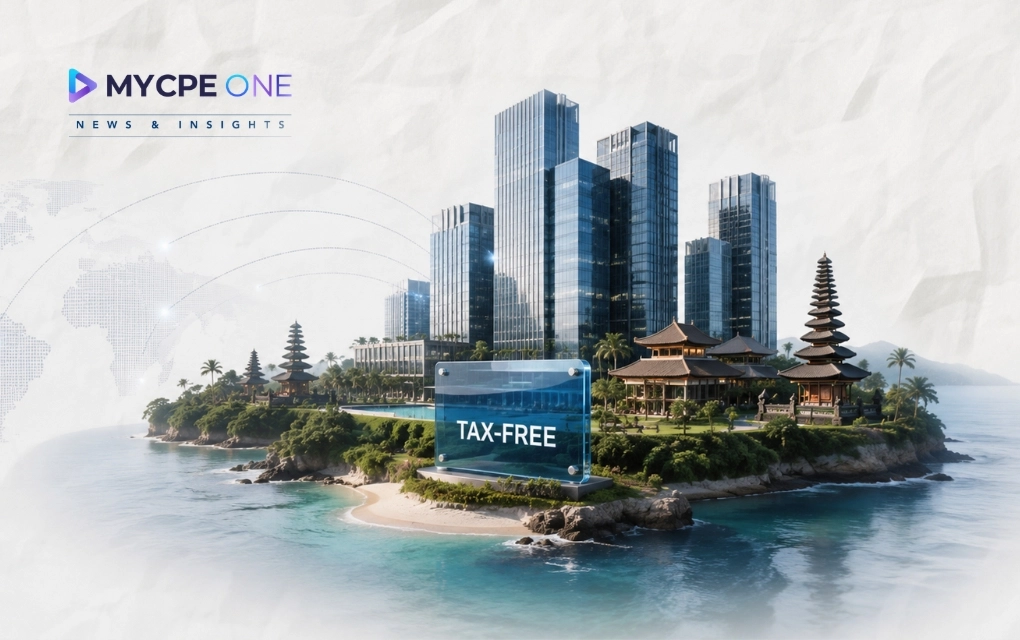
The Indonesian government wants Bali to become an international financial center similar to Dubai's DIFC, offering cross-border financial facilities, tax incentives and special legal regulations. This initiative from President Prabowo Subianto’s administration comes amidst geopolitical tensions and expectations of diversification in investment locations, however, issues of regulatory overlap, contract enforcement, and bureaucratic friction pose challenges to this plan.
Bali has long sold sunsets, surfboards, and spiritual retreats. Now Indonesia wants to add something else to the brochure: tax-free capital flows and offshore finance. That is a pretty wild pivot for an island better known for beach clubs than balance sheets. Yet Jakarta is serious. President Prabowo Subianto’s administration wants Bali to become an international financial center modeled partly on Dubai’s DIFC, complete with special legal rules, tax incentives, and easier cross-border money movement. On paper, it sounds slick. In practice, accountants, tax advisors, and investors are already asking the same question: Is this a real financial hub or just a shiny tax structure waiting for scrutiny?
Timing matters here. The global capital map looks messy in 2026. Middle East tensions, growing geopolitical fragmentation, and investor fatigue around concentrated financial hubs have pushed wealthy families and institutional investors to diversify where they park assets. Indonesia sees an opening. Bali, with global brand recognition and 7 million foreign visitors last year, looks like the country’s easiest sales pitch. Finance Minister Purbaya Yudhi Sadewa recently confirmed that investors in the proposed Indonesia Financial Center could receive tax exemptions within the special economic zone. Officials also floated the idea of applying common-law-style frameworks, similar to Dubai or Singapore, to create stronger investor confidence. That last part matters more than the tax break.
Money moves fast when investors trust courts, contracts, and regulators. Singapore did not become Singapore because of palm trees and tax perks. It became Singapore because investors believed the rules would still exist tomorrow morning. Indonesia still struggles with regulatory overlap, contract enforcement concerns, and bureaucratic friction. Even supporters of the Bali project admit that legal clarity will make or break the plan. As one analyst basically put it: spreadsheets like certainty more than sunsets.
Indonesia already offers corporate tax holidays and territorial-style incentives for foreign professionals. Under current rules, certain foreign experts working legally in Indonesia can avoid tax on foreign-sourced income for up to four years while remaining taxable on local earnings. Now layer a low-tax financial zone on top of that, and suddenly you have family offices, investment vehicles, hedge funds, and high-net-worth individuals all asking whether Bali could become Southeast Asia’s newest wealth hub. Sounds great until BEPS, CFC, and permanent establishment rules walk into the room. A zero-tax or near-zero-tax structure without real operational substance tends to attract attention fast. Tax authorities worldwide have spent the past decade cracking down on shell entities that exist mostly for tax positioning. That creates a practical problem for anyone trying to use Bali as an offshore-style structure.
If a Bali entity mainly holds passive investments, intellectual property, or financing arrangements without meaningful staff, management activity, or decision-making functions, auditors and regulators will likely treat it as a letter-box operation. Nobody wants their “paradise holding company” turning into an audit case study. A U.S. CPA firm advising multinational clients would immediately start asking uncomfortable questions:
Those details matter because substance rules are no joke anymore. Just ask anyone who survived the post-Panama-Papers compliance era.
Honestly, yes. Quite a few.
Permanent establishment risk sits near the top of the list. If foreign firms use Bali teams to negotiate contracts, manage portfolios, run trading activity, or handle client relationships, tax authorities could argue that the offshore parent has a taxable business presence in Indonesia. And this is where the “digital nomad finance hub” idea gets tricky. A remote worker answering emails from a Bali café is one thing. A de facto regional sales or investment operation functioning from Bali is another. Tax authorities care less about job titles and more about what people actually do all day. The same problem works in reverse too.
A Bali-based investment entity serving clients in other countries could create taxable exposure outside Indonesia if its activities trigger permanent establishment thresholds abroad. That means more transfer pricing reviews, more disclosure requirements, and more compliance costs. In other words, the structure that looked lean and tax-efficient during the pitch deck stage can suddenly become a full-blown cross-border reporting headache. That is why finance professionals are focusing less on the “tax-free” headline and more on operational reality. Because if the structure walks like an active business and talks like an active business, regulators usually tax it like one too.
Indonesia clearly wants more foreign capital. The country posted a fiscal deficit of 2.92 percent last year, just below its legal ceiling, while Prabowo continues pushing ambitious growth targets near 8 percent. Officials also want deeper financing channels for sovereign projects and Danantara, the state wealth fund. From a strategic standpoint, the logic is understandable. Still, financial hubs do not emerge because politicians announce them at press conferences. They emerge because investors trust the system repeatedly over time. Dubai spent decades building that reputation. Singapore built institutional credibility brick by brick. Hong Kong benefited from deep capital markets and legal continuity. Bali currently has tourism strength, global recognition, and lifestyle appeal. That is a solid start. But finance runs on predictability, not beach aesthetics.
Even local officials appear cautious. Some lawmakers worry Bali risks losing focus on infrastructure, environmental stress, and overtourism problems while chasing an offshore-finance identity. And honestly, that concern is not crazy. Turning a tourism paradise into a global financial center sounds a bit like trying to convert a luxury resort into a Bloomberg terminal overnight. Possible? Maybe. Easy? Not even close. For accountants, tax advisors, and finance leaders, the smarter move right now is watching the legal framework, substance requirements, and enforcement approach carefully before getting carried away by the tax headlines. Because in global finance, the fine print usually matters more than the brochure.
Until next time…
Don’t forget to share this story on LinkedIn, X and Facebook
Subscribe now for $199 and get unlimited access to MYCPE ONE, from CPE credits to insights Magazine
📢MYCPE ONE Insights has a newsletter on LinkedIn as well! If you want the sharpest analysis of all accounting and finance news without the jargon, Insights is the place to be! Click Here to Join
You’ve reached the 3 free-content piece limit. Unlock unlimited access to all News & CPE resources.
Subscribe Today.
Already have an account?
Sign In