MYCPE ONE
MYCPE ONE LOGO

Join 250,000+
professionals today

Add Insights to your inbox - get the latest
professional news for free.

MYCPE ONE insights

How Conflict Is Colliding with Global Economy & Tax Planning

Join our 250K+ subscribers

Join our 250K+ subscribers

Subscribe

09 MAR 2026 / ECONOMY

How Conflict Is Colliding with Global Economy & Tax Planning

How Conflict Is Colliding with Global Economy & Tax Planning

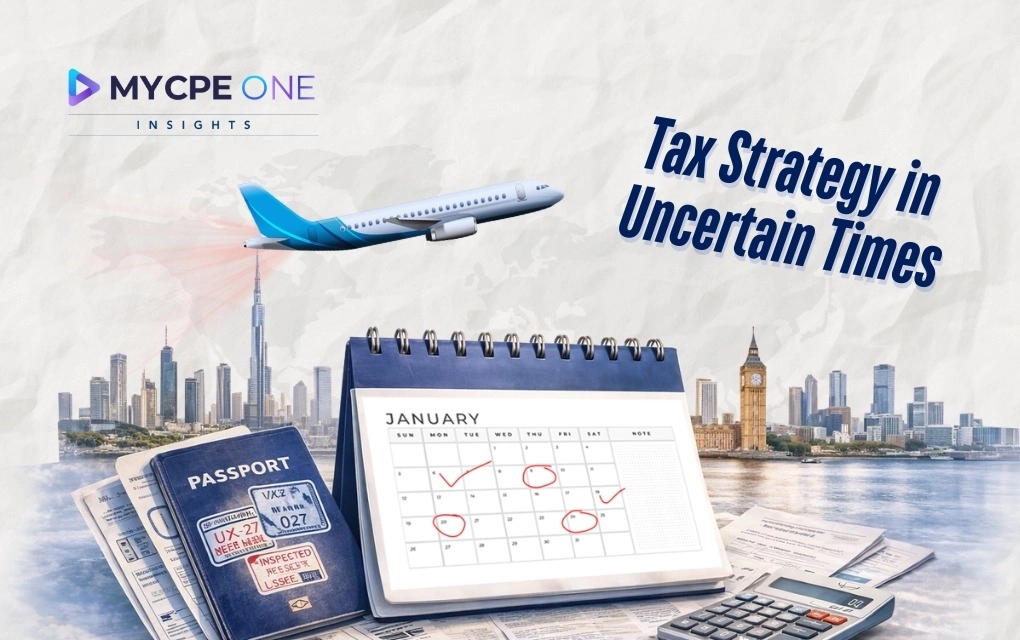
On most days, tax planning looks pretty dull from the outside. Spreadsheets, calendars, residency tests, maybe a quiet conversation with a tax advisor about where to spend the next few months. But every so often, reality barges in and reminds everyone that tax strategy does not exist in a vacuum. Right now, that reminder is coming from the skies over the Middle East. As tensions escalate between Iran, Israel, and the United States, missile alerts and air defense systems have become part of daily life in parts of the Gulf. Yet in a twist that sounds almost surreal, some wealthy expatriates are doing the opposite of what you might expect during a conflict. Instead of fleeing the region, they are chartering private jets to fly back into Dubai. Why? Because missing a residency day count could cost them millions in taxes.

This unusual moment highlights a deeper truth about modern tax planning. For many globally mobile individuals, residency rules shape everything from travel schedules to holiday plans. When geopolitics collides with those rules, the results can look strange, even reckless from the outside. Let’s unpack what is really going on.

Why are People Flying into a Conflict Zone?

Dubai has spent the last two decades building a reputation as a tax friendly hub. The United Arab Emirates generally imposes no personal income tax on individuals, investors, or most businesses. For high earners from places like the UK or Europe, that can translate into massive savings. But there is a catch. Tax residency is not based on vibes or Instagram photos from the marina. It depends on day counts. Under UAE residency rules, individuals typically need to spend 183 days in a 12 month period to qualify as tax residents. Some may qualify with as little as 90 days if they hold a residence visa and maintain a permanent home or business in the country.

Meanwhile, the UK operates under a statutory residence test, which determines tax status based on days spent in the country and personal ties. Cross certain thresholds and suddenly HMRC may view you as a UK tax resident again. And that can get expensive, fast. For high net worth individuals, becoming a UK tax resident even for a single year can expose global income and capital gains to British taxation. Compared with that, a private jet bill of $150,000 to $250,000 starts to look like a rounding error. Travel executives and tax lawyers report that some Dubai residents currently stuck abroad are scrambling to return before their day count slips too far. In other words, the private jet becomes a tax planning tool. It sounds wild, but it is simply the math of residency rules playing out in real time.

How did Dubai become a Magnet for Tax Driven Migration?

Dubai’s rise as a global expat hub did not happen overnight. For years, professionals and entrepreneurs from Europe, India, and the UK have been drawn to the emirate’s mix of low taxes, high salaries, and business friendly regulation. More recently, policy changes in the UK accelerated that trend. The UK government’s decision to abolish the non domiciled tax regime, which once allowed residents to shield foreign income from taxation, pushed many wealthy individuals to reconsider where they lived. Suddenly Dubai looked even more attractive.

Add in a luxury lifestyle, strong infrastructure, and a reputation for safety, and the emirate became a landing spot for everyone from hedge fund managers to influencers. Estimates suggest that around 240,000 British citizens now live in Dubai. For many, the move represented a clean break from rising living costs and complicated tax rules back home. But the recent missile attacks linked to regional tensions have introduced an uncomfortable reminder. Tax planning can move money across borders, but it cannot move geopolitics.

What does this say about the strange World of Tax Residency Planning?

For accountants and tax advisors, none of this is actually surprising.

Residency planning has long required a level of precision that borders on obsession. Many high net worth individuals already track their movements the way a logistics company tracks packages. In the United States, wealthy clients often use tools like TaxBird or Monaeo to monitor their location and ensure they do not exceed 183 days in high tax jurisdictions such as New York. Some go to extreme lengths. Tax attorneys describe clients who literally wait on one side of the George Washington Bridge until after midnight before entering Manhattan, just to avoid triggering another taxable day in the city. That level of attention might sound excessive. But once you understand the numbers involved, it starts to make sense.

For someone earning tens of millions annually, crossing a residency threshold can mean millions in additional taxes. Suddenly the calendar becomes as important as the investment portfolio. Still, there is a human cost to this constant monitoring. Some wealthy individuals admit they skip family events, holidays, or personal travel simply to avoid tripping a tax rule. As one advisor joked to a client who missed a family gathering because of a residency tracker app, “It’s not the app. Maybe you should plan better.”

Could Geopolitical Risk Change How Tax Havens Operate?

The bigger question now is whether geopolitical tensions could alter the appeal of tax friendly jurisdictions like Dubai. So far, most expatriates appear willing to ride out the current conflict. The UAE government has maintained a reputation for stability and rapid security responses, and many residents expect the situation to cool down eventually. But this episode does highlight a blind spot in global tax planning. Many residency strategies assume predictable travel and stable political conditions. When wars, sanctions, or travel disruptions enter the picture, those assumptions start to wobble.

Consider a simple scenario a CPA firm might see with clients: A UK entrepreneur relocates to Dubai for tax purposes, maintains property in London, and splits time between the two. Suddenly flights are disrupted because of regional conflict. A few unexpected months in Britain could trigger UK tax residency and expose global income to taxation. That is not just a theoretical risk. It is exactly the type of scenario tax lawyers are currently fielding calls about. From a compliance perspective, advisors may need to rethink how resilient these strategies are during geopolitical shocks.

When the Tax Tail wags the Life Dog

The broader lesson here is one that accountants already understand well. Tax planning can influence life decisions more than most people realize. Where someone lives. When they travel. How long they stay. Even which side of a bridge they stand on at midnight. In the world of ultra wealthy taxpayers, those choices are rarely casual. But moments like this remind us that tax strategies operate within a larger system shaped by politics, economics, and sometimes conflict. No residency calendar can fully account for those forces.

For now, Dubai remains one of the world’s most attractive destinations for global wealth. The tax benefits are still substantial, and few residents appear ready to pack their bags permanently. Still, the sight of private jets flying into a region under missile alerts offers a strange snapshot of modern tax planning. When millions of dollars are on the line, even a war zone can look like the cheaper option.

Until next time…

Don’t forget to share this story on LinkedIn, X and Facebook

Subscribe now for $199 and get unlimited access to MYCPE ONE, from CPE credits to insights Magazine

📢MYCPE ONE Insights has a newsletter on LinkedIn as well! If you want the sharpest analysis of all accounting and finance news without the jargon, Insights is the place to be! Click Here to Join

Unlock Annual Access to News & CPE Subscription

You’ve reached the 3 free-content piece limit. Unlock unlimited access to all News & CPE resources.
Subscribe Today.

News & Updates

  • Exclusive News & Insights
  • Latest Regulatory Updates
  • Accounting Industry Trends
  • Expert Insights
  • AI-Driven Audio & Summaries
  • Infographics & Videos
  • CPE-Approved Articles
  • Digital Magazine
  • Benchmarking Blogs

Unlimited CPE Access for 1 Year

  • 15,000+ Hours of Content
  • 500+ Subject Areas
  • Mandatory Ethics Courses
  • 250+ Compliance Packages
  • 50+ Virtual Conferences and Events Access
  • Format: Live, Audio, Video, E-Books
  • Audio Based Courses & Podcasts
  • Add External Certificates with AI
  • AI Compliance Tracking and Report
  • Instant Certification and Fast Reporting
  • Mobile App Access (iOS and Android)
  • Dedicated Support System
  • Practical Training Programs
  • AI Academy Access
  • Tax Academy Access
  • Audit Academy Access
  • Leadership Academy Access