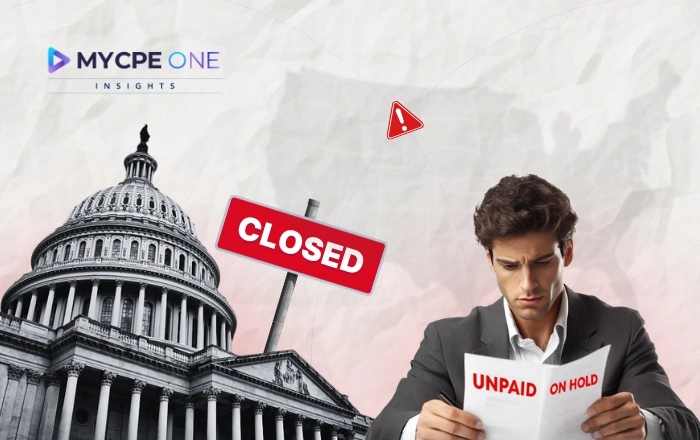
The U.S. Federal government shut down early morning October 1, 2025, following lawmakers' failure to agree on funding, affecting an estimated 750,000-900,000 federal employees and stalling many public services. Major sticking points involved health-insurance subsidies, Medicaid cuts, foreign aid and disputes over "essential" government programs, with the instability threatening permanent job losses and causing substantial economic uncertainty.
At 12:01 a.m. on October 1, 2025, the federal government shut down following a failure by lawmakers to agree on continued funding. Some essential services stayed running, but many operations paused. An estimated 750,000-900,000 federal employees were either furloughed or told to keep working, without pay. This is the 11th shutdown in modern U.S. history, but what’s different now is the threat of permanent job cuts. Agencies are using the stalemate as leverage. Meanwhile, public services, economic data, medical and food-aid programs, and more are stuck in limbo. The result? Substantial uncertainty, mounting delays, and real consequences for families, businesses, and the finance professionals guiding them.
This shutdown was triggered when Congress failed to pass a continuing resolution or a budget agreeable to both Republicans and Democrats. Major sticking points include health-insurance subsidies under the Affordable Care Act, Medicaid cuts, foreign aid, and disputes over what government programs are truly “essential.” It isn’t the first time federal funding has lapsed, but this time feels sharper. The current round carries real threats of permanent job cuts and program reductions, not merely temporary furloughs. There's more partisan messaging, less mutual trust, and the broader U.S. economy is already fragile, so the fallout could be deeper than usual.
According to the non-partisan Congressional Budget Office, furloughed workers alone could cost up to $400 million per day in lost compensation. Plus, as many as one in three staffers in certain non-Postal agencies may face furloughs if the shutdown persists.
Shutdown Snapback on Key Players & Firms
The IRS operates under a “Lapse in Appropriations Contingency Plan,” keeping only critical payment and revenue functions alive while suspending many practitioner services, think refunds, transcript requests, phone support, and even Tax Court activity. Audits and amended returns may back up, and enforcement units (including newer AI ones) may be idled too. On the oversight side, the SEC keeps core market-integrity functions going, but filings, comment letters, registration statements, and related reviews may pile up. The PCAOB, which depends on SEC action, may delay inspections or enforcement. Firms with pending quality reviews or IPO work find themselves in limbo, stuck waiting on approvals.
Smaller CPA firms may feel the effect first: paused IRS e-file systems, delayed client refunds, slow audit reviews, and hung-up correspondence can all reduce cash flow. When government contracts, grants or reimbursements are involved, uncertainty around timing, funding and going-concern risk rises.
What’s Still Working
Critical Services That Continue
Some government functions run because they protect life or property or are legally required. These include:
Social Security benefit checks and Supplemental Security Income (SSI) payments still arrive on time.
Medicare core benefit operations.
Active military operations, law enforcement, national defense.
Air traffic control staff are on duty (though without pay), managing flights, though staffing stress is increasing.
The U.S. Postal Service continues normal operations (funded via stamps/sales, not mostly via annual appropriations).
Emergency public-health responses (pandemics, severe outbreaks, hurricanes, etc.) are maintained at critical levels.
Operations That Are Slowed or Impaired
The IRS still processes tax returns, audits, collections and refunds, but backlogs and slower responses are likely.
Economic data releases, jobs, inflation, and consumer metrics may be delayed, reducing clarity for planning and forecasting.
Student aid (Pell grants, Direct Loans) continues; new program rollouts and non-aid work are suspended or restricted.
Food-aid programs like SNAP are funded through October; others, like WIC, may run short if the shutdown continues.
Public health agencies (CDC, NIH, FDA) continue essential work, but new contracts, non-urgent research, FOIA requests, and external grant awards are often paused.
Regulatory bodies such as the SEC see major slowdowns: over 90% of SEC staff may be furloughed, leaving only minimal emergency work continuing.
Infrastructure, permits, and contract-related approvals may stall; some major projects (e.g. in New York) could be frozen pending compliance or funding review.
National parks and monuments may stay partly open, but visitor centers, new permits, and staffed services are often closed or limited.
Federal Employees & Contractors
Many federal workers are furloughed; others are still working but unpaid. Both groups may receive back pay once the shutdown ends, but there is uncertainty and legal debate about how automatic or timely that pay will be.
Some agencies and administration leaders are discussing program cuts or permanent layoff plans. So, the risk isn’t only delayed pay; it could also be job loss.
Contractors and grant recipients may be stuck waiting: some invoices may be processed; others may be delayed or cancelled. Private firms that depend on federal funding should brace for uncertainty regarding timing or continuation.
For many workers, morale and financial stress are rising. Uncertainty about unemployment, income, and job security.
Social, Economic & Community Effects
Local economies dependent on federal grants, infrastructure work, or contract funding may see delayed income or halted projects.
Consumer confidence could waver; households may postpone big purchases if there’s uncertainty about income or benefits.
The economy could lose growth; each week without full funding may shave off measurable GDP percentage points.
Business planning and investment may slow, especially in sectors tied to federal oversight, approval or data releases.
Some population groups could be more vulnerable: those relying on food aid, social services, or federal assistance could feel the pain more sharply if the shutdown drags on.
Public messaging is increasingly partisan; some federal agencies are explicitly blaming one party or another, raising ethical and legal questions.
The How-Long Question
Shutdown lengths vary from very short (days) to extended (weeks or more). The longer they last, the more backlogs build up, the more delayed service becomes, and the more public and political pressure mounts.
The 2018-2019 shutdown lasted 35 days and brought a real economic slowdown, service backlogs, and delayed pay before resolution.
Many effects tend to reverse once funding resumes (refunds processed, back pay delivered, filings caught up), but repeated or long shutdowns increase uncertainty and sometimes lead to permanent program or staffing cuts.
Resolution almost always comes via a continuing resolution or final budget agreement; the longer the deadlock persists, the more painful the economic and personal consequences become.
What to Advise Clients & Keep an Eye On
Deadlines: Remind clients that tax returns, payments, and regulatory filings remain due on time; the shutdown doesn’t pause deadlines.
Refunds & Audits: Warn them that refunds, audit correspondence, and IRS response times may slow; they should factor in possible delays when planning.
Cash Flow: For clients who are federal employees (or married to them), we can help with budgeting. Unpaid furlough periods may create cash-flow gaps, and some may need to tap into unemployment, emergency savings, or adjust their withholding.
Contracts & Grants: For businesses or nonprofits receiving federal contracts or grants, confirm whether work is ongoing, whether invoices are being processed, and whether federal funding is still approved or under review; delays or freezes are possible.
Forecasting: Build uncertainty into financial forecasts. Economic data may lag, approvals may slow, and regulatory agencies may pause non-urgent work. Margins and timing should allow for flexibility.
Service Status: Keep clients informed about which government services are still functioning, which are delayed, and which may be at risk; advise which safety-net programs are likely unaffected vs. those vulnerable to cuts.
Duration & Developments: Monitor how long the shutdown lasts, any announcements of permanent program or staffing cuts, how quickly back-pay is delivered, and whether further delays or service reductions emerge; update plans accordingly.
Conclusion
This government shutdown isn’t just Washington theatre. For many Americans, it’s about delayed pay, paused services, paused benefits, and uncertainty. For your clients, it means being proactive, planning for delays, budgeting for interruptions, and staying informed about which services still function, which don’t, and for how long. As a professional advisor, your role is to bring clarity into the confusion: help clients maintain compliance, plan for uncertainty, manage cash flow, and prepare for the eventual resumption of normal operations, or adjust to possible program cuts.
Subscribe now for $199 and get unlimited access to MYCPE ONE, from CPE credits to insights Magazine
📢MYCPE ONE Insights has a newsletter on LinkedIn as well! If you want the sharpest analysis of all accounting and finance news without the jargon, Insights is the place to be! Click Here to Join
Website Services for CPA & Accounting Firms - Starting $69/month.
Is your website attracting clients—or turning them away? MYCPE ONE’s Website Development Services, starting at just $69/month, create high-converting, professional websites tailored for accounting firms like yours.
With over 400 designs to choose from and a dedicated webmaster, we handle it all for you—no DIY required.
Get started todayand create a website that works for your firm with MYCPE ONE! Make a lasting impression. Boost conversions. Stay secure.
Experience MYCPE ONE at its best! Upgrade your browser for a more interactive, user-friendly interface, and stay ahead in your professional development journey.