
Join 250,000+
professionals today
Add Insights to your inbox - get the latest
professional news for free.
Join our 250K+ subscribers
Subscribe02 APR 2026 / FINANCE
While sustainability reporting has evolved, it hasn't brought the significant environmental change needed, and with worsening global conditions raising questions on whether the system can drive change, the focus is shifting to real-time verifiable data and integrated financial and Environmental, Social, and Corporate Governance (ESG) systems. As assets in some regions become uninsurable due to climate change, companies like Microsoft, Volvo, and IKEA are collaborating to standardize emissions data, with ESG being treated as a linchpin of financial stability, influencing decisions on supplier selection, capital allocation, and pricing strategies, impacting the future of sustainability.
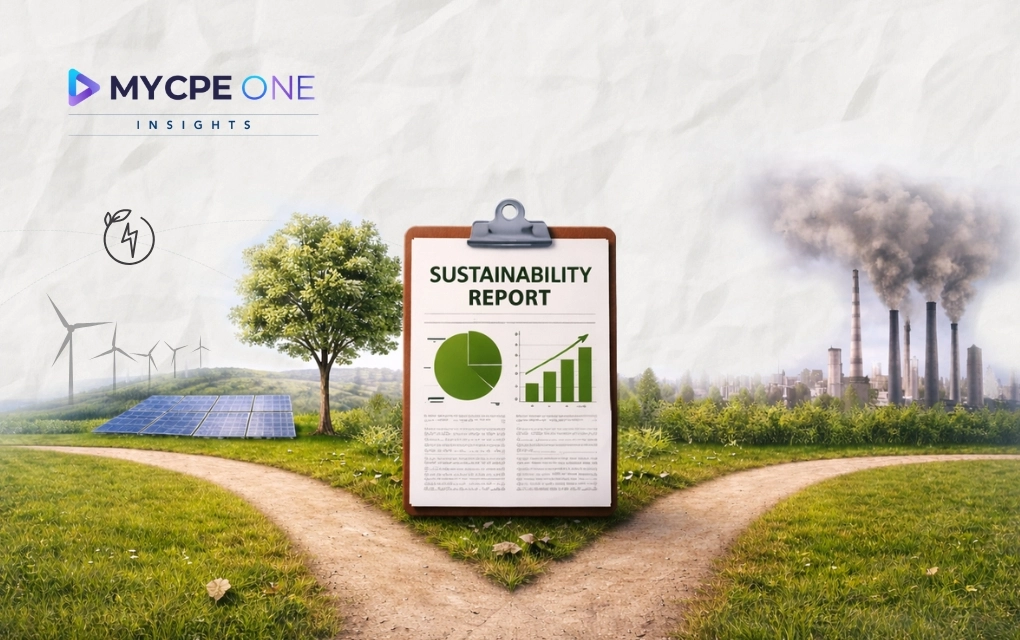
For years, sustainability reporting felt like a well-rehearsed corporate ritual. Companies polished disclosures, investors skimmed ESG scores, and regulators added new layers of rules. But here’s the uncomfortable truth: while reporting got sharper, the planet didn’t. Floods are getting worse. Supply chains are cracking under climate pressure. And in some regions, assets are literally becoming uninsurable. So, the real question isn’t whether companies are reporting enough. It’s whether the system itself was ever built to drive real change. Welcome to 2026, where sustainability hits its reality check.
Sustainability didn’t start as a mess. It started with intent. Post-2008, frameworks like GRI and regulations like NFRD pushed companies toward transparency. Then came CSRD and the EU Taxonomy, promising accountability, comparability, and structure. And to be fair, they delivered. Reports became more detailed. Metrics got standardized. ESG disclosures started looking like financial statements. But somewhere along the way, things drifted. Companies got really good at talking sustainability… not necessarily running it. That gap is now impossible to ignore. Even global experts are calling the current system “not fit for purpose,” with more than 90% agreeing a major shift is needed. Because at the end of the day, reporting didn’t fail. It wasn’t enough.
If Scope 1 and 2 are accounting, Scope 3 is chaos. It covers suppliers, logistics, product use, basically everything outside direct control. And ironically, it’s often the biggest chunk of emissions. The problem? Data. It’s delayed. It’s fragmented. It’s often estimated. This creates a bizarre situation where companies are making strategic decisions based on numbers that are already outdated. That’s not a sustainability issue. That’s a timing and infrastructure failure. And let’s be real, running a business on lagging data is like driving while looking in the rearview mirror. Not exactly a winning strategy.
Now layer regulation on top of all this.
The result? Sustainability is global in ambition… but local in confusion. Companies aren’t just managing emissions anymore. They’re juggling regulatory personalities across regions. And for CFOs, this has turned into a full-blown compliance workout, with fragmented systems, rising costs, and zero consistency.
Here’s where things take a turn. Despite the explosion in ESG disclosures, trust is slipping. Confidence in global frameworks like the SDGs and Paris Agreement is declining. Governments and institutional investors are getting poor performance ratings. Even NGOs are losing credibility. The only group gaining trust? Academia. That says everything. Stakeholders aren’t asking who reported. They’re asking who can prove it. Because at some point, sustainability reports started looking less like evidence and more like marketing decks.
Let’s bring this out of theory and into reality. In New Zealand and other high-risk regions, properties are already becoming difficult or impossible to insure due to climate exposure. One report estimates over 10,000 properties could become uninsurable by 2050 due to flooding and coastal risks.
And when assets can’t be insured, everything changes:
That’s not ESG anymore. That’s straight-up financial risk. This is exactly why sustainability is now being treated as a fourth pillar of financial stability, alongside banking, capital markets, and insurance.
Here’s where things finally start to shift. Instead of tweaking reports, companies are fixing the system. Take initiatives like MASSIV+, where companies like Microsoft, Volvo, IKEA, and others are collaborating, yes, competitors working together, to standardize emissions data across value chains. Why? Because everyone realized they were solving the same problem… just inefficiently.
The new focus is clear:
And on the tech side, AI is stepping in hard.
From tools that integrate ESG with ERP systems to platforms that flag anomalies and predict risks, companies are moving away from manual reporting toward real-time intelligence. UPS, for example, uses AI-driven routing to reduce annual emissions by more than 100,000 metric tons. That’s not reporting. That’s execution.
This is the real turning point. ESG is no longer sitting quietly in the reporting function.
It’s now influencing decisions.
Everything is starting to reflect sustainability inputs. And this shift is happening because companies are realizing something fundamental:
In 2026, ESG data is no longer an output. It’s becoming a core input. The future of sustainability won’t be defined by:
It will be defined by:
Concepts like double materiality are gaining traction, combining financial impact with environmental and social consequences to drive better decisions. And as markets internalize this data, capital will start flowing differently. Slowly, but decisively.
Finance professionals need to:
Because the companies that figure this out early? They won’t just stay compliant. They’ll stay competitive. And the rest? Well… they’ll still be stuck writing really nice reports. Sustainability didn’t stall because companies didn’t care. It stalled because:
We asked companies to measure impact before giving them the tools to do it properly. That’s changing now. 2026 isn’t about better reporting. It’s about building systems that actually work. And once that happens, reporting becomes a byproduct, not the goal.
Until next time…
Don’t forget to share this story on LinkedIn, X and Facebook
Subscribe now for $199 and get unlimited access to MYCPE ONE, from CPE credits to insights Magazine
📢MYCPE ONE Insights has a newsletter on LinkedIn as well! If you want the sharpest analysis of all accounting and finance news without the jargon, Insights is the place to be! Click Here to Join
You’ve reached the 3 free-content piece limit. Unlock unlimited access to all News & CPE resources.
Subscribe Today.
Already have an account?
Sign In