Join 250,000+
professionals today
Add Insights to your inbox - get the latest
professional news for free.
Join our 250K+ subscribers
Subscribe27 APR 2026 / FINANCE
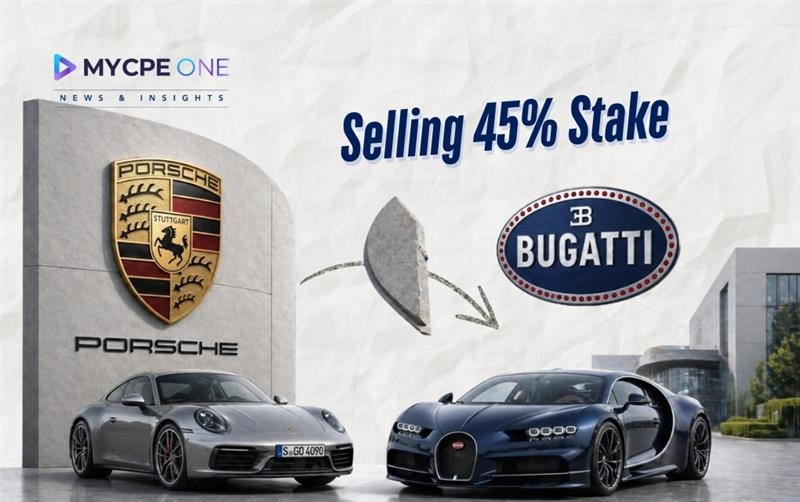
Porsche’s sales significantly dropped in 2025, leading the company to sell its stakes in Bugatti Rimac and Rimac Group to a consortium involving HOF Capital and BlueFive Capital to enhance its core business discipline amid a challenging market environment. Porsche's strategic move aims at enhancing the company's profitability and combating challenges such as falling China demand, US tariffs, and weaker EV momentum, focusing on petrol, hybrids, tighter costs, stronger margins, and fewer distractions.
Porsche’s latest move comes with a very loud financial backfire. The company’s sales revenue fell from €40.08 billion in 2024 to €36.27 billion in 2025, while operating profit collapsed from about €5.64 billion to €0.41 billion. That is not a minor dent in the fender, that is a full dashboard warning light. Porsche is now selling its 45% stake in Bugatti Rimac and its 20.6% holding in Rimac Group to a consortium led by HOF Capital, with BlueFive Capital among the major investors. The reason is simple: Porsche wants less prestige clutter and more core business discipline.
This sale is not really about Bugatti losing its shine. Bugatti is still the crown jewel of engineering excess. The issue is that Porsche can no longer afford to treat expensive side bets like trophies. The company is under pressure from falling China demand, U.S. tariffs, weaker EV momentum, and heavy write downs tied to its electric strategy. Porsche’s operating return on sales dropped sharply, making the old “growth at any cost” mindset look outdated. CEO Michael Leiters summed it up clearly: “With the sale of our stake, we are focusing Porsche on the core business.” That core now means petrol, hybrids, tighter costs, stronger margins, and fewer distractions.
Volkswagen bought Bugatti in 1998 as a statement of engineering dominance. The Veyron era was never about volume. It was about proving what the group could build when money was almost no object. Then came 2021. Porsche and Rimac formed Bugatti Rimac to combine French hypercar heritage with Croatian EV innovation. On paper, it looked like the future: Bugatti’s aura, Rimac’s battery brain, and Porsche’s industrial muscle. But the market changed fast. Luxury EV demand cooled, China became harder, tariffs squeezed exporters, and investors started asking a boring but brutal question: where is the return?
Porsche is freeing up capital, simplifying its portfolio, and reducing exposure to businesses that look exciting but do not directly repair margins. The company is also aligning with Volkswagen’s broader effort to simplify operations and sell non core assets. For investors, the message is disciplined but not painless. The bull case is that Porsche is acting like a serious operator again. It is cutting complexity, reallocating capital, and protecting profitability. The bear case is that Porsche may be stepping away from a high end innovation platform just as luxury, software, batteries, and performance engineering keep converging.
HOF Capital’s consortium takes Porsche’s stake, while Rimac gains more control over Bugatti Rimac. BlueFive Capital’s involvement also adds a Middle East investment angle, showing how global capital still wants exposure to ultra luxury assets. Mate Rimac called the new setup a structure that allows the company to execute faster on its long term vision. That matters because Bugatti now needs to balance two opposing forces: protect rarity and find a business model that does not burn cash for bragging rights.
Bugatti has historically been about fantasy, not family school runs. But luxury SUVs have become cash machines. Lamborghini’s Urus proved that even supercar brands can print money with performance SUVs. Ferrari also joined the club with the Purosangue. With Porsche gone and new investors in the room, Bugatti may face pressure to explore higher margin products. A Bugatti SUV still sounds almost illegal to enthusiasts, but from a finance lens, it is not crazy. It could fund future hypercars, stabilize cash flow, and widen the customer base. The risk is brand dilution. Bugatti’s power comes from being rare, ridiculous, and almost unreachable. Scale it too much, and the magic starts leaking.
For Porsche investors, this sale should be read as a margin repair signal. Management is admitting that the company needs sharper focus after a rough financial year. Markets may reward that discipline if Porsche shows better cash flow, lower restructuring drag, and clearer product execution. But investors will still watch EV strategy closely. A pivot toward hybrids and combustion may help near term margins, but Porsche cannot afford to look technologically behind. For Rimac and Bugatti, the deal creates a cleaner ownership structure. That could speed decisions, attract more capital, and sharpen the luxury EV story. But it also raises expectations. New investors will not want showroom poetry forever, they will want returns.
Porsche selling Bugatti Rimac is not a breakdown. It is a strategic downshift. The company is choosing capital discipline over brand romance. It wants to fix its profit engine, protect its core sports car identity, and stop chasing every shiny object in the luxury EV garage. For markets, the big question is whether Porsche can turn this clean up into a comeback. For Bugatti, the question is even bigger: can it stay mythical while becoming more financially useful? That is where the real race begins.
Until next time…
Don’t forget to share this story on LinkedIn, X and Facebook
Subscribe now for $199 and get unlimited access to MYCPE ONE, from CPE credits to insights Magazine
📢MYCPE ONE Insights has a newsletter on LinkedIn as well! If you want the sharpest analysis of all accounting and finance news without the jargon, Insights is the place to be! Click Here to Join
You’ve reached the 3 free-content piece limit. Unlock unlimited access to all News & CPE resources.
Subscribe Today.
Already have an account?
Sign In