Join 250,000+
professionals today
Add Insights to your inbox - get the latest
professional news for free.
Join our 250K+ subscribers
Subscribe24 NOV 2025 / CPA STATE BOARD UPDATES
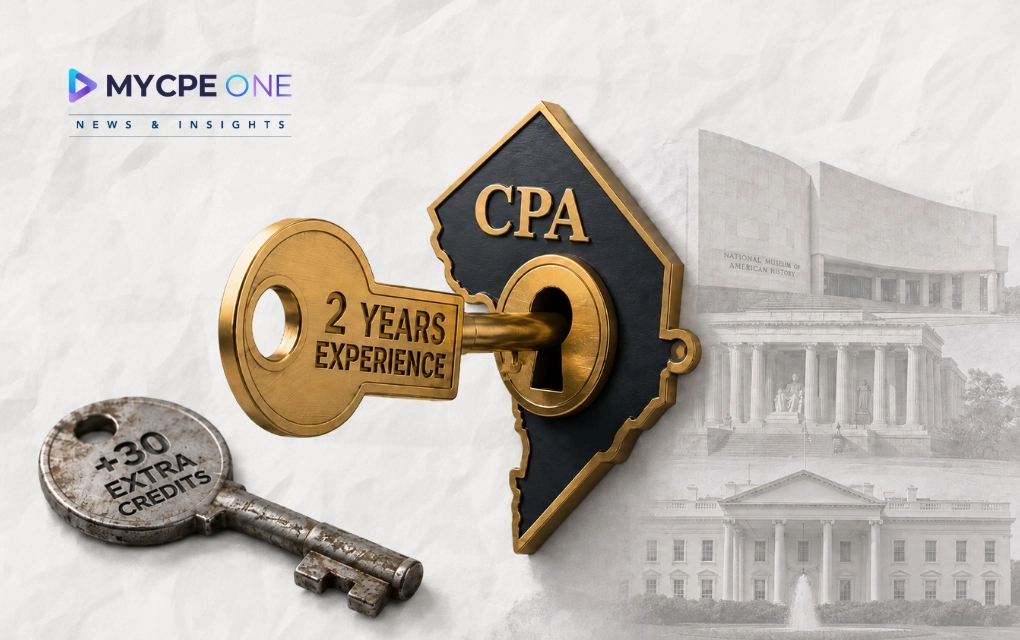
New York State Governor Kathy Hochul has legalized the 120-hour CPA pathway, reducing the education requirement for becoming a certified public accountant (CPA) in the state. The move eases the CPA talent shortage by allowing more students to qualify as accountants without the need for an additional year of college, opening the profession to a wider hiring pool and potentially influencing other states to reconsider their own licensing rules.
Imagine a crowded subway car in Manhattan around 6 p.m., where everyone is convinced they’re on the “hardest” commute. That’s been the CPA pipeline for years. Too many hurdles, not enough riders sticking around. Now, New York has decided to widen the doors, dim the fluorescent lighting and give future CPAs a little breathing room. Gov. Kathy Hochul has officially signed the 120-hour CPA pathway into law, marking one of the biggest shifts in professional licensure since the five-year education rule took over the industry. If you felt the ground move, that wasn’t your imagination. That was the Empire State stepping into a national debate we covered earlier when other states began shaking up their rules too.
For decades, the 150-hour requirement operated like an extra toll booth between students and the CPA credential. Maybe it wasn’t designed to be a roadblock, but the effect was obvious. Fewer accounting majors, shrinking exam candidate pools and talented grads jumping ship for finance and tech jobs that paid more while requiring less. New York finally said what everyone else was thinking: is the extra year of college really making or breaking the quality of our CPAs? If the answer were yes, the profession wouldn’t be staring at a talent shortage big enough to make recruiters feel like they’re “chasing ghosts,” as one partner put it.
Enter the new pathway:
It’s clean, simple, and familiar. In other words, the way it used to be. And it kicks in one year from the signing date.
If you’re already a CPA in New York, you might be wondering, “Does this change anything for me?” Short answer: yes, but not in a chaotic way.
Will this bring in more candidates? Most likely. Will it magically fix the pipeline? Unclear. But it removes a barrier that professionals have been talking about for years. The New York State Society of CPAs made that point loud and clear. Calvin Harris Jr., its CEO, called this “one of the most significant pipeline reforms in a generation.” That’s not marketing fluff. That’s the profession’s version of a mic drop.
New York isn’t acting alone. California, Illinois and North Carolina have all opened alternative routes of their own, with effective dates from 2026 to 2027. At least 24 states have modernized their licensure rules this year. If you read our earlier article on the state-by-state reform wave, you know this isn’t a quirky experiment anymore. It’s a coordinated shift. And professionals across the country are asking the same questions:
That last one is where experience becomes the center of gravity. Two years of professional work isn’t a casual suggestion. It’s the mechanism states are relying on to keep standards tight while lowering financial barriers. And let’s be real. Most CPAs will tell you they learned more in their first tax season than in an entire semester of graduate school. As the idiom goes, “Nothing beats the real thing.”
So, what does the future look like for the Empire State? A few things are coming:
And let’s not ignore the practical question professionals are already tossing around: will this help firms retain staff past the infamous “year two burnout”? Hard to say. But lowering the barrier to entry could at least bring more people through the door.
This isn’t about turning the CPA into an “easy button.” It’s about recognizing that a profession with shrinking enrollment, aging practitioners, and rising demand can’t keep pretending the old model works for everyone. New York’s move signals something bigger. The profession is trying to keep pace with modern realities: higher college costs, new career competition, and a generation that doesn’t want to take on debt just to qualify for a job that starts during busy season. If you practice in New York, the impact will reach you whether you’re hiring staff, mentoring juniors, or planning firm strategy. And if you practice elsewhere, keep one eye on your state board. Reform is no longer a fringe idea. It’s becoming the norm. As Mark Twain said, “The secret of getting ahead is getting started.” New York just started something the rest of the country can’t ignore.
Until next time…
Don’t forget to share this story on LinkedIn, X and Facebook
Subscribe now for $199 and get unlimited access to MYCPE ONE, from CPE credits to insights Magazine
📢MYCPE ONE Insights has a newsletter on LinkedIn as well! If you want the sharpest analysis of all accounting and finance news without the jargon, Insights is the place to be! Click Here to Join
You’ve reached the 3 free-content piece limit. Unlock unlimited access to all News & CPE resources.
Subscribe Today.
Already have an account?
Sign In