Join 250,000+
professionals today
Add Insights to your inbox - get the latest
professional news for free.
Join our 250K+ subscribers
Subscribe24 NOV 2025 / IRS UPDATES
The IRS has issued new guidance on tips and overtime calculations, as part of The One Big Beautiful Bill Act. The new regulations remain complex and workers could face difficulties understanding their entitlements. The IRS also continues to grapple with the fallout from the country's lengthiest government shutdown, leading to a backlog of cases that could take weeks or months to resolve. Meanwhile, Trump's back-and-forth tariffs have led to drastic price increases for items such as coffee and bananas, with the government now reversing course and removing tariffs on over 100 items.
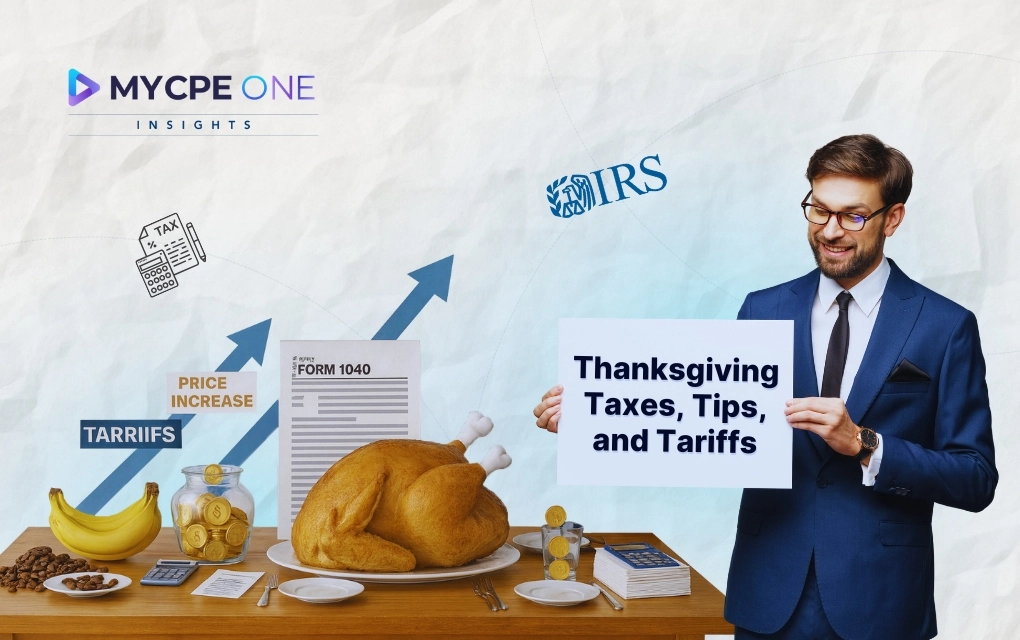
If your Thanksgiving table felt a little pricier this year, you were not imagining things. The turkey might have been on sale, but coffee, bananas and orange juice were acting like they had joined an exclusive country club. And in classic holiday style, the IRS brought something to the table too, serving up fresh guidance on tips, overtime, and a reminder that the agency is still climbing out from the longest government shutdown in U.S. history. Welcome back to the tax world’s version of a family reunion. Everyone is talking at once, the kitchen is crowded, and someone forgot to defrost the rolls.
The One Big Beautiful Bill Act created shiny new deductions for tip earners and overtime workers starting in 2025. Great news, right? Then reality walked in, looked around, and asked the obvious question: how exactly is anyone supposed to calculate this stuff if employers are not required to break out qualified tips or overtime on Form W-2? That is where Notice 2025-69 comes in. Treasury and the IRS rolled out guidance that basically says, “Use what you have.” Social Security tips in Box 7, tip reports on Form 4070, logs you kept in a notebook or notes app, and even records for gig workers receiving tips through TPSOs. If you can prove it, you can use it. Kind of refreshing, like when a restaurant says the kitchen is out of rules and everyone is just trying their best.
The big twist is that Specified Service Trade or Business workers, who were supposedly excluded, now get transition relief for 2025. Doctors, lawyers, CPAs, bookkeepers, and other expertise-driven fields appear to be temporarily invited to the tip deduction party. Whether that is intentional or the IRS equivalent of “I thought you were bringing dessert” remains to be seen. Overtime got its own clarity too. Only the “half” in time-and-a-half counts. If your employer pays double time or triple time, you still only get to deduct the FLSA-required premium. A few examples from the IRS show how to calculate it, but the theme is simple. The law cares about federal overtime rules, not whatever quirky pay practices your job uses. There are caps to keep expectations realistic. Tip deductions max out at $25,000. Overtime deductions tap out at $12,500. And both start phasing out at $150,000 in modified AGI. Joint filers get double the thresholds, which might be the most romantic tax fact you will hear all week.
President Trump has been on a tariff tour that can only be described as a financial soap opera. After slapping tariffs as high as 50% on imports like coffee and bananas, prices exploded. Coffee jumped more than 40% year over year, and bananas climbed nearly 9 percent. The problem is the obvious one. The U.S. does not grow coffee at scale and it cannot summon banana plantations by sheer force of policy. So now the administration is reversing course and removing tariffs on more than 100 items that America consumes but does not really produce. Trump insists tariffs remain a revenue generator and even floated a $2,000 per person “tariff dividend” to be mailed out sometime in mid-2026. Treasury Secretary Bessent says the idea is still alive but would need Congress. Economists say they would like to see the math.
After a 43-day government shutdown, the IRS reopened on November 13 with a backlog large enough to make a CPA whisper “yikes.” It will take weeks or months for the agency to catch up. If you are dealing with audits, appeals or paper-filed anything, patience is not just a virtue; it is mandatory. Taxpayer Assistance Centers are open again. The phones are staffed. And the Taxpayer Advocate Service is back, though they politely warn that they are triaging the most urgent cases first. If you left messages during the shutdown, someone will eventually return them.
What is moving? E-filed returns are still being processed within the usual 21 days. Paper returns, on the other hand, are crawling. Original individual returns from October 2025 are finally moving. Amended returns from August are being reviewed. Business returns show similar timelines. Identity theft affidavits are backed up into 2024, which feels like finding an unopened Christmas gift under the couch in March. If you filed Forms 2848 or 8821, allow about 19 business days. If you filed Form 1023, expect months, not weeks. And if you are waiting on anything involving the Employee Retention Credit, grab a snack. It is going to be a while.
Nothing says American tradition like Thanksgiving sports. But behind the highlight reels is a national fascination with publicly funded stadiums, even though economists have been yelling for decades that the math does not work. San Antonio recently approved more than $300 million in county tax dollars and over $450 million from the city for a new Spurs arena. Consultants promised big economic gains, but researchers say those projections are about as solid as a folding chair at a tailgate. Spending shifts, it doesn’t grow. Owners capture most of the value. And with franchise valuations soaring nearly 1,000 percent in two decades, it is hard to argue that these teams cannot pay their own way. Cities are increasingly turning to Community Benefits Agreements with real teeth, including clawbacks. Because if taxpayers are footing the bill, they want receipts.
The IRS is slowly waking back up. New deductions are here but messy. Tariffs are doing gymnastics. And stadium funding continues to test the limits of public optimism. So, what do professionals need to watch? Tip and overtime deductions will be popular, especially for workers juggling multiple jobs or side gigs. Clients will need clean records. Employers will need clearer reporting practices. And CPAs will need coffee, ideally cheaper than last month. Tariff policy will keep shifting. Inflation will continue to influence voter impatience. And tax administration will feel the aftershocks of the shutdown for a long time. Thanksgiving may be over, but the leftovers in the tax world are just getting started.
Until next time…
Don’t forget to share this story on LinkedIn, X and Facebook
Subscribe now for $199 and get unlimited access to MYCPE ONE, from CPE credits to insights Magazine
📢MYCPE ONE Insights has a newsletter on LinkedIn as well! If you want the sharpest analysis of all accounting and finance news without the jargon, Insights is the place to be! Click Here to Join
Digital Marketing Services for CPA & Accounting Firms - Starting $399/month.
Struggling to attract new clients? MYCPE ONE’s Digital Marketing Services help accounting firms stand out, generate leads, and grow revenue effortlessly.
With expertise in SEO, paid ads, social media, and targeted PPC, MYCPE ONE maximizes your marketing efforts to deliver high ROI and broader industry reach.
Invest in digital marketing for your firm today—see the difference with MYCPE ONE!
Stand out. Generate leads. Grow revenue.
You’ve reached the 3 free-content piece limit. Unlock unlimited access to all News & CPE resources.
Subscribe Today.
Already have an account?
Sign In