Join 250,000+
professionals today
Add Insights to your inbox - get the latest
professional news for free.
Join our 250K+ subscribers
Subscribe15 JUN 2026 / CPA STATE BOARD UPDATES
Vermont has updated its CPA licensure laws, creating an additional pathway into the accounting profession. This comes as the profession faces a talent shortage, with young professionals questioning the cost and time commitment traditionally required to become certified CPAs. The new law allows candidates to qualify with a bachelor’s degree in accounting, two years of supervised experience, and successful completion of the Uniform CPA Exam, shifting some emphasis from extended classroom hours to real-world professional experience.
The CPA pipeline in Vermont just got a Green Mountain State reset, and accounting firms should not treat it like another quiet licensing update buried in a government bill. For years, the profession has been stuck in the same awkward spot. Firms need more CPAs. Students are questioning whether the cost of becoming one still makes sense. Senior professionals are retiring. Small and mid-sized practices are trying to build their next generation of leaders from a talent pool that keeps getting tighter. Now Vermont has signed CPA licensure changes into law, creating another path into the profession. On paper, it looks like a technical update. In practice, it is a workforce move with real consequences for firms, candidates, clients, and professionals already practicing in the state.
For decades, the traditional CPA path centered heavily on the 150-credit-hour requirement. The idea was not wrong. More education was meant to build stronger technical judgment, protect the public, and prepare candidates for a complex profession. But the cost side became harder to ignore. For many students, those extra credit hours meant another year of tuition, more debt, delayed earnings, and more time before entering the workforce at full speed. That is a tough sell when finance, analytics, consulting, technology, and private industry roles often offer faster entry without the same licensing grind.
Accounting did not suddenly become less important. The path just started looking less practical for many capable students. That friction mattered. When young professionals are already comparing salary, flexibility, debt, and career speed, an extra academic year can feel like a locked door with the lights on inside.
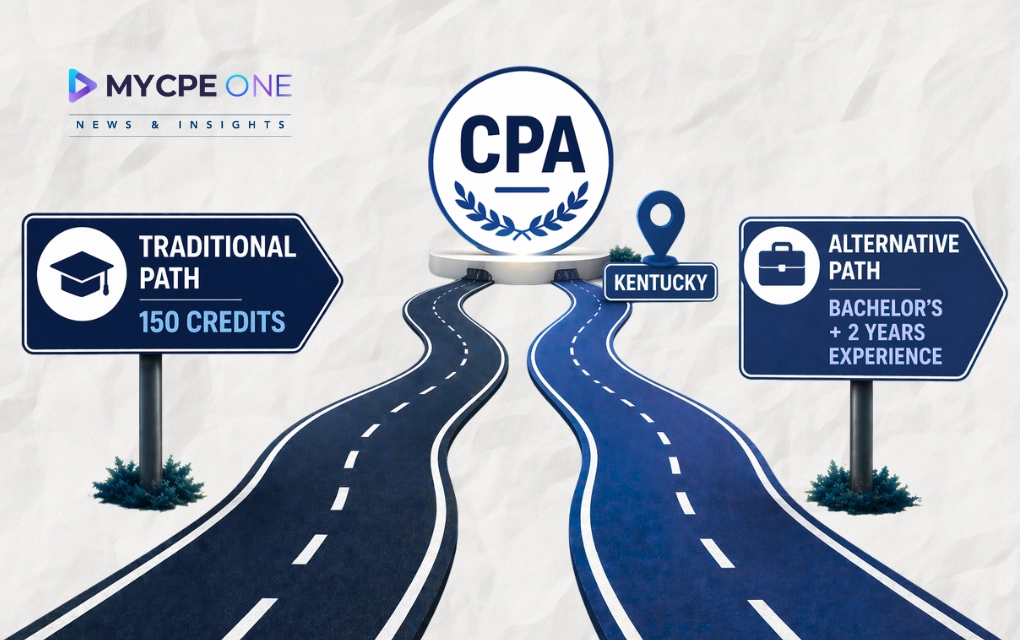
Vermont’s new law changes that equation by creating an additional CPA licensure pathway. Candidates can now qualify with a bachelor’s degree focused on accounting, two years of supervised experience, and successful completion of the Uniform CPA Exam. The existing routes remain available, including the traditional 150-credit-hour path and the post-baccalaureate degree route with accounting concentration and one year of experience. So, Vermont is not throwing out the old model. It is adding another workable lane.
The state is not saying the CPA credential should become casual. Candidates still need accounting education, practical experience, and the CPA Exam. What Vermont is doing is shifting some weight from classroom hours to real professional experience. Sadie Fischesser, executive director of the Vermont Society of CPAs, summed up the intent clearly when she told CFO Dive, “It’s quick.” She added that the change keeps Vermont competitive with other states and avoids unnecessary Vermont-specific hoops.
This law lands at a time when the accounting profession is trying to fix a pipeline problem that has been building for years. More than 40 states have already passed similar CPA pathway laws or changed certification rules, making Vermont part of a much broader national rethink. The pressure is especially real in Vermont. Fischesser told CFO Dive, “In Vermont the shortage is very real.” She pointed to a shrinking population, annual retirements, young professionals leaving the state, and fewer accounting education options. Vermont reportedly had about 1,200 CPAs in fiscal 2025, up slightly from the prior year but still below the roughly 1,400 active CPAs reported in 2019.
When the CPA count falls, the work does not disappear. Tax filings still come due. Audits still need staffing. Nonprofits still need financial reporting support. Small businesses still need advisors. Municipalities still need finance professionals. Firms still need managers, reviewers, partners, and succession plans. A thinner pipeline means more pressure on the CPAs already practicing in the state. More work piles onto fewer desks, and that can affect turnaround times, client service, burnout, and long-term firm value.
Vermont’s CPA licensure change is not about lowering the bar. It is about rebuilding the ladder so more capable people can actually climb it. The CPA Exam stays. Accounting education stays. Professional experience stays. Public trust stays at the center. What changes is the idea that one rigid academic route should define readiness for everyone. For professionals practicing in Vermont, this is a signal to prepare. Firms should revisit hiring plans, mentorship programs, experience documentation, and succession strategies. Educators should help students understand the new pathway early. Candidates should treat the change as an opening, not a shortcut. The future of the profession will depend on whether states can protect quality while making the path more realistic. Vermont just made its move. For accounting professionals, the message is clear: the pipeline problem is not fixing itself, and Vermont has decided it is time to stop waiting.
Until next time…
Don’t forget to share this story on LinkedIn, X and Facebook
Subscribe now for $199 and get unlimited access to MYCPE ONE, from CPE credits to insights Magazine
📢MYCPE ONE Insights has a newsletter on LinkedIn as well! If you want the sharpest analysis of all accounting and finance news without the jargon, Insights is the place to be! Click Here to Join
You’ve reached the 3 free-content piece limit. Unlock unlimited access to all News & CPE resources.
Subscribe Today.
Already have an account?
Sign In