Join 250,000+
professionals today
Add Insights to your inbox - get the latest
professional news for free.
Join our 250K+ subscribers
Subscribe07 OCT 2025 / MONTHLY REGULATORY CAPSULE
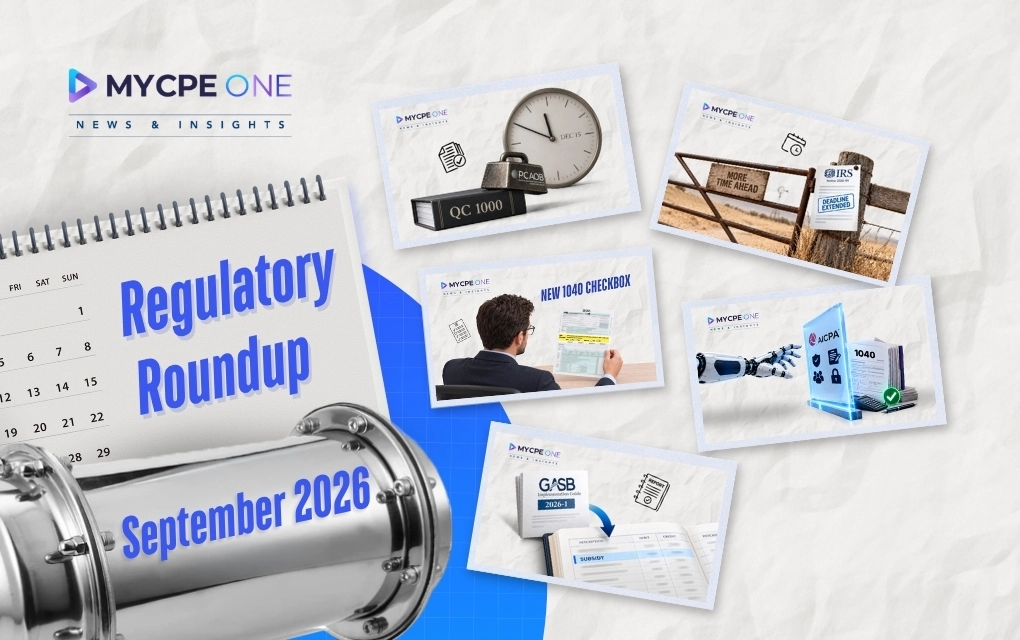
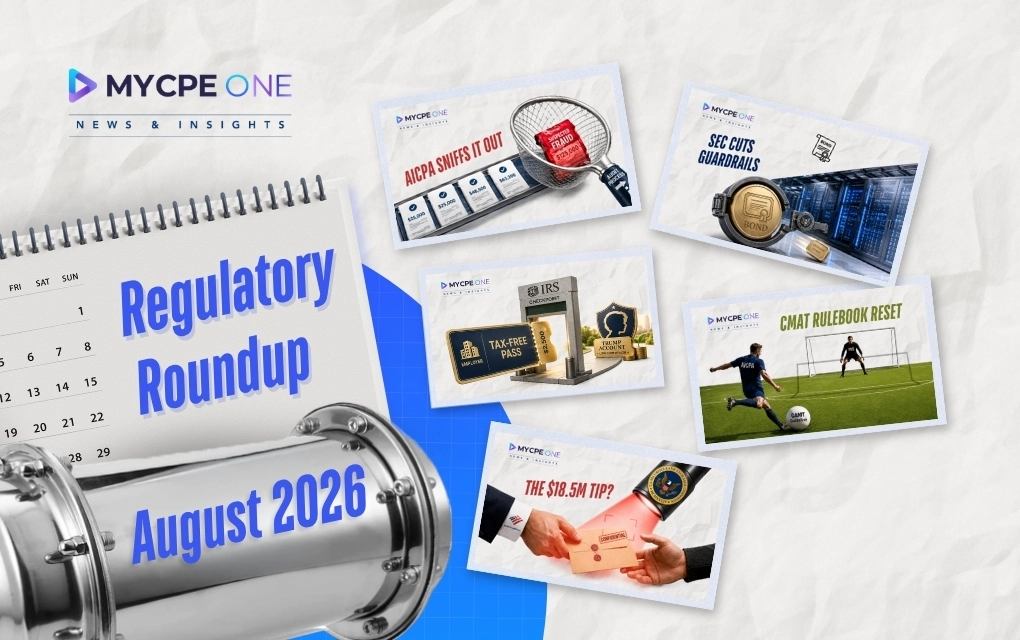
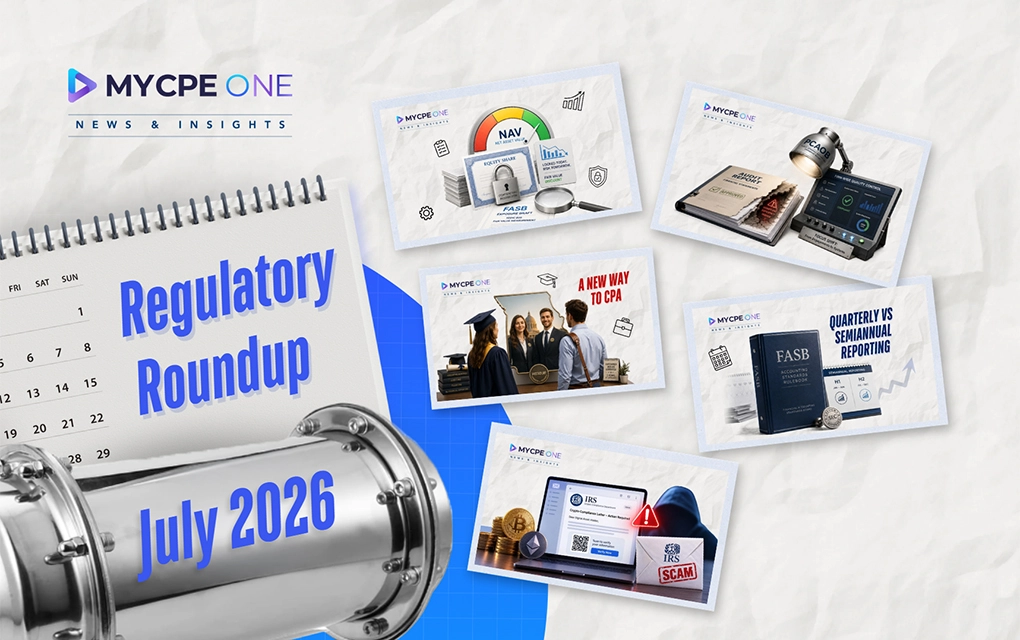
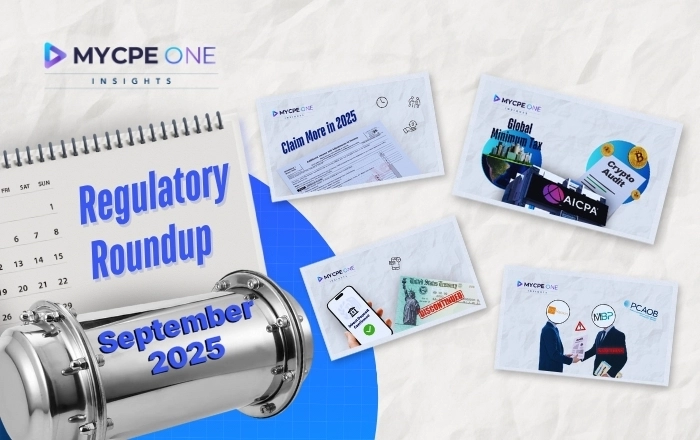
September 2025 witnessed significant changes in the compliance landscape across finance, auditing, and accounting. The AICPA and NASBA are considering changes to how professionals earn CPE credits, the SEC discussed the future of quarterly reporting, the FASB unveiled improved software accounting, the IRS introduced new deductions and digital mandates, and the PCAOB concurrently pushed for innovation and enforcement. These developments emphasize the regulatory shift from catching up to taking the lead, crucial for professionals to stay ahead of forthcoming policy changes.
September 2025 was anything but quiet in the compliance world. From the AICPA and NASBA rethinking how professionals earn CPE credits to the SEC questioning the future of quarterly reporting, the month reshaped long-standing norms across accounting, auditing, and finance. The FASB modernized software accounting, the IRS rolled out new deductions and digital mandates, and the PCAOB balanced innovation with enforcement. Together, these updates tell one story: regulation is no longer playing catch-up, it’s steering the conversation. This recap pulls together the month’s most critical developments across five pillars: AICPA, FASB, IRS, PCAOB, and SEC, to keep professionals ahead of the curve and ready for the next wave of policy shifts shaping 2026 and beyond.
NASBA and the AICPA are revisiting the CPE Standards that took effect in January 2024, aiming to modernize how professionals earn and report credits. The exposure draft emphasizes flexibility, AI-driven learning, and maintaining quality as education evolves. With feedback due by December 16, 2025, the proposal invites CPAs to help shape how their lifelong learning will look in the AI and microlearning era, before the new standards lock in.
From Pillar Two tax complexities to crypto lending audits, the AICPA is building frameworks to keep pace with global reform and digital finance. Its latest initiatives call for harmonized OECD guidance to prevent double taxation and offer auditors clarity on crypto-backed loans. The move reflects a broader shift: modernizing the profession’s playbook for cross-border taxes and blockchain realities. How these updates reshape compliance could redefine audit and tax strategy for years ahead.
The AICPA and NASBA are winding down their Experience, Learn and Earn (ELE) program after fall 2025, citing market shifts and emerging state-level licensure alternatives. Launched with Tulane University, the initiative helped over 260 students complete CPA credit hours affordably. As firms and states roll out new talent pipelines, the sunset signals a broader transition in how the profession nurtures future CPAs—raising questions about what the next education model will look like.
The FASB’s ASU 2025-06 modernizes how companies account for internal-use software, finally ditching outdated stage-based rules in favor of a clearer, probability-driven model. Once management approves funding and completion is probable, costs can be capitalized, simplifying what was once a minefield for controllers and auditors. The update also unifies website development under the same framework, streamlines disclosures, and clarifies AI-related challenges, marking a major step toward consistency and transparency in tech-related accounting.
The IRS is testing a new draft form, Schedule 1-A (Form 1040), to simplify deductions tied to tips, overtime, car loans, and seniors. Rolled out under the One Big Beautiful Bill Act, this consolidated form introduces below-the-line deductions designed to help working Americans. But between strict MAGI limits, documentation hurdles, and expiring provisions after 2028, tax pros will have their hands full ensuring compliance as these “everyday” breaks make their debut next filing season.
After waves of postal theft and refund fraud, the IRS and Treasury are ending paper checks for refunds and payments by September 30, 2025. The shift to digital transfers aims to curb fraud losses topping hundreds of millions annually while modernizing government payments. For taxpayers, it means updating bank info or adopting Direct Express® cards before refund season hits, because come fall 2025, the “check’s in the mail” excuse will be officially retired.
The IRS has slapped $162 million in penalties on taxpayers who fell for viral social media “tax hacks” involving bogus credits like the Fuel Tax Credit and expired leave credits. With nine Taxpayer Assistance Centers closing, misinformation is thriving while legitimate guidance shrinks. The agency is now turning to AI, analytics, and tougher penalties to combat the chaos. As tax season looms, professionals will be key in steering clients away from the TikTok tax trap.
Per diem rates for lodging, meals, and incidental expenses will stay flat in 2025, holding at $319 for high-cost cities and $225 elsewhere. While the freeze stabilizes employer compliance, it clashes with rising travel costs, squeezing business travelers already stretched thin. The IRS says the move ensures consistency, but finance teams may soon face a balancing act, maintain compliance while addressing the widening gap between fixed allowances and real-world expenses.
Starting October 16, 2025, tax preparers will see their PTIN renewal or application fee drop from $11 to $10, plus a $8.75 third-party charge. The reduction follows a biennial review showing lower program costs, affecting over 900,000 preparers annually. Though the savings are modest, the update underscores the IRS’s effort to streamline costs and improve efficiency as it continues digitizing its operations ahead of the 2026 filing cycle.
A sloppy predecessor–successor handoff at Marcum Asia morphed into a $100,000 penalty and mandatory training after draft workpapers were shared without the direct, documented terms AS 2610 demands. Regulators framed it as an investor-protection miss, not mere red tape, echoing recent heat on other firms. The takeaway is simple: no intermediaries, tight agreements, clear usage rights, and auditable trails. Firms that still treat these protocols like box-checking will keep learning the hard way, what changes next?
The PCAOB’s Technology Innovation Alliance is pushing four plays, standardized data, hands-on AI exploration, an Innovation Lab, and tech literacy, while updated AS 1105 and AS 2301 hard-wire controls testing for technology-assisted analysis. Translation: validate ITGCs and automated controls, then lean on analytics with rigor, not vibes. Firms are racing ahead with AI, but proficiency gaps persist. The new rules open the door for smarter evidence, fewer redundancies, and sharper risk responses, how fast will practice catch policy?
QC 1000, the risk-based quality control overhaul with Form QC and EQCF for mega-firms, just slid to December 15, 2026. The text stays intact; the calendar moved after pushback on the aggressive runway versus IAASB/AICPA timelines. For large firms, this is tuning time; for small and mid-size shops, it’s a chance to tailor scalable systems without chaos. Treat it as a breather, not a break, will your documentation, risk maps, and governance be truly ready on day one?
At its Sept. 26–27, 2025 Registered Reports Conference with Management Science, the PCAOB spotlighted evidence-based oversight: nine proposals on tech in audits, market incentives, and core reporting processes made the cut. Themes ranged from gen-AI’s audit impact to PE ownership, centralized teams, and EQR effectiveness. Acting Chair George Botic and OERA’s Joshua White stressed research as a backbone for inspections and standard-setting. The agenda is clear, better data, better policy; so which findings will steer the next rule tweaks?
The SEC, boosted by President Trump and Chair Paul Atkins, is floating a shift from mandatory quarterly reports to semiannual filings, potentially letting companies choose their cadence. Proponents tout billions in cost savings and less “short-termism,” while critics fear thinner transparency and more room to bury bad news. With 8-Ks still policing material events and a sped-up rulemaking mood, the big question is whether investors will accept fewer peeks under the hood, or demand the old rhythm back.
Chair Paul Atkins blasted Europe’s ESG regime and warned that if IFRS drifts toward climate metrics, the SEC could yank its U.S. recognition. That would upend two decades of IFRS access and saddle foreign issuers with GAAP reconciliations. Meanwhile, U.S. multinationals already juggling CSRD disclosures face split-screen reporting and analyst scrutiny for inconsistencies. Even if Washington trims ESG mandates, investor demand won’t fade, so will companies harmonize narratives across regimes, or let markets play detective?
The SEC and DOJ charged Daryl Heller with running a $770 million ATM-investment Ponzi, promising “safe” fixed returns while allegedly recycling new money and loans to pay old investors. With payouts halted and losses piling up, recoveries look limited, even as assets are frozen and criminal counts stack up. The bust landed as the SEC and CFTC unveiled a harmonization push to close oversight gaps. As regulators tighten the net, how quickly will controls catch the next scheme?
As September closed, one thing became clear: the compliance landscape is shifting from static to strategic. The AICPA and NASBA are retooling education for an AI-driven profession, while the FASB has simplified decades of confusion around software costs. The IRS is digitizing at record speed, the PCAOB is tightening audit quality controls, and the SEC is redefining transparency itself. Whether it’s CPE standards or quarterly filings, the message is the same, adaptability now defines professionalism. Staying compliant isn’t just about following the rules; it’s about anticipating how they’ll evolve. As we head into Q4, every CPA, auditor, and financial leader should treat these updates as a blueprint for smarter, tech-aligned, and forward-focused governance.
Until next time…
Don’t forget to share this story on LinkedIn, X and Facebook
Subscribe now for $199 and get unlimited access to MYCPE ONE, from CPE credits to insights Magazine
📢MYCPE ONE Insights has a newsletter on LinkedIn as well! If you want the sharpest analysis of all accounting and finance news without the jargon, Insights is the place to be! Click Here to Join
Transforming Finance & Accounting Operations for Enterprises!
We help 100+ clients streamline F&A operations with our full-suite outsourcing services—eliminating the need for in-house teams. Partner with us for Top-tier finance & accounting talent, Cutting-edge technology, and World-class infrastructure.
Our Full-Suite F&A Services Include:
We collaborate with CPA and accounting firms to drive real business value.
Schedule a no-obligation discovery callYou’ve reached the 3 free-content piece limit. Unlock unlimited access to all News & CPE resources.
Subscribe Today.
Already have an account?
Sign In