
©2026 - www.my-cpe.com All rights reserved
support@my-cpe.com7 Days Free Trial
for Enterprise Subscriptions
You have Not Selected the Monthly or Annual Plan

#1 Global Platform for Continuing Education
Create your Free Account | Get Unlimited Access only @$199/Year ( View Details )
Trusted by 250,000+ Professionals for Continuing Education
Create Your Account 1/2
Already have an account? Log In
To Continue using Trial, please verify your email address
Didn’t received verification email? Resend Email
You can cancel anytime during your trial period.
Become a
MYCPE ONE Member
@ $299 $199
33% Discount on Annual Subscription


Complete Access to 12,000+ Hours of Content
Trusted by 250,000+ Professionals
"Steven was knowledgeable and thorough…”
Steven was knowledgeable and thorough in his information about the product and what is offered. He was empathetic to my situation. He went above and beyond answering all of my many questions. Excellent service!

Crystal lovejoy
"Great Customer Service”
Great service and very patient as I asked several questions. Steven answered all my questions and helped me make the right decision in my subscription purchase. Thank you.

Lori corry
"It is what it advertised to be”
It is what it advertised to be. Professional quality training and CPE tracking and certificates; systems knows AZ CPA CPE requirements and categories. I've needed help on several occasions and the assistance was quick and effective; however, there were some problems with data entry. The assistance sometimes asks for input, but when I try to type it is dissallowed for some reason. On several occasions I had to close the popup to get it out of my way.

Brian Carey
"Great customer service”
Great customer service. Classes are pertinent. Great value

Steve

Trusted by 250,000+ Professionals
Trusted by 250,000+ Professionals
"Steven was knowledgeable and thorough…”
Steven was knowledgeable and thorough in his information about the product and what is offered. He was empathetic to my situation. He went above and beyond answering all of my many questions. Excellent service!
Crystal lovejoy
"Great Customer Service”
Great service and very patient as I asked several questions. Steven answered all my questions and helped me make the right decision in my subscription purchase. Thank you.
Lori corry
"It is what it advertised to be”
It is what it advertised to be. Professional quality training and CPE tracking and certificates; systems knows AZ CPA CPE requirements and categories. I've needed help on several occasions and the assistance was quick and effective; however, there were some problems with data entry. The assistance sometimes asks for input, but when I try to type it is dissallowed for some reason. On several occasions I had to close the popup to get it out of my way.
Brian Carey
"Great customer service”
Great customer service. Classes are pertinent. Great value
Steve
Subscribe Now at $199/ 12 Months
Topic of Interest
Select the topics of your interest to receive Webinars/Virtual Events/E-Books/Podcasts of your interest.
Selected Topics
Important: Course Deactivation Alert
Below mentioned Courses will be deactivated soon due to outdated content. Complete the course within the next 7 days to receive credits. After Expiry date, the course will be unavailable for credit. For assistance or inquiries, please contact our support team at support@my-cpe.com.
Course Name
Thank You.
2025 has been the year of AI, and no section is untouched by its impact. The implementation of AI has shifted toward strategic work instead of transactional aspects.
CPAs must stay updated with the latest trends and accounting tech developments. The job role has now become more prominent, exclusive, and dynamic. So as a CPA, you need to have a clear and concise idea of every aspect of business. Whether it be Artificial Intelligence, tech, Sustainability, or cyberworld, you must master all.
Some prominent areas of development like Artificial Intelligence, Environmental, Social, and Governance ESG, Data Privacy, or Cybersecurity, are the CPE topics CPAs must be attentive to learn.
Stay ahead of these changes and master Accounting Trends Update for 2025.
Artificial Intelligence is powering accounting to concentrate on high-value activities, reducing manual labor. With lesser human interaction, AI is helping to focus on more strategic planning, forecasting, and advising on complex decisions.
AI is now capable of managing your task include:
The majority of large firms alongside Big 4 are actively using and exploring AI. Small accounting firms are highly focused on adopting AI. Big accounting giant PWC, with its AI agent OS, transformed the entire audit process. In KPMG Workbench, A multi-agent AI platform, transforming client delivery and ways of working across the global organization.
In this data driven world, CPAs can leverage AI to enhance efficiency and gain competitive advantage. Big 4 accounting players are now in the game. 42% of firms actively using generative AI report daily usage transforming traditional workflows.
Efficiency Gains: AI automates transaction analysis, reducing time spent on sampling and detailed tests. Professionals now focus on higher-risk, priority based areas requiring human judgment.
Real-Time Analysis: AI processes financial data instantly, providing current information for timely decisions. It helps in a more frequent and accurate forecasting.
Second Assistant: Handling routine tasks, AI can help you with strategic insights. CPAs can use LLM to assist with budgeting, forecasting, and financial modeling.
Cost Reduction: Automated data entry and transaction processing generate significant savings while reducing manual errors.
CPAs, equip yourselves with the right knowledge and tools to stay ahead. Level Up Your AI Skills in Accounting & Audit with the trending CPE topics.
| Courses | Credits | Rating | Reg. Link |
|---|---|---|---|
| Using AI in a Fraud Investigation | 2 | 4.6 | Click here |
| Using AI in a Government Audit | 2 | 4.7 | Click here |
| AI Audit in 2025: Tools and Techniques Explained | 2 | 4.5 | Click here |
| AI in Financial Analysis & Auditing | 1.5 | 4.6 | Click here |
| Automated Bookkeeping & RPA: Best Practices and Risks | 1.5 | 4.5 | Click here |
| The Future of Lease Accounting: Automation, AI, and Smarter Decisions | 1 | 4.4 | Click here |
| GPT Builder for Accountants: No-Code AI for Smarter Workflows | 2 | 4.6 | Click here |

98% of companies globally now disclose ESG information. 99% in the U.S. This mandatory compliance shift creates significant opportunities for CPAs ready to build sustainability expertise.
There are quite a few ESG reporting standards developed and recommended by globally recognized institutes.
Four major frameworks dominate ESG reporting:
Global Reporting Initiative: GRI an international, independent organization provide standards to gov and companies for their sustainability impact reporting.
Sustainability Accounting Standards Board (SASB): Investor-focused standards across 77 industries, providing a framework for companies to disclose financially material sustainability information to investors.
Task Force on Climate-related Financial Disclosures (TCFD): Climate risk assessment for financial performance. Requirements are integrated into IFRS standards.
International Sustainability Standards Board (ISSB): IFRS S1 and S2 released June 2023, effective January 1, 2024. Global baseline for sustainability disclosure.
Regulatory requirements accelerate rapidly. The Securities and Exchange Commission passed its climate disclosure rule in March 2024, requiring material Scope 1 and 2 emissions reporting. California enacted greenhouse gas and ESG regulations in October 2023, with similar legislation pending in Illinois, New York, Colorado, Vermont, and Maine.
The EU's Corporate Sustainability Reporting Directive impacts 3,000 U.S. companies with significant EU operations. CSRD requires "double materiality" assessment, both impact materiality and financial materiality.
So CPAs must have a fair idea of sustainability accounting and a clear disclosure of ESG reporting.
ESG reporting creates measurable opportunities. 88% of U.S. companies reporting ESG information obtain third-party assurance. Also, investors view sustainability information as a critical component for investment decisions.
CPAs possess the right foundation:
Assurance Expertise: Enterprise risk management, internal controls, financial reporting, and CPA obtain essential building blocks for sustainability reporting.
Professional Standards Knowledge: Data integrity, reporting frameworks, regulatory compliance position CPAs to lead ESG integration.
Strategic Advisory Opportunities: ESG compliance has evolved. CPAs use sustainability data to identify efficiency gains, assess risk exposure, forecast financial impacts.
Enhanced Service Offerings: ESG assurance services expand client portfolio, creating more valuable strategic partnerships.
CPAs guide organizations through sustainability standards, materiality assessments, business model integration, and culture development.
Get in-depth overview of the increasing demand and impact of ESG compliance on winning the investors’ trust and preparation and presentation of the Financial Statement.
👉 ESG’s Growing Impact on Audits and Financial Statements
ESG Reporting and CPE Learning Opportunities you must not miss, especially for the consultants and auditors:
| Courses | Credits | Rating | Reg. Link |
|---|---|---|---|
| ESG’s Growing Impact on Audits and Financial Statements | 2 | 4.6 | Click here |
| 2025 Assurance Update: Getting Ready for 2026 and Beyond | 1.5 | 4.4 | Click here |
| An Introduction to Green Finance and Ethical Investment | 2 | 4.5 | Click here |
| The Controller's Role in ESG | 2 | 4.5 | Click here |
| The ESG Guide: Metrics That Make a Difference | 4.5 | 4.4 | Click here |
| What Every Construction Auditor Needs to Know About ESG | 1 | 4.3 | Click here |

Cyberattacks on accounting firms increased 300% since COVID-19. CPAs handle sensitive financial data daily, making them prime targets for cybercriminals. For accounting professionals managing cybersecurity knowledge becomes essential.
Four major threats target accounting professionals:
The Gramm-Leach-Bliley Act requires tax return preparation firms to implement Written Information Security Plans. The FTC Safeguards Rule mandates security plans for client data protection.
IRS Publication 4557 outlines specific security measures for tax professionals. The IRS Security Summit coordinates between tax agencies and industry stakeholders to combat data theft.
AICPA's cybersecurity risk management framework helps CPAs to demonstrate effective security processes. The FFIEC Cybersecurity Assessment Tool assists financial institutions with risk identification.
Strong cybersecurity practices deliver measurable advantages:
Client Trust: CPA wins clients trust and confidence in maintaining security builds and handling sensitive financial information.
Compliance Assurance: CPAs having knowledge of ethical and legal obligations to safeguard client data privacy will seamlessly comply with the regulatory requirements.
Risk Reduction: An experienced and trained CPA will be at an upper hand in protecting and preventing data breaches, operational disruptions, and reputational damage.
Operational Security: Cloud-based applications with centralized storage, role-based access controls, and multi-factor authentication improve data protection. This removes critical data from vulnerable desktops and email attachments.
| Course | Credits | Rating | Reg. link |
|---|---|---|---|
| The Impact of the Digital Revolution on the Accounting Profession | 2 | 4.5 | Click here |
| Navigating Cyber Threats: Exploring the New NIST Framework 2.0 | 2 | 4.6 | Click here |
| Cyber Incident Response for a Resilient Ready-to-Act Plan | 1 | 4.6 | Click here |
| Advanced Persistent Threats with Early Detection and Defense Tactics | 1 | 4.6 | Click here |
The accounting profession changes fast. CPAs who build expertise in AI, ESG reporting, cybersecurity, ethical AI usage, and digital transformation position themselves ahead of these changes. Professional organizations deliver targeted training and offer CPA CPE credits to help professionals stay compliant and competitive. CPAs can choose courses that match their practice needs and career goals.
AI is revolutionizing accounting by automating routine tasks, improving data accuracy, and providing real-time analytics. This allows accountants to focus on more strategic work and decisions demanding human intervention.
ESG reporting offers accounting firms opportunities for third-party assurance services, strategic advisory roles, and enhanced service offerings. It allows CPAs to leverage their professional expertise in a rapidly growing area of business reporting.
With 300% increased cyberattacks on accounting firms since COVID-19, cybersecurity knowledge is essential for protecting sensitive client data, ensuring compliance with regulations, mitigating risks.
CPAs must consider fairness, transparency, privacy, and accountability when implementing AI. They need to ensure AI systems are free from bias, protect client data, and align with professional standards and regulations.
CPAs can lead digital transformation by developing a structured change management framework, creating technology champion networks, ensuring cultural alignment, and adopting a measured implementation approach. This requires balancing technological expertise with strong leadership and communication skills.

Imtiaz Munshi, CPA (US), is the CFO at Azstec, LLC and a trusted advisor to high-net-worth entrepreneurs. A seasoned tax planner and a business strategist with his 25 years of experience, he helps businesses grow smarter and stronger. Imtiaz specializes in guiding entrepreneurs and enterprises through complex financial decisions with clarity and confidence. His passion lies in simplifying strategy, optimizing tax outcomes, and driving sustainable growth. Through his work and thought leadership, Imtiaz continues to empower CPAs and business owners to stay ahead in an evolving financial landscape shaped by AI, ESG, and data-driven change.


Business Insights: Remote Work, Decision Bias & Wine Fraud

How AI Is Changing Marketing for CPA Firms
Agentic AI Workflows for Management Accountants
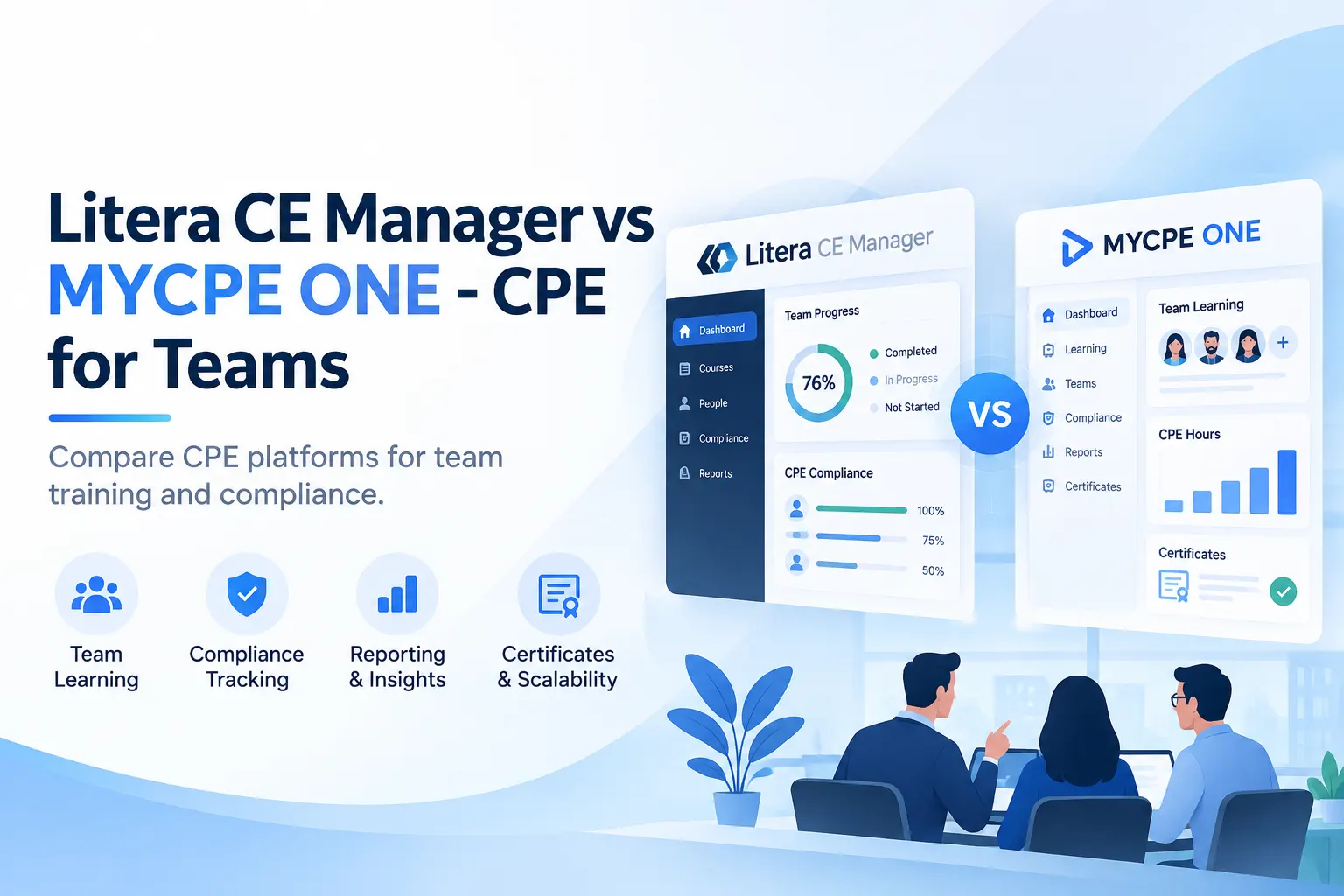
Compliance vs Compliance Plus: Pricing and Features Compared for Your Team
 Amrit Singh
Offshore Bookkeeping vs. In-House: What UK Accounting Firms Should Consider
 Christopher Rivera

Registration Completed

Something Went Wrong!! Please Try Again.

Registration Completed

Please Update Your Profile to Claim Your Continuing Education Credits.

Thank you for subscribing 7 Days Free Trial.
Please upgrade your browser to use MYCPE ONE
Experience MYCPE ONE at its best! Upgrade your browser for a more interactive, user-friendly interface, and stay ahead in your professional development journey.
Upgrade NowHow did you find out about us?
We were looking so hard for you now that you are finally here, So would you tell us how you found out about us?

What is your primary purpose to use MYCPE ONE?

Thank you for submitting your inquiry! We will contact you soon.
CloseOur Promise






