©2026 - www.my-cpe.com All rights reserved
support@my-cpe.com7 Days Free Trial
for Enterprise Subscriptions
You have Not Selected the Monthly or Annual Plan

#1 Global Platform for Continuing Education
Create your Free Account | Get Unlimited Access only @$199/Year ( View Details )
Trusted by 250,000+ Professionals for Continuing Education
Create Your Account 1/2
Already have an account? Log In
To Continue using Trial, please verify your email address
Didn’t received verification email? Resend Email
You can cancel anytime during your trial period.
Become a
MYCPE ONE Member
@ $299 $199
33% Discount on Annual Subscription


Complete Access to 12,000+ Hours of Content
Trusted by 250,000+ Professionals
"Steven was knowledgeable and thorough…”
Steven was knowledgeable and thorough in his information about the product and what is offered. He was empathetic to my situation. He went above and beyond answering all of my many questions. Excellent service!

Crystal lovejoy
"Great Customer Service”
Great service and very patient as I asked several questions. Steven answered all my questions and helped me make the right decision in my subscription purchase. Thank you.

Lori corry
"It is what it advertised to be”
It is what it advertised to be. Professional quality training and CPE tracking and certificates; systems knows AZ CPA CPE requirements and categories. I've needed help on several occasions and the assistance was quick and effective; however, there were some problems with data entry. The assistance sometimes asks for input, but when I try to type it is dissallowed for some reason. On several occasions I had to close the popup to get it out of my way.

Brian Carey
"Great customer service”
Great customer service. Classes are pertinent. Great value

Steve

Trusted by 250,000+ Professionals
Trusted by 250,000+ Professionals
"Steven was knowledgeable and thorough…”
Steven was knowledgeable and thorough in his information about the product and what is offered. He was empathetic to my situation. He went above and beyond answering all of my many questions. Excellent service!
Crystal lovejoy
"Great Customer Service”
Great service and very patient as I asked several questions. Steven answered all my questions and helped me make the right decision in my subscription purchase. Thank you.
Lori corry
"It is what it advertised to be”
It is what it advertised to be. Professional quality training and CPE tracking and certificates; systems knows AZ CPA CPE requirements and categories. I've needed help on several occasions and the assistance was quick and effective; however, there were some problems with data entry. The assistance sometimes asks for input, but when I try to type it is dissallowed for some reason. On several occasions I had to close the popup to get it out of my way.
Brian Carey
"Great customer service”
Great customer service. Classes are pertinent. Great value
Steve
Subscribe Now at $199/ 12 Months
Topic of Interest
Select the topics of your interest to receive Webinars/Virtual Events/E-Books/Podcasts of your interest.
Selected Topics
Important: Course Deactivation Alert
Below mentioned Courses will be deactivated soon due to outdated content. Complete the course within the next 7 days to receive credits. After Expiry date, the course will be unavailable for credit. For assistance or inquiries, please contact our support team at support@my-cpe.com.
Course Name
Thank You.
Agentic AI systems are a radical form of standard automation. It executes multi-step accounting and tax workflows autonomously. It executes tasks like reconciliations, variance analysis and compliance checks combining reasoning and rules without waiting for human instruction.
By the end of 2026, predicts that 40% of enterprise applications will embed task-specific AI agents. Before implementation. There are associated risks of data security, unexplainable decisions, and professional liability, and that must be understood carefully. CPAs must also understand what precautionary measures must take before head.
There is no such universal formal definition agreed for Agentic AI so far. but it can be characterized as a autonomous technology through distinct operations that perceive, reason, and act in digital environments to achieve goals on behalf of human principals.
Agentic AI can analyze information, interact with accounting systems, decide needed actions, use connected tools, and perform the needed action along with adjusting the next steps based on the situation.
A simple accounting treatment may help you to better understand.
Suppose a company receives an invoice for $12,000, but the invoice amount does not match the purchase order.
An Agentic AI system can investigate the difference, check the purchase order, goods receipt, vendor history, and company policy. It will now determine the likely reason and resolve the issue within its authority. If not, then only will escalate it to the accountant with an explanation.
The biggest concern is not what and how but where? Which accounting workflows should be automated first?
Start with a workflow containing high-volume repetitive tasks that are governed by clear rules, measurable inputs, and outputs. Not everything can be included in the same set.
Transaction like critical tax interpretation, sentimental decisions, unsolved disputes associated transactions, and unusual audit findings demands professional judgement, and AI is not a reliable option for this.
Small steps first. Start with the daily repetitive, low-risk processes. Apply agentic AI in five critical workflow areas where autonomous decision-making delivers measurable improvements in speed, accuracy and capacity.
Invoices arrive across multiple channels. An AI agent can independently retrieve an invoice from an email inbox, extract structured fields (supplier name, date, line-item totals, and tax categories), compare those details with an approved purchase order, and verify whether the supplier exists in the master accounting ledger. Any discrepancies or changes in payment details are instantly flagged for manual approval.
Bookkeeping teams spend significant time sorting unclear bank records and classifying transactions. Agentic systems can check transaction ledger lines, flag duplicates or unusual variances, assign confidence scores to proposed category matches, and prepare clean, reconciled records before an accountant signs off.
Unclear items or unfamiliar vendors are routed into an accountant’s review queue with the system logging the exact rationale behind its suggested matching. Microsoft Dynamics 365 Business Central uses AI technology to inspect unmatched transactions and identify more matches based on dates, amounts, and descriptions.
AI adoption in audits has jumped from 8% to 21% in a single year, with early pilot firms logging 20% to 40% productivity gains. In audit workflows, an agent can collect requested files, classify documents, match ledger balances with bank confirmations, identify missing records, and generate targeted exception lists for the auditor to examine
Embedding an AI agent into a firm's workspace to handle heavy administrative and preparation of work while maintaining strict human control. Agentic AI can organize documents, drafts of reasoning trails, and flags exceptions, leaving professional evaluation strictly to the accountant.
A vendor submits a multi-page PDF invoice via email or client portal. The AI agent detects the file and automatically initiates the review workflow. Agent processes the document, using precise parsing capabilities to extract structured data fields including supplier name, tax ID, invoice date, line-item totals, and payment terms. Match and validate the invoice line and approve transactions within transactions.

Firms routinely lose hours chasing clients for missing documents and organizing incoming PDFs. An AI agent can scan client organizers, compare received documents against a requested list (Provided-By-Client or PBC list), identify exactly what is missing, send personalized follow-up reminders, and organize files in a secure, centralized workspace to prepare them for first-stage human review.

CPAs handle highly sensitive personal and financial data. Before connecting any AI agent, firms must verify where data is processed, how long it is retained, whether it is used to train a vendor's public model, and what encryption standards are enforced.
To prevent sensitive financial records from scattering across unmanaged local devices, firms should rely on controlled, centralized cloud workspaces with strict, least-privilege data access permissions.
AI models are trained on publicly available datasets that frequently mirror human and investor biases, such as geographic over-representation of Western markets or emotional biases like loss aversion (e.g., an LLM showing an algorithmic tendency to hold onto losing assets rather than reallocating capital).
CPAs must be aware of these systemic biases and mitigate them by providing highly structured, domain-specific instruction sets (often saved as markdown files called "skills") and utilizing Model Context Protocol (MCP) servers to anchor the model’s reasoning to verified, external financial data
The value of an agent lies not just in its final output, but in the defensibility of its process. Every single workflow must generate a durable, untameably audit log detailing exactly which data files the agent touched, what rules were applied, what actions were proposed, who authorized the execution, and what changes occurred after post-authorization. If a regulator or client challenges a transaction, the firm must be able to cleanly reconstruct the entire digital trail.
Similar terminologies with identical fell processes may become sometimes confusing. Robotic Process Automation (RPA), Generative AI, Workflow Automation, and Agentic AI completely operate in different mechanisms in accounting.
RPA bots mimic human interactions and perform repetitive actions as programmed. Capable in high-volume data entry, invoicing, and standard report for stable workflows. But when the condition and process changes, RPA cannot learn new methods by itself or make decisions on their own. So, when a different file or new format comes up RPA flags it and stop working that requires a manual intervention.
Agentic AI is capable to orchestra multiple agents, synthesizing different pieces, interpreting data, adapting the changes, and understanding the nuances for decision making.
The difference between Agentic AI and Generative AI is execution. Generative AI can explain things and recommend a solution. Agentic AI can learn and operate on its own toward a defined goal. It breaks down the exception, gathers supporting evidence, prepares documentation, and routes it for approval.
Workflow automation follows fixed instructions, like automating a repetitive task. For example, it can automatically match an invoice with a purchase order and send it for approval.
Agentic AI can decide what steps to take based on the situation. Instead of just simple automated matching, it goes further by noticing a mismatch, investigating the reason, checking related information, and deciding whether to resolve it or send it to an accountant.
First, take a step as a pilot project with a dedicated person managing the process. Desigen each step of the particular workflow. Dedicate a particular time for the pilot project, Draft the progression you make during the process. And pre-describe the desired outcome then tally it with the exact outcome achieved.
Week Wise example of AGENTIC AI Pilot
Week 1: Select a small, single piece of workflow that is regularly recorded in business transactions. Document each individual step, measure current manual processing times, and map the connected software systems. Here you have the baseline for all subsequent measurements.
Week 2: Draw the boundaries for operations. Define the access, functionality, and desired outcomes expected. Clearly document the databases agent can touch, specific actions it can take, and what exact points it will need human accountant.
Week 3: Run the agentic workflow using historical, controlled data. Mix normal, clean transactions with highly challenging cases, including poor-quality document scans, duplicate records, incomplete files, or conflicting details. Have the reviewing CPA meticulously log every recommendation, error, and correction.
Week 4: Deploy the workflow live. Selected group of clients or a single internal team. Actively review every single transaction and output.
| Week 1 | Week 2 | Week 3 | Week 4 |
|---|---|---|---|
| Review Current Process & Map Baseline, Steps, Systems, and Exception Rates | Define the AI Workflow & Set Clear Human-in-the-Loop Approval Rules | Test with Controlled Data, Mixing Clean Transactions with Hard Exception Cases | Launch a Limited Live Pilot with Selected Clients & Measure Final Performance |
Agentic AI represents a highly promising mechanism for CPAs driving a fundamental change in how accounting work gets done. The intelligent agents can handle the intensive preparation work under strict human supervision. The key to successful AI adoption is deliberate and controlled execution.
Agentic AI operates autonomously to complete entire workflows without step-by-step human instruction.
The system flags unrecognized supplier details as exceptions, halting automated payment workflows until a reviewer verifies the vendor's credential.
CPAs must verify that AI systems comply with standards like SOC 2, GDPR, CCPA, and IRS Publication 4557. Key considerations include encryption protocols, role-based access controls, multi-factor authentication, and vendor data management practices.

Imtiaz Munshi, CPA (US), is the CFO at Azstec, LLC and a trusted advisor to high-net-worth entrepreneurs. A seasoned tax planner and a business strategist with his 25 years of experience, he helps businesses grow smarter and stronger. Imtiaz specializes in guiding entrepreneurs and enterprises through complex financial decisions with clarity and confidence. His passion lies in simplifying strategy, optimizing tax outcomes, and driving sustainable growth. Through his work and thought leadership, Imtiaz continues to empower CPAs and business owners to stay ahead in an evolving financial landscape shaped by AI, ESG, and data-driven change.
Table of Contents


Business Insights: Remote Work, Decision Bias & Wine Fraud



How AI Is Changing Marketing for CPA Firms
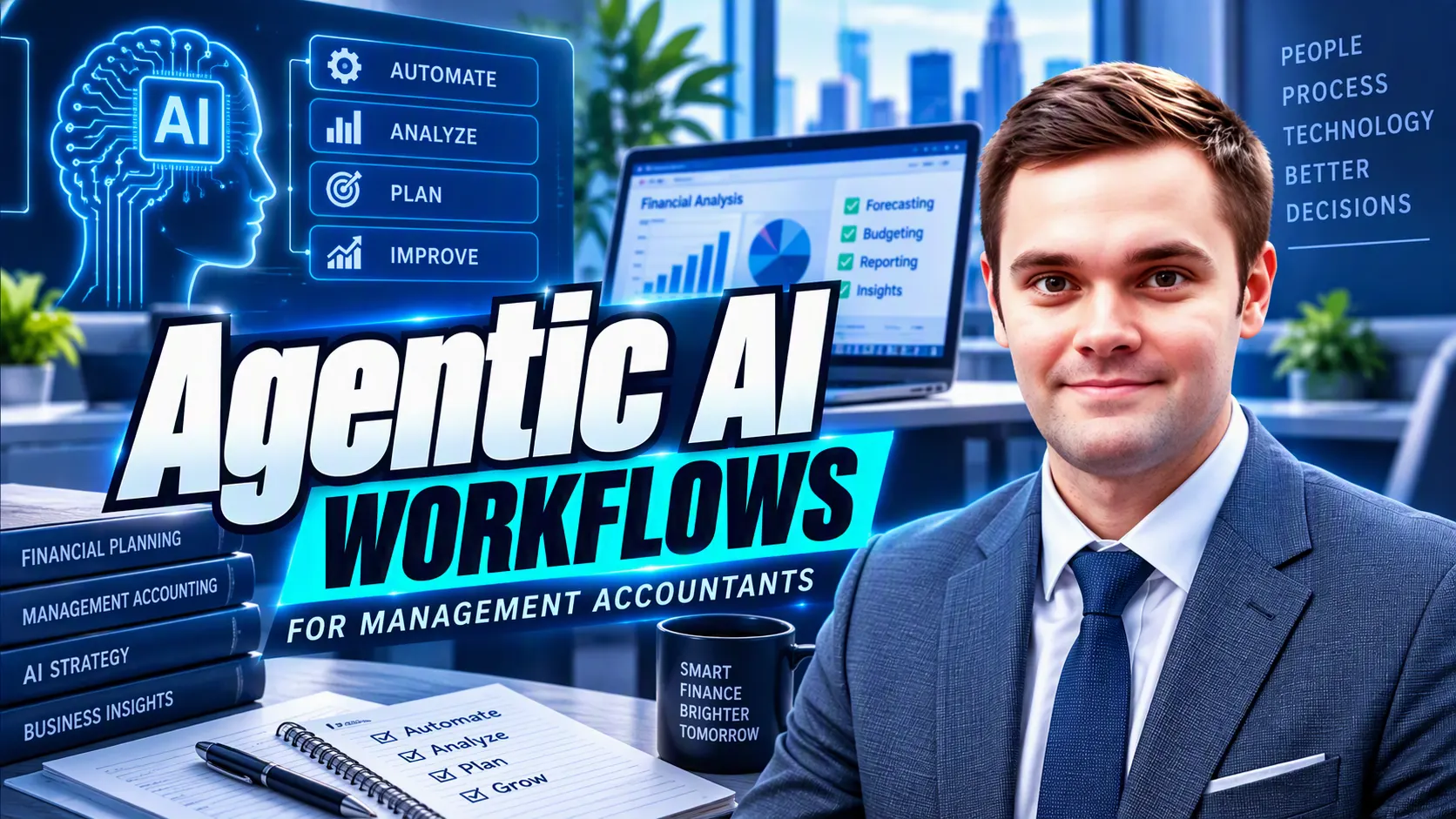
Agentic AI Workflows for Management Accountants
Compliance vs Compliance Plus: Pricing and Features Compared for Your Team
 Amrit Singh
Offshore Bookkeeping vs. In-House: What UK Accounting Firms Should Consider
 Christopher Rivera

Registration Completed

Something Went Wrong!! Please Try Again.

Registration Completed

Please Update Your Profile to Claim Your Continuing Education Credits.

Thank you for subscribing 7 Days Free Trial.
Please upgrade your browser to use MYCPE ONE
Experience MYCPE ONE at its best! Upgrade your browser for a more interactive, user-friendly interface, and stay ahead in your professional development journey.
Upgrade NowHow did you find out about us?
We were looking so hard for you now that you are finally here, So would you tell us how you found out about us?

What is your primary purpose to use MYCPE ONE?

Thank you for submitting your inquiry! We will contact you soon.
CloseOur Promise