©2026 - www.my-cpe.com All rights reserved
support@my-cpe.com7 Days Free Trial
for Enterprise Subscriptions
You have Not Selected the Monthly or Annual Plan

#1 Global Platform for Continuing Education
Create your Free Account | Get Unlimited Access only @$199/Year ( View Details )
Trusted by 250,000+ Professionals for Continuing Education
Create Your Account 1/2
Already have an account? Log In
To Continue using Trial, please verify your email address
Didn’t received verification email? Resend Email
You can cancel anytime during your trial period.
Become a
MYCPE ONE Member
@ $199 $189
33% Discount on Annual Subscription


Complete Access to 12,000+ Hours of Content
Trusted by 250,000+ Professionals
"Steven was knowledgeable and thorough…”
Steven was knowledgeable and thorough in his information about the product and what is offered. He was empathetic to my situation. He went above and beyond answering all of my many questions. Excellent service!

Crystal lovejoy
"Great Customer Service”
Great service and very patient as I asked several questions. Steven answered all my questions and helped me make the right decision in my subscription purchase. Thank you.

Lori corry
"It is what it advertised to be”
It is what it advertised to be. Professional quality training and CPE tracking and certificates; systems knows AZ CPA CPE requirements and categories. I've needed help on several occasions and the assistance was quick and effective; however, there were some problems with data entry. The assistance sometimes asks for input, but when I try to type it is dissallowed for some reason. On several occasions I had to close the popup to get it out of my way.

Brian Carey
"Great customer service”
Great customer service. Classes are pertinent. Great value

Steve

Trusted by 250,000+ Professionals
Trusted by 250,000+ Professionals
"Steven was knowledgeable and thorough…”
Steven was knowledgeable and thorough in his information about the product and what is offered. He was empathetic to my situation. He went above and beyond answering all of my many questions. Excellent service!
Crystal lovejoy
"Great Customer Service”
Great service and very patient as I asked several questions. Steven answered all my questions and helped me make the right decision in my subscription purchase. Thank you.
Lori corry
"It is what it advertised to be”
It is what it advertised to be. Professional quality training and CPE tracking and certificates; systems knows AZ CPA CPE requirements and categories. I've needed help on several occasions and the assistance was quick and effective; however, there were some problems with data entry. The assistance sometimes asks for input, but when I try to type it is dissallowed for some reason. On several occasions I had to close the popup to get it out of my way.
Brian Carey
"Great customer service”
Great customer service. Classes are pertinent. Great value
Steve
Subscribe Now at $189/ 12 Months
Topic of Interest
Select the topics of your interest to receive Webinars/Virtual Events/E-Books/Podcasts of your interest.
Selected Topics
Important: Course Deactivation Alert
Below mentioned Courses will be deactivated soon due to outdated content. Complete the course within the next 7 days to receive credits. After Expiry date, the course will be unavailable for credit. For assistance or inquiries, please contact our support team at support@my-cpe.com.
Course Name
Thank You.
Logging every continuing education credit you earn, matching it to your regulator's rules, and keeping proof of completion is the real task. If you are a CPA, the rules are different. Each state board of accountancy sets the rules. If you are an Enrolled Agent, the IRS, under Circular 230, defines your compliance rules.
Effective August 1, 2026, NASBA and the AICPA revised the Statement on Standards for CPE Programs. EAs whose Social Security number ends in 7, 8, or 9 are in their renewal window right now. Professionals now hold more than one credential, each with its own clock.
Dual-credential holders follow two rule sets. CPAs answer to their state board of accountancy, while EAs answer to the IRS. That single difference shapes everything you track: hour totals, ethics rules, approved providers, and how your credits reach the regulator.
For Enrolled Agents, requirements, tracking, and recording are pretty straightforward. But complying with CPA rules is complicated. EAs need 72 Hours (min 16 annually), with 6 hours of ethics every three years, whereas CPAs generally need 120 hours triennially, with a minimum of 40 CPE every year.
CPA rules and reporting periods vary by state board, so always confirm before renewal and check your state-specific requirements. The variation in ethics requirements, carryforward limit, Reporting Cycle, and renewal fee makes the tracking difficult for CPAs.
A single federal tax course can count for both CPA and EA. But the ethics is the core differentiator here, and it rarely overlaps. EA ethics must come from an IRS-approved provider, while states such as Texas and Florida require a board-approved ethics course. So, one needs to plan on separate ethics courses.
Texas CPA need 120 CPE every 3-year rolling period, a minimum of 20 CPE every year, with a 4-hour Board-approved ethics course every 2 years. Whereas, California CPA require 80 hours per 2-year renewal period, minimum 20 hours (12 technical) with 4 hours of ethics; 2-hour Board-approved Regulatory Review.
A spreadsheet works if you hold one license. However, it is a bygone era to use one or two providers and never miss a week of data entry. Automation wins once you hold multiple credentials, learn from several providers, or manage CPE for a team.
Start with your rules, not your tool. A tracker is only as accurate as the requirements you load into it.

For CPAs, a CPE audit is a formal review by a state board of accountancy. For CPAs, document retention timelines vary from 4 to 5 years depending on the state.
Enrolled Agents for CE compliance reviews and audits by the Internal Revenue Service (IRS). EAs generally must maintain these records for 4 years.
Do not rely on providers to hold your records. Many purge old transcripts, and audit notices can arrive long after a reporting period closes. If you receive an audit notice, export your records for the period requested, match them against the board's checklist, and respond by the stated deadline.
CPE compliance is simple to describe and easy to get wrong in practice. The professionals who avoid problems are not the ones who know the most rules. They capture every certificate when they earn it, check progress against each rule set during the year, and keep records long after renewal.
Automation handles the clerical work. You stay in charge of the rules. If you are an EA renewing before January 31, 2027, check your PTIN account now. If you are a CPA, explore CPE Courses for CPAs that align with your state's annual minimum and ethics requirements before your next renewal date.
Use one tracker that accepts credits from any provider, maps them to each state and credential you hold, and alerts you before deadlines. EAs should pair it with regular checks of their online PTIN account.
Keep them for as long as any regulator requires. EAs must keep records for four years, several states require five years, and NASBA suggests at least five years when no other rule applies.
Yes. Several options are free, including NASBA's CPE Audit Service in participating states and MYCPE ONE's CPE Wallet, which accepts credits from any provider at no cost.

Imtiaz Munshi, CPA (US), is the CFO at Azstec, LLC and a trusted advisor to high-net-worth entrepreneurs. A seasoned tax planner and a business strategist with his 25 years of experience, he helps businesses grow smarter and stronger. Imtiaz specializes in guiding entrepreneurs and enterprises through complex financial decisions with clarity and confidence. His passion lies in simplifying strategy, optimizing tax outcomes, and driving sustainable growth. Through his work and thought leadership, Imtiaz continues to empower CPAs and business owners to stay ahead in an evolving financial landscape shaped by AI, ESG, and data-driven change.


Workplace Respect After Diversity, Equity & Inclusion (DEI) Environment


AI-Driven Financial Crime: Fraud, Deepfakes & AML

AI Systems Starter Kit for Everyday Business
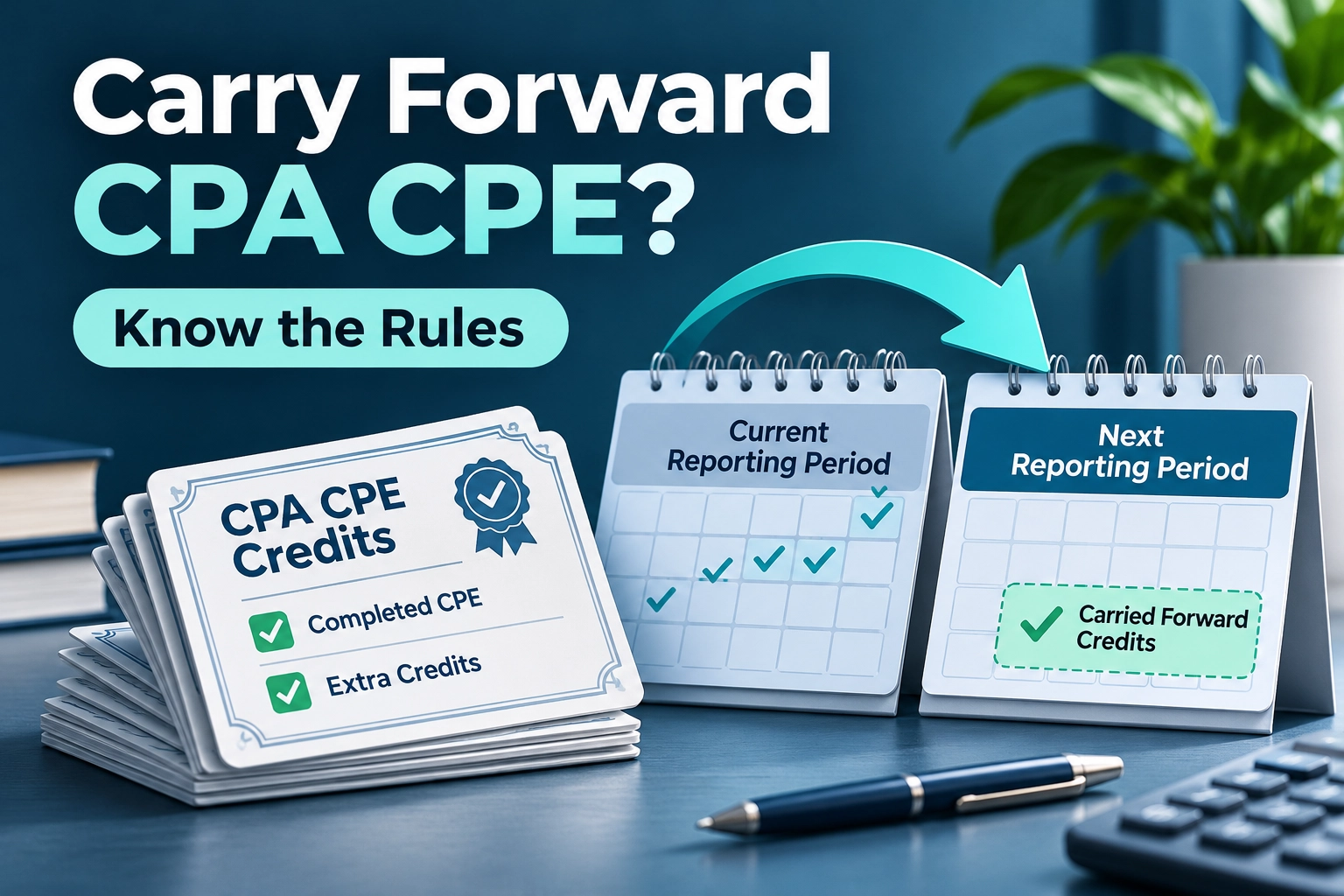
Can I Carry Forward Extra CPA CPE Credits to the Next Reporting Period?
Imtiaz Munshi, CPA
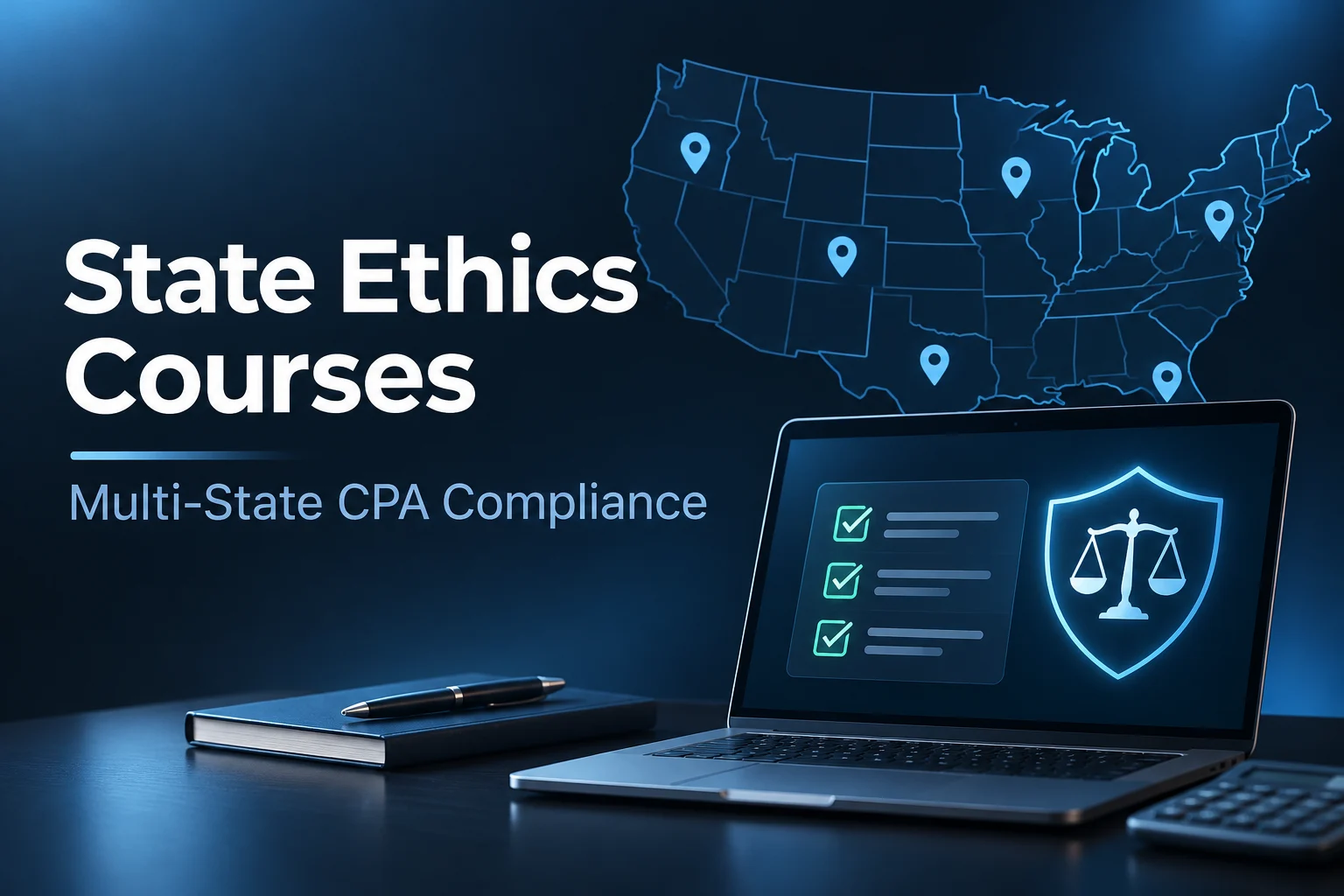
Which CPE Providers Offer State-Specific Ethics Courses and Multi-State CPA Compliance Support?
Imtiaz Munshi, CPA


Registration Completed

Something Went Wrong!! Please Try Again.

Registration Completed

Please Update Your Profile to Claim Your Continuing Education Credits.

Thank you for subscribing 7 Days Free Trial.
Please upgrade your browser to use MYCPE ONE
Experience MYCPE ONE at its best! Upgrade your browser for a more interactive, user-friendly interface, and stay ahead in your professional development journey.
Upgrade NowHow did you find out about us?
We were looking so hard for you now that you are finally here, So would you tell us how you found out about us?

What is your primary purpose to use MYCPE ONE?

Thank you for submitting your inquiry! We will contact you soon.
CloseOur Promise