

Scale your CPA & accounting firm with elite offshore talent trusted by 1,000+ firms.
Thank you for your interest. Our due diligence checklist will be shared with you within 48 hours.

In the movie Whiplash, the young drummer Neiman is technically flawless. Perfect timing, perfect technique. But his mentor Fletcher pushes him past technical perfection toward something harder to teach: presence under pressure, composure in chaos, leadership of the performance. That gap - from technical excellence to leadership readiness - is exactly what separates a great senior manager from a great partner.
Great technicians don't automatically become great partners. That transition has to be built deliberately.
The path from senior manager to partner is the most demanding transition in an accounting firm career. It requires a complete expansion of identity: from expert deliverer to business builder, from individual contributor to firm leader. And it rarely happens by accident.

Partners are expected to develop the next generation - to mentor, challenge, and grow the staff beneath them. But if they've never been trained to give developmental feedback, to coach under-performers, or to build a team culture, they will default to what they know: doing the technical work themselves.
This creates the overloaded partner problem: technically excellent people who've been promoted into leadership but never learned to lead.
Building a client portfolio is not a natural extension of doing excellent work. It requires a specific skill set: identifying opportunities, building relationships outside engagement contexts, articulating the firm's value clearly, and following through consistently.
Very few firms train this deliberately. Most assume it will develop through osmosis. It rarely does.
Before you are a leader, success is all about growing yourself. When you become a leader, success is all about growing others.
Future partners need to understand how a firm works as a business: realization rates, leverage ratios, capacity planning, pricing strategy. When new partners don't understand the economics, they make decisions that feel right professionally but create financial strain.
Partners are expected to contribute to firm direction. But moving from execution mode to strategic mode is a cognitive shift that requires exposure and practice - thinking about market positioning, talent strategy, service line development, and competitive differentiation.
Firms with accelerated partnership tracks see 61% higher retention among high-potential staff - one of the most direct ROI cases for investing in leadership development pipelines. — Becker 2025 CPA Exam & Career Report
The firms with the strongest partner pipelines are intentional about it years in advance. They identify high-potential senior managers early, create development plans with specific milestones, and expose future partners to firm management conversations and business development opportunities before the promotion decision is made.
The firms that plan their partner pipeline carefully are the ones where partners arrive ready - and where the transition strengthens the firm rather than straining it.
Working with 1,000+ accounting firms and enterprises, we've seen what separates firms that develop consistently from those that scramble. If your firm is navigating any of these challenges, let's have a conversation - no pitch, just perspective from a team that's helped firms build exactly what's described in this piece.

Strong firms don’t wait for partner readiness to emerge, they build it with intent. At MYCPE ONE, we see that firms investing early in leadership, business development, and strategic exposure create partners who are prepared, not pressured. The real advantage isn’t promotion, it’s preparation. Firms that act now will lead tomorrow, while others struggle to keep pace.
Partner readiness refers to the ability of a senior manager to transition into a partner role by developing leadership, business development, strategic thinking, and firm management skills - beyond technical expertise.
Most senior managers are promoted based on technical excellence, but partner roles require skills like client acquisition, team leadership, and firm strategy - areas that are often not formally trained within firms.
Firms can build a strong partner pipeline by identifying high-potential talent early, creating structured development plans, offering leadership training, and providing exposure to business development and firm management.
Key skills include leadership and people development, business development, financial and operational understanding, and the ability to contribute to firm strategy and long-term growth.
With a large percentage of partners nearing retirement, firms must proactively develop future leaders to avoid leadership gaps, maintain client relationships, and ensure sustainable growth.

Amrit Singh is a business leader with 10+ years of experience in continuing education. Helping accounting, tax, and finance professionals stay compliant with ease, he began his journey as a consultant. Learning across industries before stepping into a leadership role, he is shaped by both successes and failures. Amrit is passionate about problem-solving, building products, exploring technology, and mentoring future leaders. He is dedicated to transform continuing education, making it simpler, smarter, and more meaningful. Through his blogs and talks, he shares insights on accounting careers, CPA compliance, and the future of continuing education.
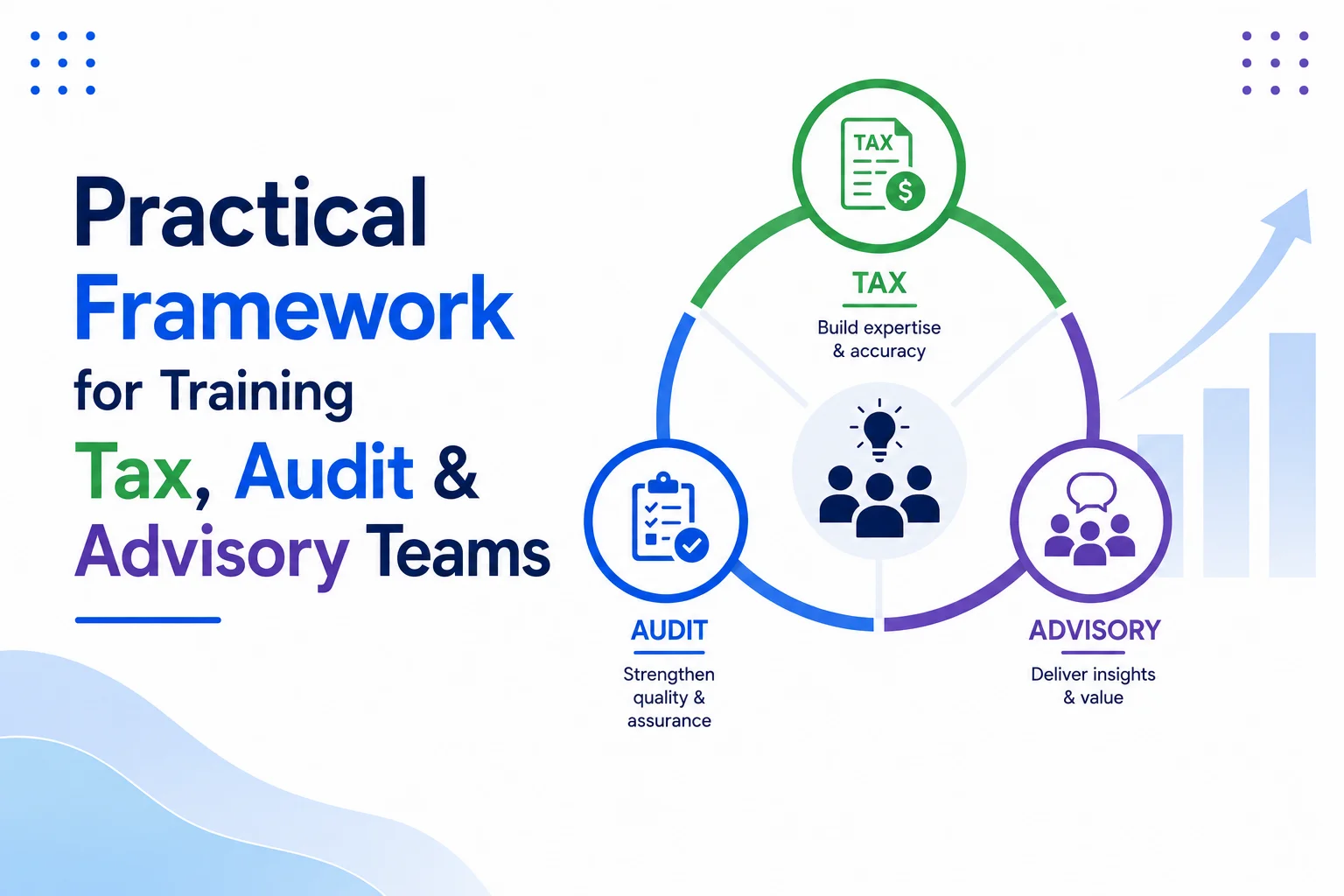
A Practical Framework for Training Tax, Audit, and Advisory Teams
Amrit Singh
-(1).webp "Why CPE Compliance Alone Is Not Enough for Firm Growth")





