Scale your CPA & accounting firm with elite offshore talent trusted by 1,000+ firms.
Thank you for your interest. Our due diligence checklist will be shared with you within 48 hours.

Accounting firms face tough decisions about growth, client service, and operational efficiency due to the shrinking talent pool. Many firms now see offshore talent as their go-to strategy since domestic hiring keeps getting harder. The numbers make a compelling case - firms can cut labor costs by 50 to 70 percent by hiring offshore accountants and bookkeepers instead of local talent.
India and the Philippines stand out as prime spots for accounting outsourcing. Both the destinations have a large and growing pool of accounting professionals in U.S. and international standards. Strong English skills and cultural similarities make these countries, great partners for American firms looking for quality work at better rates.
Flexibility plays a crucial role for firms taking this path. The "pay as you grow" model lets organizations scale up during busy periods and scale down when things slow down. This adaptability helps firms stay competitive while they deal with uncertain economic conditions.
We'll explore the trends that will reshape the industry through 2026.
CPA firms have found a lifeline in offshore accounting to tackle their talent shortages. The traditional hiring channels aren't working anymore, and offshore solutions give firms an edge that goes way beyond the reach and influence of just cutting costs.
“MYCPE ONE offers technology-driven offshoring solutions for CPA & accounting firms, enabling them to build a well-professional offshore team.”

The numbers tell a compelling story about offshore accounting's financial benefits. Firms can cut their labor costs by 50-70% when they hire offshore instead of locally. This isn't about getting cheap work - it's smart business sense. A full-time accountant in Latin America costs between $24,000 and $54,000, while their US counterpart commands $57,000 to $127,000.
The savings don't stop at salaries. Firms can skip the expenses of office space, equipment, and full benefits packages. They can put that money into growing their firm instead. Research shows firms save up to 60% on accounting costs by going offshore.
The talent pool becomes so big when you look beyond your borders. Countries like the Philippines, India, and Latin America produce thousands of qualified accountants every year. Many of these professionals have specialized skills you might not find locally.
International CPAs bring a unique experience to the table. They often speak multiple languages and know different regulatory systems. Many are experts in US GAAP, IFRS, and complex financial rules. This makes them perfect for specialized tasks.

India’s Role in Offshore Accounting
The Philippines’ Strengths in Offshoring
“MYCPE ONE has been in offshore accounting for over a decade! The company serves clients in the US, UK, and Canada, with a pool of talent working round the clock to streamline your accounting, tax, and payroll needs.”
In 2026, offshoring is set to enter a new phase for accounting firms.
What started as a way to manage costs has now become a core strategy for U.S. accounting firms. Offshoring is no longer just about bookkeeping or back-office work. Today, it is integrated into tax, audit, accounting, and advisory services for firms looking to scale.

In 2026, the main trends in offshoring are not just about saving money. Firms are focused on building capacity, improving resilience, and driving operational efficiency. This is essential as the profession faces ongoing talent shortages, higher client expectations, and more complex regulations.
Several key offshore accounting trends are reshaping global finance and will define how CPA firms operate by 2026.
AI has evolved from a buzzword to become a simple tool in offshore accounting operations. By 2025, 71% of accounting professionals believe AI will affect their industry.
Many believe that AI will reduce the need for offshore teams, but the reality is different. AI is actually increasing the value of offshore talent. Offshore professionals now play a key role in operating, reviewing, and managing AI-driven processes, while onshore teams focus on oversight, judgment, and client relationships.
Offshore teams now use AI-powered platforms to:
AI is projected to automate 80% of routine accounting tasks by 2027. AI can boost efficiency, but it does not replace the need for professional oversight. Firms do not let AI make final decisions or communicate directly with clients. Human review and validation are still essential for compliance and quality in accounting.ng delivery.
This lets offshore professionals focus on high-value activities. Teams work faster with fewer staff as AI handles data preparation, account matching, and spots unusual patterns.
For more detailed insights: https://my-cpe.com/blogs/ai-in-accounting

QuickBooks Online, Xero, and Zoho Books are the foundations of modern offshore accounting. These systems give teams immediate access to financial data. No more sending files back and forth. Cloud technology helps teams keep records current. Teams in different countries can work together naturally in one unified workspace.
Offshore accounting now goes beyond simple bookkeeping. Overseas teams help with budget forecasting, profit analysis, tax-saving strategies, and performance KPIs. This change from "bean-counting" to business advising makes offshore services more valuable.
About 79% of accountants expect growth in strategic advisory services next year, with volume likely to rise by 38% on average.
Offshore firms now offer advanced finance functions like virtual CFO services and financial planning analysis support. Offshore analysts trained in U.S. GAAP and SOX Section 404 processes deliver audit-ready, compliant financial outputs. AI-powered outsourcing helps create faster reports while meeting compliance standards.
Immediate financial reporting shows firms their exact financial health when they need it. Unlike traditional monthly or quarterly statements, firms can spot cash flow issues right away and grab profitable opportunities quickly. These systems cut down errors from manual entry or delayed account matching.
Accounting firms now take a balanced approach to hiring talent as the industry continues to change. They no longer choose between complete in-house teams or full outsourcing. The smart ones find ways to mix both approaches.
A hybrid accounting model mixes in-house accounting staff with offshore resources to save money and work better. This setup combines traditional accounting processes with flexible workflows. Firms can handle both regular compliance tasks and specialized advisory services at the same time.
This balanced structure lets firms work with offshore talent for day-to-day tasks while local teams handle client meetings. The result gives firms "scalability without sacrificing structure". They can adapt quickly without losing their core organization.
Choosing which tasks to keep local or send offshore needs careful thought. Most firms keep client meetings, strategic advice, and sensitive financial work close to home. They send routine work like bookkeeping, tax preparation, and data entry to offshore teams.
Three questions help make this decision:

Mixing offshore and local accounting teams creates several advantages. Right away, this mix cuts costs since outsourcing regular tasks can reduce labor costs by up to 60%. Teams can also grow quickly during busy periods without hiring permanent staff.
Offshore teams work while local teams sleep. This creates a non-stop workflow. Some firms finish their month-end tasks 33% faster through smooth communication with Latin American accounting teams.
Core Accounting Roles
Non-Technical and Firm Support Roles
Emerging and Specialized Offshore Roles
Case example: Tax season scalability
Tax season puts huge pressure on accounting firms. Staff shortages hit many firms hard. The successful ones use a systematic 90-day framework that combines planning, targeted outsourcing, and automated workflows.
"Partial outsourcing" works well here. Vendors handle basic tax preparation while skilled local staff focus on reviews and client advice. These vendors work as part of your firm. They use the same tax software and follow your specific instructions.
This approach helps firms grow their capacity and profits without adding permanent staff. Good quality management ensures both internal and external teams meet the same high standards during busy periods.
Unlike traditional outsourcing, where firms delegate projects to external vendors, a managed offshore team functions as a true extension of your firm, working exclusively for you but based overseas. These teams operate under your processes and culture, while the offshore partner handles recruitment, training, HR, IT infrastructure, and compliance.
Under MOS, we continue to manage all backend responsibilities-legal, HR, IT, payroll, and compliance- while firms pay the actual salary of the staff, plus a fixed monthly management fee.
Don't get it confused with DIY (Do It Yourself). Here's the detailed comparison of the Managed Offshoring Services (MOS) model versus the Do-It-Yourself (DIY) approach, based on our internal experience, client feedback, and industry observations.
Case Study
The USXA case study demonstrates the impact. Formerly WSRP, USXA onboarded more than fifty offshore professionals in under two years, completed five acquisitions in less than twenty-four months, and achieved a 2.5x revenue increase through both organic and inorganic growth.
In 2026, the most effective managed offshoring models combine AI-driven workflows with skilled offshore teams. Offshore staff handle execution and process management, automation speeds up routine work, and onshore teams focus on review, accountability, and client communication.

Choosing the perfect offshore accounting partner needs more than just looking at costs. The right partner becomes part of your firm. A wrong choice could lead to risks and compliance problems.
Your first step should be to review security credentials like ISO 27001 and SOC 2 Type II certifications, which show dedication to information security. Good partners use multi-layered protection with VPNs, multi-factor authentication, and role-based access controls.
Their technology ecosystem should include modern cloud accounting platforms that combine smoothly with your existing systems. A disconnected tech stack can turn offshoring into a coordination nightmare that leads to missed deadlines and security risks.
Compliance does not prevent offshoring. The real risks come from poor communication and lack of documentation.
Teams working offshore must know U.S. Generally Accepted Accounting Principles (GAAP) and IRS regulations well. GAAP differs significantly from International Financial Reporting Standards (IFRS), so offshore partners need expertise in proper reconciliation. Lack of this knowledge could lead to misreported income or incorrectly stated gains, exposing clients to heavy penalties and possible criminal charges.
You should get answers to these important questions before finalizing your partnership:
The right offshore partner should do more than cut costs; they should be a reliable, knowledgeable extension of your firm that helps stimulate growth.
MYCPE ONE specializes exclusively in helping CPA and accounting firms build and scale their offshore teams efficiently. With over a decade of experience, we have successfully partnered with 40+ firms from the Top 200, providing them with high-quality offshore talent tailored to their unique needs.
With delivery centers across India and the Philippines, we offer a ready-to-go offshore staffing model, enabling firms to onboard quickly, scale effortlessly, and expand their teams without hassle
At MYCPE ONE, we’ve continuously evolved, learning from challenges and refining our approach. We have consistently grown at >30% YoY over the last decade.
We have expanded beyond offshoring into CPE, M&A Advisory, Digital Marketing, Website Solutions, Insights & Benchmarking Reports, and providing comprehensive support to CPA and accounting firms.
Here’s a detailed guide on What sets MYCPE ONE apart from the competition.
AI and automation will alter the map of offshore accounting workflows by 2026. Cloud-based tools continue to break down geographical barriers. Offshore teams are moving away from simple transactions toward providing strategic insights. Virtual CFO services and up-to-the-minute data analysis will become standard features rather than premium options.
Most successful firms will adopt hybrid models that blend local and offshore talent effectively. This balanced approach lets firms keep client relationships local while using offshore resources for specialized tasks and routine work. This flexibility becomes especially valuable during tax season when firms need to scale without adding permanent staff.
Finding the right offshore partner is vital for success. Your selection process should focus on security certifications, technical compatibility, and compliance expertise - not just cost. The ideal partner works as a natural extension of your firm to support growth while maintaining quality standards.
Firms that embrace these changes will find a way through the talent crisis. Those who adapt thoughtfully will succeed despite the challenging accounting landscape.
The firms that embrace offshore accounting strategically, not just as a cost-cutting measure, will emerge stronger from the talent crisis, positioned for scalable growth in an increasingly competitive market.
MYCPE ONE is the trusted partner for over 3,000 CPA and accounting firms worldwide, empowering them to scale, innovate, and achieve operational excellence.
With a decade of experience, a unified platform, and 3000+ team members across 40+ offices, MYCPE ONE delivers comprehensive offshoring, CPE and L&D, website solutions, digital marketing services, M&A advisory, and daily news insights - all designed to help firms attract top talent, maintain compliance, and drive sustainable growth.
Backed by SOC 2, ISO 27001, and GDPR certifications, MYCPE ONE ensures the highest standards of data security and client support for every firm.
Offshore accounting provides access to a global talent pool, offering cost savings of 50-70% compared to local hiring. It also enables faster hiring cycles and scalability during peak seasons, helping firms overcome staffing shortages and maintain growth.
Key trends include increased use of AI and automation in workflows, cloud-based collaboration tools, a shift from transactional to strategic services, the rise of virtual CFO support, and growing demand for real-time reporting capabilities.
Hybrid models strategically combine in-house staff with offshore resources. Firms typically keep client-facing and sensitive roles in-house while outsourcing routine tasks like bookkeeping and tax preparation. This approach offers scalability and cost efficiency while maintaining quality control.
Key considerations include security certifications (like ISO 27001 and SOC 2), proficiency in U.S. GAAP and IRS regulations, technology compatibility, scalability during peak seasons, and quality review processes. It's crucial to evaluate potential partners beyond just cost savings.
Offshore accounting enables firms to scale operations quickly without long-term commitments. By implementing a systematic framework that combines capacity planning, targeted outsourcing, and workflow automation, firms can increase capacity and profitability during peak periods without expanding permanent headcount.

Amrit Singh is a business leader with 10+ years of experience in continuing education. Helping accounting, tax, and finance professionals stay compliant with ease, he began his journey as a consultant. Learning across industries before stepping into a leadership role, he is shaped by both successes and failures. Amrit is passionate about problem-solving, building products, exploring technology, and mentoring future leaders. He is dedicated to transform continuing education, making it simpler, smarter, and more meaningful. Through his blogs and talks, he shares insights on accounting careers, CPA compliance, and the future of continuing education.


How to Scale CAAS (Client Accounting & Advisory Service) + VCFO with Offshoring!


How To Scale CFO And Advisory Services With Offshoring

Bursting myths around Offshoring for an Accounting firm
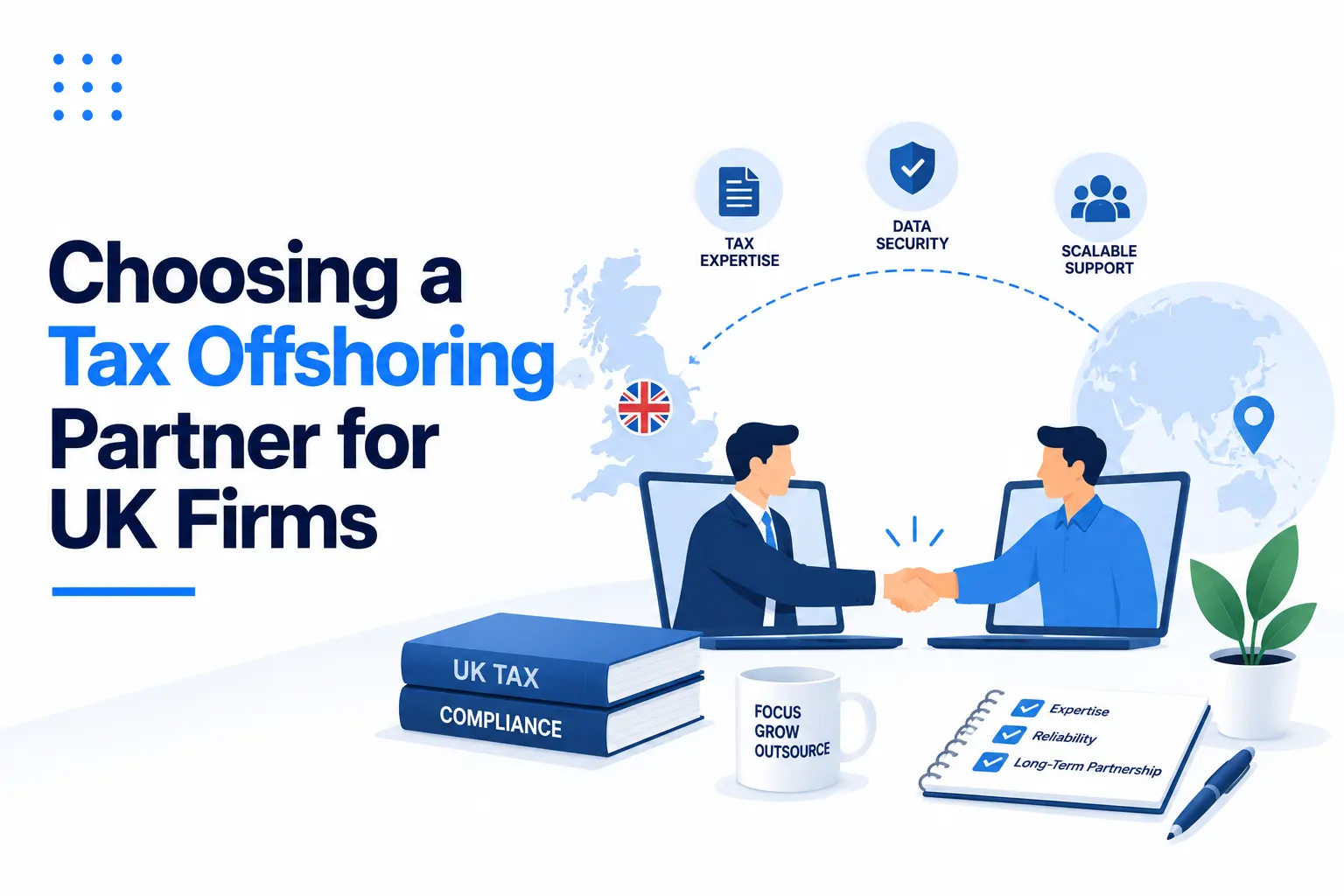
How to Choose the Right Tax Offshoring Partner for Your UK Accounting Firm
 CA Nemin Vora
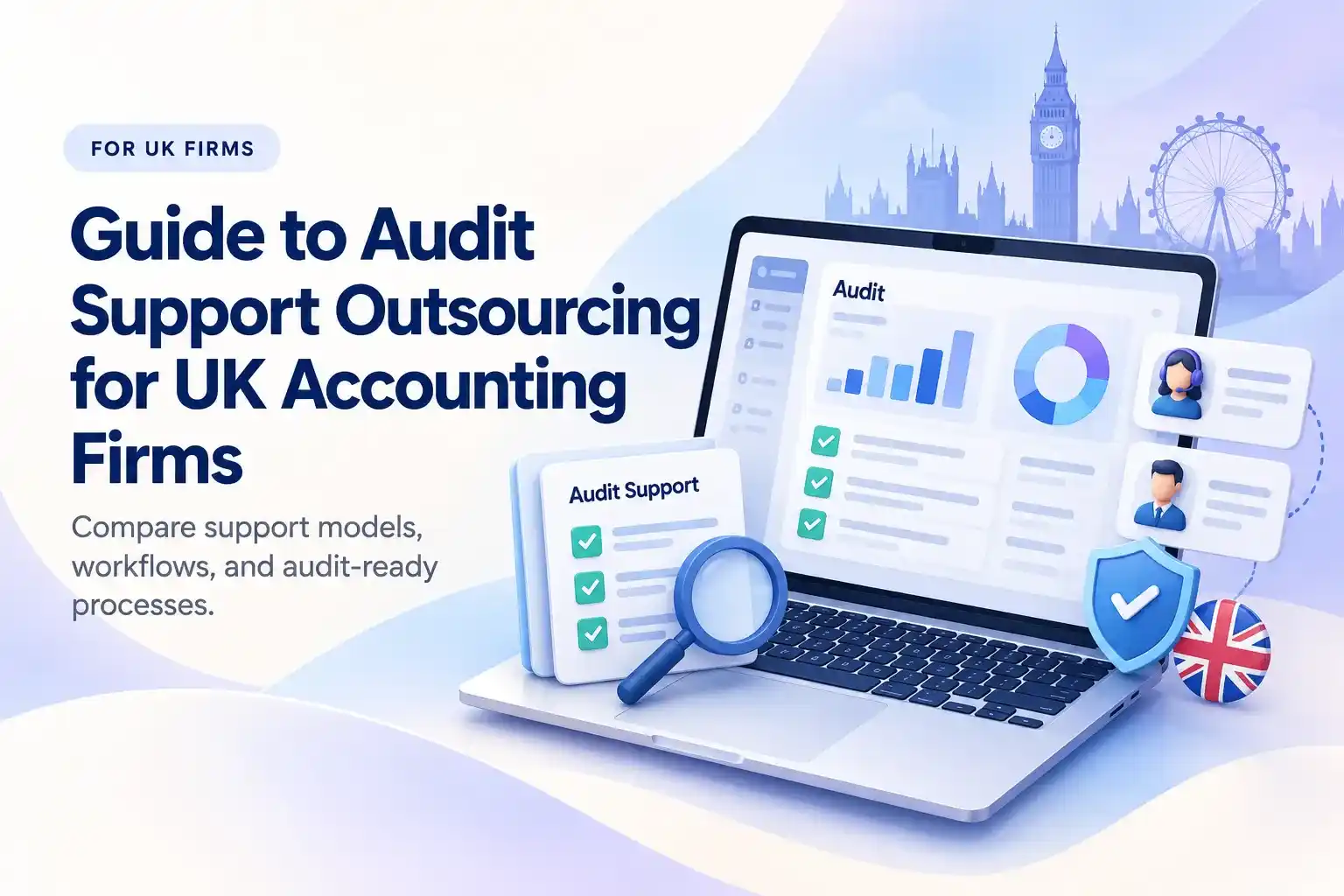
Complete Guide to Audit Support Outsourcing for UK Accounting Firms
CA Nemin Vora