
Scale your CPA & accounting firm with elite offshore talent trusted by 1,000+ firms.
Thank you for your interest. Our due diligence checklist will be shared with you within 48 hours.

Building an offshore finance team is one of the most cost-effective ways for businesses to scale financial operations without the overhead of domestic hiring.
This guide walks you through every step of setting up an offshore finance team - from defining roles and choosing the right location to onboarding, workflow integration, and long-term management.
Whether you're a growing mid-market company or an established firm exploring offshore finance and accounting services, this guide gives you a clear, practical roadmap to get started.
Building an offshore finance team is one of the most cost-effective ways for businesses to scale financial operations without the overhead of domestic hiring.
This guide walks you through every step of setting up an offshore finance team - from defining roles and choosing the right location to onboarding, workflow integration and long-term management. Whether you're a growing mid-market company or an established firm exploring offshore finance and accounting services, this guide gives you a clear, practical roadmap to get started.
Most businesses don't wake up one morning and decide to go offshore. It usually starts with a problem - a CFO stretched too thin, a controller handling tasks three levels below their pay grade, or a finance function that's reactive when it should be strategic.
That's the moment the offshore finance team conversation begins.
An offshore finance team is a dedicated group of finance and accounting professionals - bookkeepers, staff accountants, financial analysts, FP&A specialists, payroll managers - hired and managed from a lower-cost geography, typically India or the Philippines, but fully integrated into your company's day-to-day operations.
This isn't outsourcing in the old sense - handing off work to a faceless vendor. It's building a real team. One that shows up every day, knows your business, and grows with you.
The numbers back this up. Businesses that build offshore finance teams typically reduce their accounting and finance staffing costs by 40-70% compared to equivalent US hires, without sacrificing quality or compliance.
The short answer: because the math is undeniable.
A Senior Accountant in the US costs between $70,000 and $95,000 per year in base salary alone, before benefits, PTO, payroll taxes, and recruitment costs. An equally qualified professional in India - certified, experienced, and fluent in English - can be hired at a fraction of that cost through a managed offshore model.
But cost is only part of the story. The talent shortage in US finance and accounting is real. According to the AICPA's 2025 Trends Report, accounting graduates fell 6.6% in the 2023–24 academic year, and 83% of finance leaders in a recent CFO survey said they couldn't find enough accounting talent. Meanwhile, demand for finance professionals has never been higher - driven by regulatory complexity, investor scrutiny, and the pressure to deliver real-time financial insights.
The offshore model fills that gap. 1 in 3 Fortune 500 companies now runs a Global Capability Center (GCC) out of India, and as of 2024, Indian GCCs employed 1.9 million professionals, generating $64.6 billion in revenue. What's changed is that this playbook is now accessible to mid-market businesses, not just enterprise giants. If you're weighing the broader financial case for outsourcing, this breakdown of what CFOs should know before outsourcing finance and accounting is worth reading first.

Step one is always clarity. Before you post a job description or interview a single candidate, map out your current finance function.
Ask these questions:
The offshore finance team typically handles the first category, and handles it well. Your onshore team then has room to focus on higher-value work. For a detailed look at how CFOs are drawing that line in practice, read how CFOs can win with offshore teams: real-world success strategies.
Common offshore finance roles include:
Think of it like building a relay team. Your onshore CFO and Controller hold the anchor leg. The offshore team runs the first three legs - clean, efficient, and consistent, so the baton arrives ready for the finish.
India remains the dominant destination for offshore finance and accounting services, and for good reason:
Here's where most businesses either get it right or spend six months learning an expensive lesson.

There are two primary models:
For most businesses building their first offshore finance team, the managed model is the right starting point. Explore A CFO's Guide to Finance & Accounting Outsourcing for a full breakdown of how each model plays out across different business sizes.
This is the step most businesses skip, and later regret. Offshore teams perform best when the workflow is documented. Before Day 1, map out:
Offshore doesn't mean interchangeable. Interview your candidates. Review their work samples. Assess their communication skills. The best offshore finance professionals aren't just technically sound - they're proactive, responsive, and willing to raise their hand when something looks off.
For a wider lens on how HR and finance leaders are approaching this, this piece on redefining roles when building global teams is a useful read.
Secure remote access, cloud-based accounting software, shared drives, and communication tools (Slack, Teams, Zoom) are non-negotiables. Your offshore team should feel like a natural extension of your onshore operation, not a black box you throw work into.
The first 30–60 days are critical. Assign a dedicated point of contact onshore. Run daily check-ins. Give feedback early and often. Don't assume the work is "good enough"; build the quality baseline explicitly.
The businesses that get the most value from their offshore finance teams don't treat them as vendors. They treat them as team members.
Watch the video to know how MYCPE ONE maintains Data Security at MYCPE ONE.
Actual cost depends on the model, roles, and provider, but here's a realistic benchmark:
| Role | US Cost (Annual) | Offshore Cost (Annual) | Savings |
|---|---|---|---|
| Staff Accountant | $65,000 – $75,000 | $18,000 – $25,000 | ~60–70% |
| Senior Accountant | $80,000 – $95,000 | $25,000 – $35,000 | ~60–65% |
| Financial Analyst | $85,000 – $100,000 | $28,000 – $40,000 | ~55–65% |
| Bookkeeper | $45,000 – $55,000 | $12,000 – $18,000 | ~65–70% |
Note: Offshore costs above are estimates for managed service models inclusive of HR, infrastructure, and compliance overhead.
For a business replacing three US accounting hires with an offshore finance team, the annual savings can exceed $150,000, with a break-even typically reached within the first 90 days. For a deeper look at the full cost picture, including hidden costs most businesses don't factor in, read the real cost of an outsourced CFO and why US companies choose India.
The businesses winning right now aren't the ones with the biggest domestic headcount. They're the ones that figured out how to build lean, capable, globally distributed finance operations and redirected their savings into growth.
Building an offshore finance team isn't a shortcut. It takes planning, the right partner, and a genuine commitment to integration. But for businesses willing to put in that work, the returns in cost, capacity, and capability are difficult to argue with.
The question isn't whether your business can afford to build an offshore finance team. It's whether you can afford not to.
MYCPE ONE has helped 300+ businesses across the US and Canada build high-performing offshore finance teams. Explore our offshore finance and accounting services or schedule a no-obligation call to discuss your team-building strategy.
Offshore finance teams work at almost any scale. Even a business with a three-person finance function can benefit from adding one or two offshore staff accountants to handle high-volume transactional work. The managed offshore model makes it accessible; there's no need to set up a foreign entity or navigate local labor law on your own. Many growing businesses start with one offshore hire and scale to a full team within 12–18 months as they build confidence in the model.
With a managed offshore service provider, most businesses have their first offshore finance professional placed and onboarded within 4-8 weeks. A full team build - five to ten professionals across multiple functions typically takes 3-6 months, depending on role complexity and your internal onboarding capacity. The bottleneck is rarely candidate availability. It's usually internal readiness: process documentation, software access, and management bandwidth.
Quality control starts before the first hire. Document your standards, build review checkpoints into the workflow, and assign a senior onshore reviewer for the first 90 days. After that, monthly audits of output quality, along with regular feedback loops, maintain the baseline. Most businesses report that, after a structured onboarding period, their offshore team's error rates are comparable to, or even better than, those of their onshore equivalents.

Nemin Vora, a CA and Tax Attorney, leads Client Relations at MYCPE ONE. With 7+ years of experience at Big 4 and top public accounting firms across America, he helps U.S. firms scale globally through remote talent, offshoring, and cloud operations. Known for his sharp tax insights and practical approach to firm growth, Nemin is a dynamic speaker. He breaks down complex topics such as leadership, AI, global staffing, and practice expansion into relatable lessons that professionals actually enjoy learning. Beyond the strategy decks, Nemin is a learner at heart, a stage actor, and a tech enthusiast.


How to Scale CAAS (Client Accounting & Advisory Service) + VCFO with Offshoring!


How To Scale CFO And Advisory Services With Offshoring

Bursting myths around Offshoring for an Accounting firm

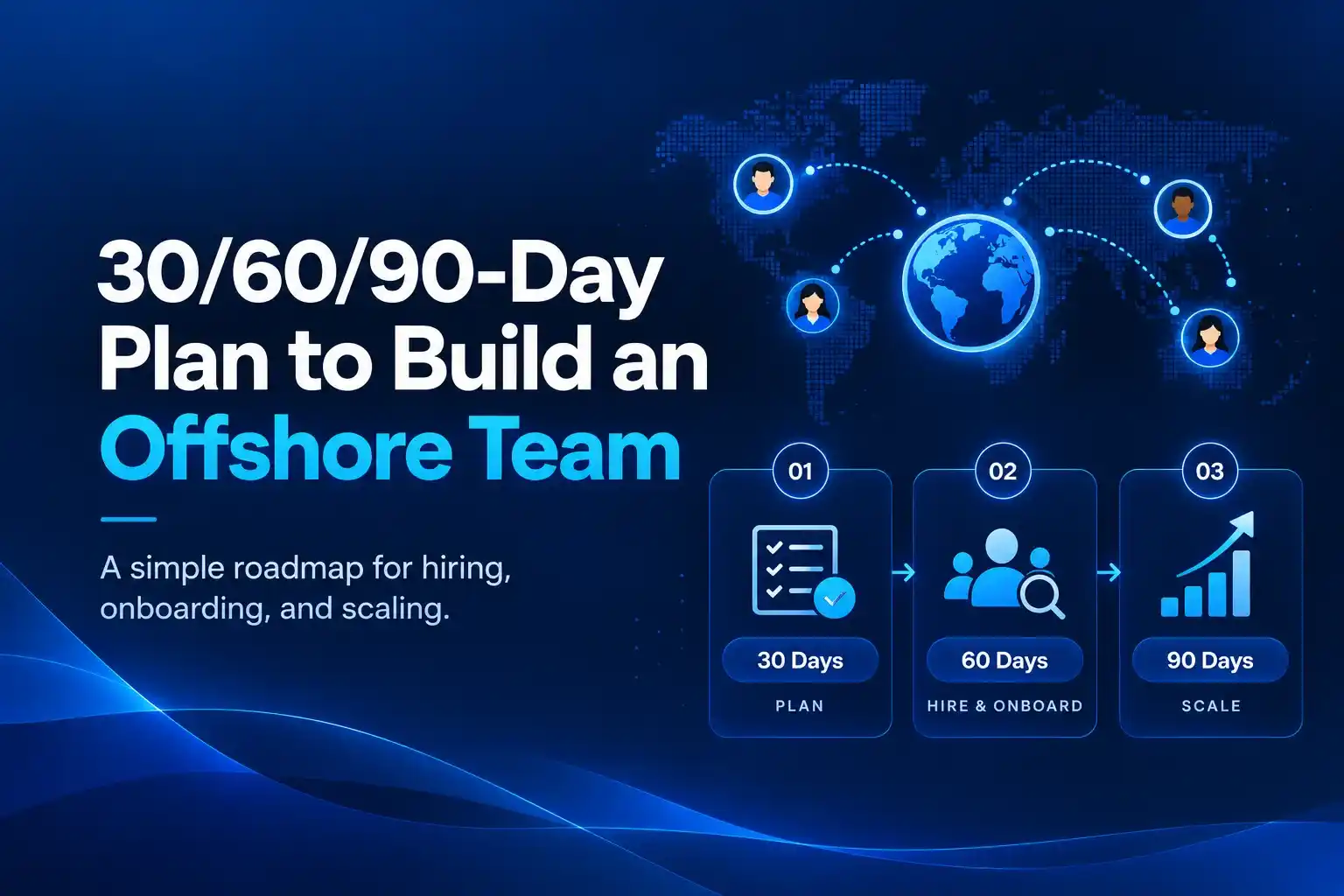
How UK Accounting Firms Should Build an Offshore Team: 30/60/90-Day Playbook
CA Nemin Vora