
Scale your CPA & accounting firm with elite offshore talent trusted by 1,000+ firms.
Thank you for your interest. Our due diligence checklist will be shared with you within 48 hours.

Offshore vs local accounting for CPA firms is one of the most important growth decisions firm owners face today. Local accounting offers proximity, in-person collaboration, and direct client trust, but comes with rising labor costs, hiring shortages, and slower scalability. Offshore accounting unlocks 50–70% cost savings, 24/7 turnaround, and access to skilled CPAs, EAs, and tax preparers in talent-rich markets like India and the Philippines.
For most modern CPA firms, a hybrid model — combining local advisory expertise with offshore execution — delivers the strongest ROI, faster scaling, and higher capacity during tax season without sacrificing quality, compliance, or client relationships.
What 1,000+ CPA firms have learned about building scaled accounting teams without sacrificing quality, and why the old "offshore or local" debate misses the real opportunity
We talk to accounting firm leaders every week. And if there's one pattern we've noticed after working with hundreds of firms across the US, Canada, and UK, it's this: the firms that are winning aren't choosing between offshore and local. They're strategically engineering teams that do both, and doing it in ways their competitors haven't figured out yet.
In today’s offshore vs local accounting landscape, the firms that scale fastest are the ones that move beyond this binary choice.
But here's what makes this different from what you've probably heard before: it's not about "going offshore to cut costs" or "staying local to maintain quality." Both of those are incomplete thoughts.
The real question is: how do you structure your team so that you're actually growing faster than your labor cost inflation, expanding into higher-margin services, and keeping your senior people engaged instead of burned out?
Accounting firm economics have shifted. The traditional model - hire local staff, bill by the hour, survive busy season - is becoming harder to defend.
This shift is forcing firms to rethink the offshore vs local accounting model as a long-term growth strategy rather than a short-term staffing decision.
Your local labor costs have climbed. A senior tax accountant now costs $55-75K/year, depending on your market. A junior accountant is $40-50K. And finding them isn't easy. The labor market for accounting talent is tighter than it's been in a decade. Firms are competing for a shrinking local pool, which means signing bonuses, flexible schedules, and higher salaries just to keep up.
Meanwhile, your clients are less patient with delays. Tax season runs on the same calendar. Your competitors are delivering work in 2-3 weeks instead of 4-5. That speed difference is becoming a competitive advantage, not a nice-to-have. Firms exploring offshore accounting trends in 2026 are seeing a clear shift toward hybrid delivery models that combine cost efficiency with scalability.
And your best people are tired. Not "a little stressed during April" tired. Genuinely burned out. The ones who've been with you 8+ years are taking buyouts from PE-backed firms. The junior team is job-hopping. You're spending $40-60K per replacement in training and recruitment costs, only to have them leave in 18 months anyway.
That's the economic reality. And it's why accounting firms are reconsidering the offshore/local question, not because offshore is suddenly "cool," but because the numbers aren't working with a purely local model anymore.
Many firms are now exploring outsourced accounting for CPA firms as a structured way to solve this capacity problem.

Let's be direct about the real costs of staying purely local.
You have fixed labor costs 12 months a year. January, June, August - you're still paying your full team salary. But your billable utilization in those months is maybe 60-70%. You're carrying unused capacity constantly, which means your cost per billable hour is structurally higher than it needs to be.
Then tax season hits. You're overloaded. Your team works 55-60-hour workweeks for 12 weeks straight. Your best people are exhausted.
And here's the part most firms underestimate: the people you're losing to burnout aren't your mediocre performers. They're your sharp people; the ones who have other options. They leave in May, you scramble to replace them in June, and you're back in the shortage problem by July.
The turnover math is brutal. Replacing a mid-level tax accountant costs 50-70% of their annual salary in recruitment, background checks, onboarding, and training. If you're replacing 2-3 people per year because of burnout, that's $50-100K in annual replacement costs.
And that's not even counting the opportunity cost of your senior people spending time training new hires instead of doing client work.
In the offshore vs local accounting comparison, this is where the local-only model starts to break down.
Take a look at the average cost of accountants in the US: https://quickbooks.intuit.com/r/accounting/how-much-does-an-accountant-cost/
But there's a deeper problem: your service line mix gets locked into what your local team can handle. You have 6 FTE people, so you can deliver 6 FTE's worth of work per year (adjusted for seasonality and utilization).
If your market demands bookkeeping services and you don't have local capacity, you say no to the client. If your clients need CFO advisory and you don't have a senior person available, you lose the engagement to a larger firm.
You're leaving revenue on the table because you're constrained by fixed local headcount.
Offshore accounting has matured significantly over the past 3-5 years. The difference between what was happening 10 years ago and what's happening now is night and day. It's not outsourcing to the cheapest vendor in Mumbai anymore.
It's building strategic teams with experienced accountants, often Big-4 trained, who operate under clear quality standards and integrate into your firm's actual workflows.
The firms that are winning with offshore have cracked a specific code: they treat their offshore team like an extension of their firm, not like a call center. They invest in training. They maintain communication. They have clear escalation paths. And they see results: faster delivery, lower costs, and the ability to actually scale.
But here's where most firms fail with offshore: they rush it.
They try to offshore 80% of their work immediately.
They pick the cheapest provider because the margins look great on a spreadsheet. They don't invest in training because "the provider should handle that." And then 8 weeks in, they realize the quality is inconsistent, the communication is painful, and they're spending more time fixing offshore mistakes than they would have spent doing the work locally.
So they pull the plug, declare offshore "doesn't work," and go back to their purely local model.
However, a proper local vs offshore accounting services comparison shows that offshore success depends less on cost and more on structure, training, and integration.
That failure pattern is real. We've seen it countless times. And it happens because firms didn't think about offshore strategically; they thought about it tactically, as a cost-cutting move.
The firms hitting significant growth metrics are running a deliberately engineered hybrid model. Not 100% offshore. Not 100% local. But a precise mix engineered around their specific firm economics, service mix, and growth trajectory.
In a real-world local vs offshore accounting services comparison, this is the layer where firms unlock the most operational efficiency and cost advantage.

Your US Senior Layer (Primarily Local): CPA partners, senior tax managers, client relationship owners. These people are the face of your firm. They're handling complex returns, client strategy, and advisory conversations. They're also the ones writing checks and taking accountability for client outcomes.
In some firms, senior offshore team members also support in specialized areas like technical reviews, research, and advanced preparation. You need 2-4 people in this tier, depending on firm size.
Your US Management & QA Layer (Hybrid Oversight): These are your experienced accountants who aren't quite senior partners yet, but they're deep in the work. One of their key jobs is managing your offshore team - reviewing work, catching issues before they hit clients, and handling escalations.
For every 2-3 offshore accountants, you typically need 1 US-based manager/QA person. This layer ensures offshore output stays consistent and high quality.
In mature setups, offshore senior staff can also take on internal review and quality responsibilities. They also handle client-facing work that requires immediate turnaround or deep relationship knowledge.
Your Offshore Core Team (40-60% of work): Experienced accountants, many Big-4 trained or CA-certified, who handle 40-60% of your standardized, repeatable work. Bookkeeping entries. Tax return prep. Compliance work. State filings.
Increasingly, firms are also leveraging offshore teams for advanced tax prep, financial analysis, and draft-level advisory support. The work has documented procedures and clear quality standards.
This is where your cost advantage sits. Instead of paying $55K/year for a local accountant to do routine bookkeeping, you're paying $10-14K/year for an experienced offshore person to do the same work. Your US manager reviews it, it passes QA, and it goes to the client.
Flexible Offshore Overflow (For Seasonal Surges): During tax season, you can quickly ramp up temporary offshore capacity for overflow work. Instead of hiring and training 2 local contractors for the busiest 6 weeks, you tap into a pre-vetted offshore pool and ramp up for the specific season. When April ends, you dial it down. You only pay for the capacity you actually use.
The result of this architecture: your senior team isn't getting destroyed by routine work. Your growth is no longer capped by local hiring constraints. Your cost structure is optimized. And your team is actually engaged because they're doing higher-value work.
Let's look at a specific scenario: a $6.5M revenue firm with 11 local staff, looking to add capacity and reduce burnout. Right now they're at capacity. They have calls they're turning down. Their busy season is brutal.
From a financial standpoint, the offshore vs local accounting model becomes less about cost alone and more about capacity leverage.
Current State (100% Local):
What They're Achieving: About 1,400 billable hours per FTE (after vacation, training, non-billable work). 11 FTE × 1,400 hours = ~15,400 billable hours annually. At their blended rate of $250/hour, that's about $3.85M in annual revenue.
But they're actually at $6.5M, which means they're either billing higher rates, working more hours, or have some leverage in their pricing. Let's say they're billing the full-time people higher (partners at $400/hour, seniors at $300, mid-level at $200, juniors at $125), which averages out to the higher revenue number.
The Problem: They're turning down bookkeeping clients because they don't have capacity. They're declining CFO advisory work because the senior people are booked on tax returns. Their team is exhausted. Two people are already job hunting. They need to grow, but don't want to hire more local staff because of the cost and the utilization risk.
Those 3 offshore accountants aren't working on a complex tax strategy. They're handling bookkeeping entry, basic compliance returns, payroll setup, and standardized tax return prep under the management of your QA person. Conservatively, they can handle 35-40% of the routine work that your local team was previously doing.
Let's estimate: your local team was spending about 4,000 hours per year on routine bookkeeping and compliance work that could be standardized. The offshore team takes on 40% of that = 1,600 hours of work redirected offshore. That frees up your local team for:
On the cost side, you're paying roughly the same total labor cost in Year 1 (slightly up because of the offshore setup investment). But in Year 2 onwards, your offshore team is fully ramped and trained, your processes are locked in, and you're now paying $75K/year for capacity that would have cost $150K+ locally.
Year 2+ Actual Impact:
That's roughly $65-120K in annual benefit from a $75K annual investment. And those benefits compound in Year 3+.
Most firms think of offshore as "a cheaper way to get the same work done." That's the wrong frame. The real value is that it lets you redirect your expensive senior talent toward higher-margin work. If your partner is spending 20% of her time on 1040 prep, she's earning roughly $100/hour on a $400/hour billing rate. If you redirect that 20% toward advisory work, she's now earning $400/hour on a $400/hour billing rate.
That leverage shift is where the real margin improvement lives. Offshore doesn't just save cost; it unlocks pricing power on the work your senior people actually do.
Here's what most firms underestimate: the timeline to get offshore working well. It's not 4 weeks. It's 12-16 weeks minimum, and that's if you do it right. In most local vs offshore accounting services comparison cases, firms underestimate the implementation effort required to make offshore successful.
Weeks 1-2: Process Documentation You need to actually document what you do. Not broadly ("we do tax returns"), but specifically:
This documentation doesn't exist in most firms; people just know how to do it. Building it is work. Real work. But if you don't do this, offshore training will be painful, and results will be inconsistent.
Weeks 3-4: Partner Selection Who are you working with? Not the cheapest vendor. You want someone with infrastructure, experience with US accounting work, and proven compliance capabilities. Interview their references. Ask about turnover. Ask about their training process. Ask about worst-case scenarios - what happens if something goes really wrong?
Weeks 5-8: First Team Build & Training You hire 2-3 offshore people (not 10). You fly someone from your firm over there for 2 weeks (or they come to you, depending on the provider). You do hands-on training. This is expensive and time-consuming. Do it anyway. The quality of this phase determines everything that comes after.
Weeks 9-12: Pilot & Iteration You give the offshore team ONE specific process to handle (e.g., bookkeeping entry for 3 specific clients). Your QA person reviews 100% of their work. You catch issues, you fix them, you iterate. You're looking for: Can they produce consistent, high-quality output? Can they handle edge cases? Can they communicate issues clearly?
Weeks 13-16: Ramp to Production You expand from 1 process to 2-3 processes. You move QA from 100% review to sampling (maybe 20-30% review). You see measurable metrics: defect rates, turnaround time, and client satisfaction. By week 16, you should have confidence that this is working.
Months 5-6: Scale or Adjust You decide: Are we adding more offshore capacity? Expanding to new processes? Or do we stop here? Most firms find a stable hybrid model somewhere in this phase and stick with it.
That's a 4-6 month commitment before you see real benefit. Most firms want it faster. Most also underestimate how much training and management time this requires. Your best local people need to be involved in training, not doing client work. That's a real cost. Factor it in.
Many firms avoid early-stage mistakes by using structured managed offshore services instead of building from scratch.
This isn't going to work for every firm. And you should be honest about whether your firm is ready:
You don't have a US-based manager to oversee it. Offshore work needs someone on your team taking responsibility for quality, managing the relationship, handling escalations, and catching issues before clients see them. If your whole team is already maxed out, you don't have bandwidth for this. You need to either hire a manager or bring someone in part-time to fill this role. If you can't do that, offshore will fail.
Your processes are inconsistent. If two different people on your team do the same task differently each time, offshore will magnify that chaos. Your offshore team will replicate the inconsistency, but also create their own variants, and your QA person will spend all their time negotiating which way is "right." Before you go offshore, your processes need to be documented and standardized. That's not offshore's job - that's your job first.
You're chasing 80% cost savings. You can't get there. Real offshore talent that produces high-quality work costs $11-18/hour. You're not finding $5/hour people and getting Big-4 quality. The math doesn't work. If someone's offering you that deal, they're cutting corners on something - quality, compliance, or sustainability. Expect to pay premium rates for premium talent.
Your clients are actively hostile to offshore. Some clients specifically demand "all US-based" staff. If that's a requirement in your service agreements, you either need to negotiate with those clients or accept that you can't use offshore for their work. You can still use offshore for other clients, but don't force it where it's not welcome.
You haven't done a real process audit. Before you talk to offshore providers, audit your own firm. What actually takes time? What's routine? What's complex? Where are people spending hours on tasks that could be systematized? Some firms think "we'll offshore everything except tax returns," then realize 60% of their return work is actually edge-case complexity that's hard to offshore. Do the audit first. Then you'll know what's actually offshorable.
Here's something we see consistently but don't see discussed much: once you introduce an offshore component, your hiring dynamic changes.
You stop hiring for "do everything" roles. You hire more deliberately. You need a tax manager who's comfortable with advisory work; you don't need them prepping routine 1040s anymore. You hire QA-minded people who can manage and oversee work. You hire business development people to find those new clients you now have capacity for. Your hiring profile changes, and suddenly you're more selective and strategic about local headcount.
That also changes your retention curve. Junior people know they'll get less boring routine work, more exposure to advisory, and faster progression. Senior people know they're not going to work 60 hours in April. You might actually keep your good people.
We work directly with CPA and accounting firms to architect these models. We handle provider selection, training, quality management, and integration. Let's talk about what a hybrid model could look like for your specific firm.
The offshore/local question isn't binary. It's architectural. The offshore vs local accounting decision is no longer about choosing one over the other; it’s about designing the right combination. The firms winning right now aren't debating ideology - they're engineering teams based on economics, growth stage, and service mix.
Done well, a hybrid model lets you grow faster than your competitors, keep your team engaged, and improve margins. Done poorly, it creates chaos and burns out your people trying to manage it. The difference isn't the offshore provider; it's your preparation, training, and commitment to making it work.
If you're at a growth inflection - turning away clients, facing team burnout, or hitting a capacity wall; it's worth a serious look. Not as a cost-cutting move. As a growth strategy.
The difference between offshore vs local accounting lies in where your accounting team is based and how work is delivered. Offshore accounting involves hiring professionals from another country for tasks like bookkeeping and tax preparation, while local accounting relies on in-house or domestic staff. Offshore models offer cost efficiency and scalability, while local teams provide proximity and direct client interaction.
Offshore accounting is not a replacement for local hiring- it works best as part of a hybrid model. CPA firms that combine offshore teams for execution and local teams for advisory and client management achieve better scalability, cost efficiency, and faster turnaround times compared to relying solely on local hiring.
CPA firms can outsource a wide range of tasks offshore, including:
In more mature setups, offshore teams can also support advanced functions like financial analysis and draft-level advisory work.
For a deep dive, explore tasks accounting firms can outsource.
Common risks include communication gaps, inconsistent quality, and data security concerns. However, these risks can be minimized by working with structured offshore partners, implementing strong QA processes, and ensuring compliance with standards like SOC 2 and data protection regulations.
However, with proper planning and implementation, these can be significantly reduced. Give it a read to know how.
CPA firms can typically reduce labor costs by 40–60% by leveraging offshore accounting teams, depending on the role and geography. More importantly, offshore models help firms increase capacity and redirect senior staff toward higher-margin advisory services, improving overall profitability.
In a local vs offshore accounting services comparison, firms should evaluate cost efficiency, quality control, communication, data security, and scalability. Offshore models often deliver better cost and capacity advantages, while local teams provide stronger client relationships. The right balance depends on the firm’s size, service mix, and growth goals.

Nemin Vora, a CA and Tax Attorney, leads Client Relations at MYCPE ONE. With 7+ years of experience at Big 4 and top public accounting firms across America, he helps U.S. firms scale globally through remote talent, offshoring, and cloud operations. Known for his sharp tax insights and practical approach to firm growth, Nemin is a dynamic speaker. He breaks down complex topics such as leadership, AI, global staffing, and practice expansion into relatable lessons that professionals actually enjoy learning. Beyond the strategy decks, Nemin is a learner at heart, a stage actor, and a tech enthusiast.


How to Scale CAAS (Client Accounting & Advisory Service) + VCFO with Offshoring!


How To Scale CFO And Advisory Services With Offshoring

Bursting myths around Offshoring for an Accounting firm
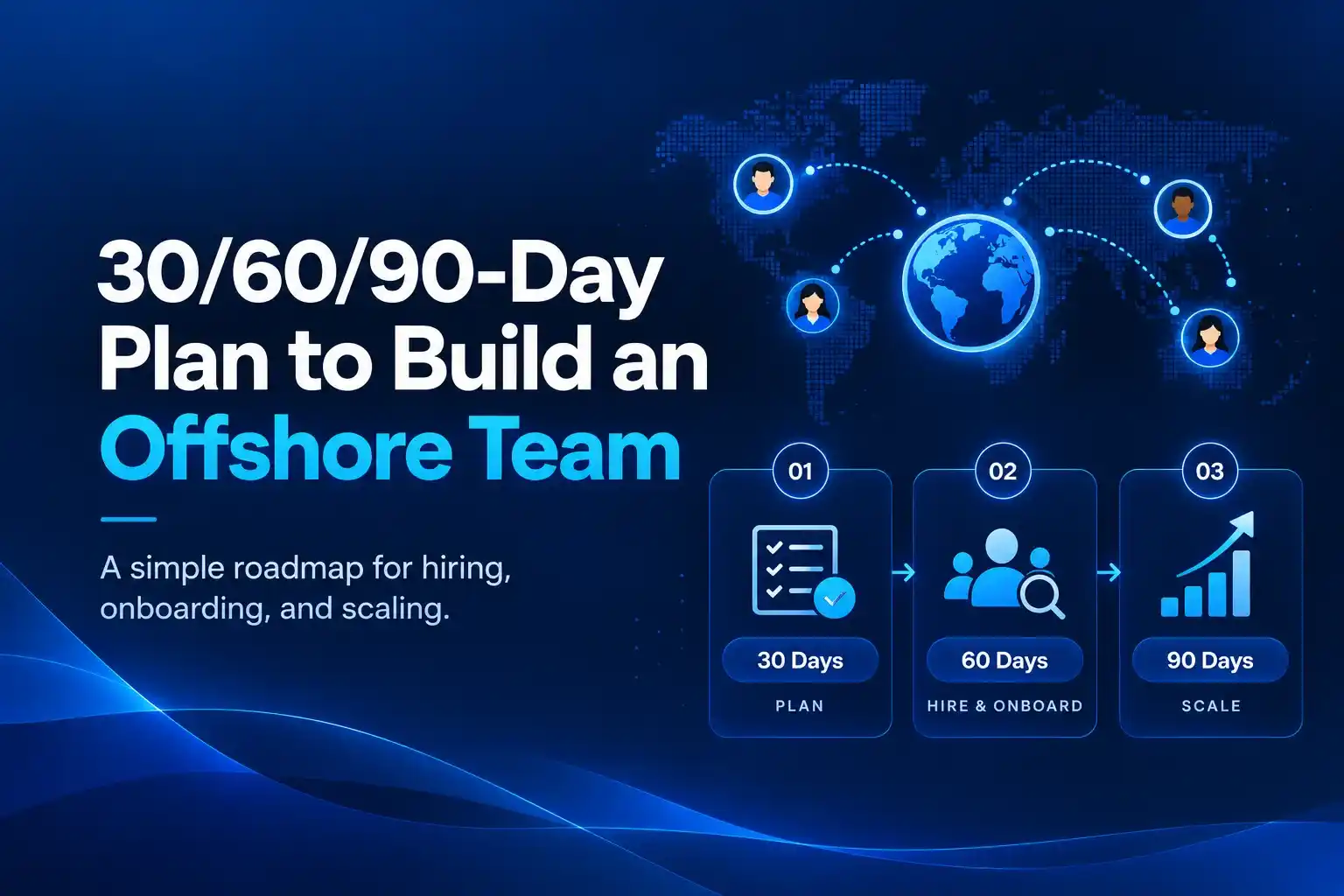
How UK Accounting Firms Should Build an Offshore Team: 30/60/90-Day Playbook
CA Nemin Vora