©2026 - www.my-cpe.com All rights reserved
support@my-cpe.com7 Days Free Trial
for Enterprise Subscriptions
You have Not Selected the Monthly or Annual Plan

#1 Global Platform for Continuing Education
Create your Free Account | Get Unlimited Access only @$199/Year ( View Details )
Trusted by 250,000+ Professionals for Continuing Education
Create Your Account 1/2
Already have an account? Log In
To Continue using Trial, please verify your email address
Didn’t received verification email? Resend Email
You can cancel anytime during your trial period.
Become a
MYCPE ONE Member
@ $299 $199
33% Discount on Annual Subscription


Complete Access to 12,000+ Hours of Content
Trusted by 250,000+ Professionals
"Steven was knowledgeable and thorough…”
Steven was knowledgeable and thorough in his information about the product and what is offered. He was empathetic to my situation. He went above and beyond answering all of my many questions. Excellent service!

Crystal lovejoy
"Great Customer Service”
Great service and very patient as I asked several questions. Steven answered all my questions and helped me make the right decision in my subscription purchase. Thank you.

Lori corry
"It is what it advertised to be”
It is what it advertised to be. Professional quality training and CPE tracking and certificates; systems knows AZ CPA CPE requirements and categories. I've needed help on several occasions and the assistance was quick and effective; however, there were some problems with data entry. The assistance sometimes asks for input, but when I try to type it is dissallowed for some reason. On several occasions I had to close the popup to get it out of my way.

Brian Carey
"Great customer service”
Great customer service. Classes are pertinent. Great value

Steve

Trusted by 250,000+ Professionals
Trusted by 250,000+ Professionals
"Steven was knowledgeable and thorough…”
Steven was knowledgeable and thorough in his information about the product and what is offered. He was empathetic to my situation. He went above and beyond answering all of my many questions. Excellent service!
Crystal lovejoy
"Great Customer Service”
Great service and very patient as I asked several questions. Steven answered all my questions and helped me make the right decision in my subscription purchase. Thank you.
Lori corry
"It is what it advertised to be”
It is what it advertised to be. Professional quality training and CPE tracking and certificates; systems knows AZ CPA CPE requirements and categories. I've needed help on several occasions and the assistance was quick and effective; however, there were some problems with data entry. The assistance sometimes asks for input, but when I try to type it is dissallowed for some reason. On several occasions I had to close the popup to get it out of my way.
Brian Carey
"Great customer service”
Great customer service. Classes are pertinent. Great value
Steve
Subscribe Now at $199/ 12 Months
Topic of Interest
Select the topics of your interest to receive Webinars/Virtual Events/E-Books/Podcasts of your interest.
Selected Topics
Important: Course Deactivation Alert
Below mentioned Courses will be deactivated soon due to outdated content. Complete the course within the next 7 days to receive credits. After Expiry date, the course will be unavailable for credit. For assistance or inquiries, please contact our support team at support@my-cpe.com.
Course Name
Thank You.
In Groundhog Day, Bill Murray's character wakes up to the same alarm, the same song, the same day, over and over, until he finally starts paying attention to the pattern and uses it to actually get somewhere. Before that, he's just repeating the same mistakes in a slightly different order every time.
That's what training looks like at most CPA and accounting firms without a central knowledge base. Someone re-uploads the same onboarding slide deck to a new shared drive folder every January. A manager emails around "the latest version" of a compliance training, except nobody's sure if it's actually the latest version.
A new hire asks three different people the same question about where to find the cybersecurity training and gets three different answers. Everyone is reliving the same day... just with worse organization each time.
Ask five people at your firm where the current onboarding materials live, and you'll likely get five different answers: a shared drive, an old LMS nobody uses anymore, someone's inbox, a binder in a filing cabinet, or "I think Sarah has it." None of these answers are wrong, exactly — that's the problem. There isn't one wrong place, because there isn't one right place either.
This shows up as very real, very measurable time loss:
None of this is anyone's fault individually. It's the natural result of training content living in a dozen different places instead of one.
A single, centralized knowledge base... one platform where every course, policy, recording, and certification lives with a consistent name, a consistent owner, and a single current version — collapses all of that friction at once.
Think of it less like a filing cabinet and more like a well-run production line. Every part has a name, a place, and a status. When something changes, it changes once, in one place, for everyone. Nobody has to guess whether "Cybersecurity Training v2" or "Cybersecurity Training FINAL final" is the one that counts, because there's only one, and it's tagged, searchable, and current by design.
That's where the time savings compound. Firms that consolidate training into one platform routinely report reclaiming the majority of the hours previously lost to searching for content, re-explaining where things live, and rebuilding materials that already existed, the kind of hidden tax that never shows up on a budget line but shows up everywhere in lost productivity.
A well-run knowledge base can realistically save a firm the better part of the time it used to spend just finding training content, before anyone even started learning from it.
Not every shared folder qualifies as a "knowledge base." The ones that actually work share a few features:
Consider a firm with three offices and no central training platform. Each office's admin maintains its own onboarding materials, updated whenever someone remembers to. When the firm rolls out a new cybersecurity policy, one office adopts it within a week, one takes over a month because the update got buried in an inbox, and one office is still using the old policy six months later because nobody told them it changed.
Now picture the same firm after consolidating into a single knowledge base. The cybersecurity update is published once. Every office sees the same current version, tagged and dated, the same day. The admin who used to spend hours each month reconciling which office was on which version now checks one dashboard. That's not a hypothetical efficiency gain — that's the entire point of having one source of truth instead of three.
Scattered training content doesn't just create confusion it quietly taxes every single person who has to work around it. A single knowledge base doesn't just organize your content; it gives your firm back the time everyone's been spending finding, re-explaining, and rebuilding things that should have taken thirty seconds to locate in the first place.
Curious what this looks like inside a real platform?
Our webinar, 10 Learning & Development Secrets: What Big 4 Firms Do Differently And How Your Firm Can Do It Too, walks through exactly how top firms structure a centralized knowledge base and how much time it actually saves. Join the next live session or watch the on-demand recording, and see how CPE for Teams brings your firm's entire training library into one platform.

Amrit Singh is a business leader with 10+ years of experience in continuing education. Helping accounting, tax, and finance professionals stay compliant with ease, he began his journey as a consultant. Learning across industries before stepping into a leadership role, he is shaped by both successes and failures. Amrit is passionate about problem-solving, building products, exploring technology, and mentoring future leaders. He is dedicated to transform continuing education, making it simpler, smarter, and more meaningful. Through his blogs and talks, he shares insights on accounting careers, CPA compliance, and the future of continuing education.

Business Insights: Remote Work, Decision Bias & Wine Fraud


How AI Is Changing Marketing for CPA Firms
Agentic AI Workflows for Management Accountants
Compliance vs Compliance Plus: Pricing and Features Compared for Your Team
Amrit Singh
Offshore Bookkeeping vs. In-House: What UK Accounting Firms Should Consider
 Christopher Rivera
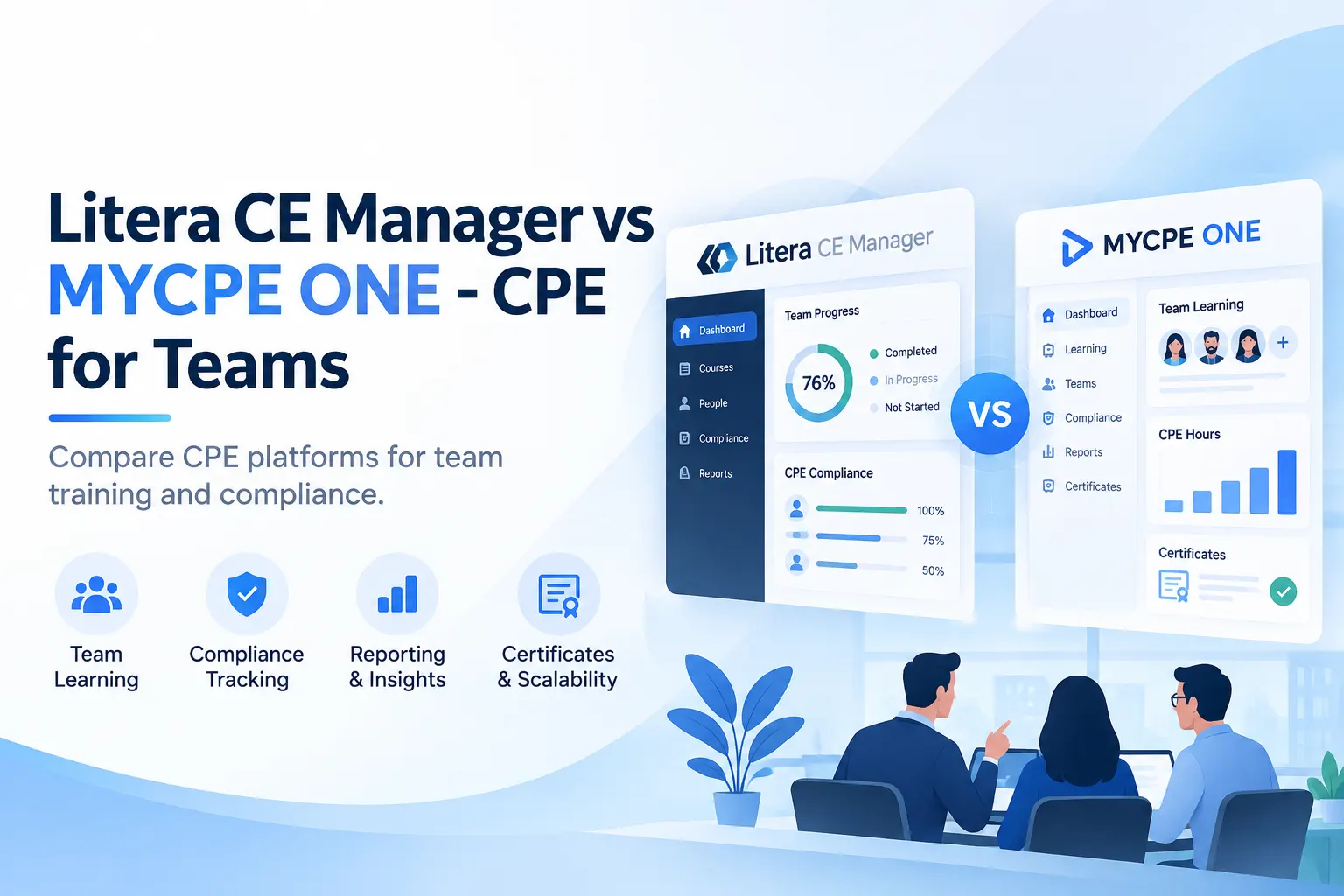

Registration Completed

Something Went Wrong!! Please Try Again.

Registration Completed

Please Update Your Profile to Claim Your Continuing Education Credits.

Thank you for subscribing 7 Days Free Trial.
Please upgrade your browser to use MYCPE ONE
Experience MYCPE ONE at its best! Upgrade your browser for a more interactive, user-friendly interface, and stay ahead in your professional development journey.
Upgrade NowHow did you find out about us?
We were looking so hard for you now that you are finally here, So would you tell us how you found out about us?

What is your primary purpose to use MYCPE ONE?

Thank you for submitting your inquiry! We will contact you soon.
CloseOur Promise