
Scale your CPA & accounting firm with elite offshore talent trusted by 1,000+ firms.
Thank you for your interest. Our due diligence checklist will be shared with you within 48 hours.

The hardest part of implementing pre-employment assessments in a CPA firm is rarely the technology. It’s the culture. Partners who have hired on instinct for 20 years are not eager to hear that their judgment is unreliable. Managing directors who built their careers on relationship-based hiring don’t immediately welcome a test score as a co-decision-maker.
This blog is about the human side of implementing objective hiring and how to build a firm-wide culture that makes assessments a competitive advantage, not a bureaucratic hurdle.
Partner resistance to structured hiring is understandable but it’s rooted in cognitive bias, not evidence. Here’s how to reframe the most common objections with data:
“I hired great people for 20 years without tests.”
Survivorship bias at work. We remember our best hires and mentally edit out the costly mistakes. Assessment data creates an objective record that removes this distortion.
“Tests can’t capture the whole person.”
Correct and no one claims otherwise. Assessments capture the technical reality that interviews consistently miss. They complement judgment; they don’t replace it.
“Candidates will be put off by tests.”
Top candidates expect rigorous processes. Research shows high performers actively prefer employers who demonstrate structured, merit-based hiring. It’s mediocre candidates who avoid scrutiny.
“We don’t have time to add steps.”
The real time cost is not the assessment; it’s the bad hire. One wrong hire costs the average CPA firm $50,000–$150,000 in direct and indirect losses. A 30-minute test is not the bottleneck.
"Data doesn’t replace judgment. It upgrades it"
— Laszlo Bock, Former SVP People Operations, Google

Don’t mandate firm-wide assessment adoption overnight. Identify one upcoming hire, ideally a role where you’ve had past quality issues. Run the full MYCPE ONE assessment process alongside your normal hiring workflow. Compare assessment results to your interview instincts. Document the outcome.
After the first three to six assessment-based hires, compile the results. Show partners: here’s who we assessed, here’s what the tests predicted, here’s how those hires are performing. Let the evidence build the case.
Take it a step further with topic-wise score breakdowns. MYCPE ONE’s assessment reports don’t just show an overall score, they break performance down by topic area (e.g., US GAAP, Tax, Audit, Software Proficiency). Use these breakdowns to:
This closes the loop between assessment data and real-world performance in a granular, actionable way. It gives partners the concrete evidence they need to champion objective hiring firm-wide.
Communicate to candidates that your firm uses objective skills assessment as part of its hiring process. Frame it as a differentiator: “We are serious about technical excellence, and we verify it.” Top candidates will respect this. Mediocre ones will self-select out, saving you time.
After 90 days, 6 months, and 12 months, review assessment predictions against actual performance. Use this data to refine your assessment thresholds and build internal credibility for the process.

Firms that embed objective assessment into their hiring culture report three consistent benefits over time: higher quality of hire, lower first-year turnover, and stronger employer brand among high-caliber candidates who actively seek rigorous employers.
Building a culture of objective hiring in your CPA firm means combining experience with data, not replacing it. Start small, share results, and build partner confidence over time. With consistent use, assessments improve hiring accuracy, reduce costly mistakes, and help create a stronger, more reliable team across the firm.

Amrit Singh is a business leader with 10+ years of experience in continuing education. Helping accounting, tax, and finance professionals stay compliant with ease, he began his journey as a consultant. Learning across industries before stepping into a leadership role, he is shaped by both successes and failures. Amrit is passionate about problem-solving, building products, exploring technology, and mentoring future leaders. He is dedicated to transform continuing education, making it simpler, smarter, and more meaningful. Through his blogs and talks, he shares insights on accounting careers, CPA compliance, and the future of continuing education.


Crack the Code: Unleashing Hidden Talents for Workplace Magic


.webp-1717773117 "Understanding Your Talent Development Function")
Understanding Your Talent Development Function


Fundamentals of Managing and Developing Talent
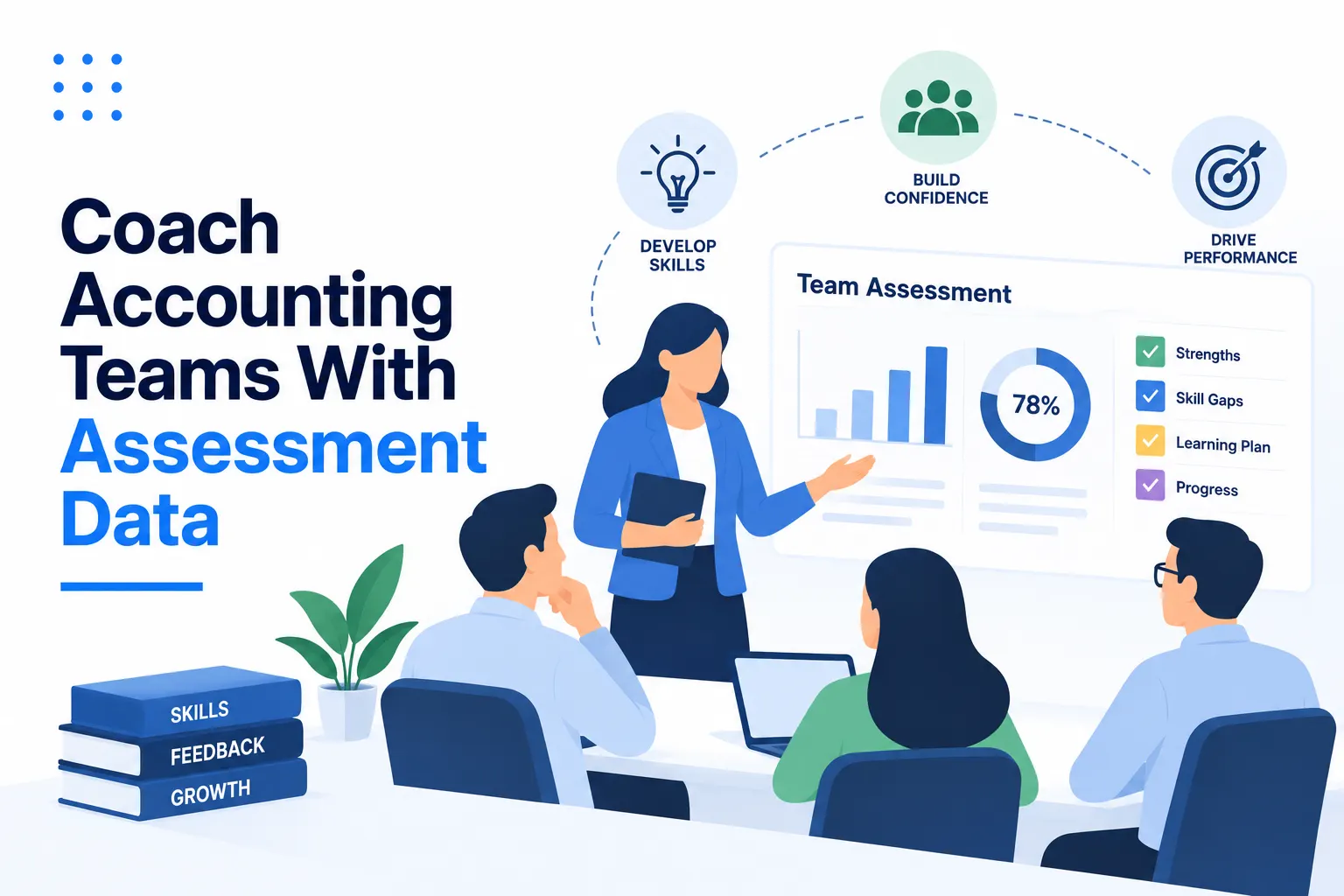
Manager’s Playbook: How to Coach Accounting Teams Using Assessment Data
Amrit Singh